Supreme Court Weighs Vote Counting Rules in Key Case
The Supreme Court is hearing arguments in Watson v. Republican National Committee, a case challenging Mississippi's law allowing late-arriving, postmarked ballots to be counted. This case raises questions about federalism and the balance of power in election administration. A ruling against the law could make it harder for millions of votes to be counted.


Supreme Court Hears Arguments on Ballot Counting Deadline
The Supreme Court is considering a case that could make it harder for votes to be counted, even if they are cast on time. The case, Watson v. Republican National Committee, pits state officials against a national party committee over a Mississippi law. This law allows election officials a grace period to count mail-in ballots that are postmarked by Election Day but arrive a few days later.
A Clash Over Federalism and Voting Rights
This legal battle highlights a significant debate about federalism, which is the balance of power between state and national governments. For years, many Southern states pushed for states’ rights in elections, a movement countered by federal laws like the 15th Amendment and the Voting Rights Act. Now, some of those same groups are on the other side, seeking to eliminate a rule that states have chosen to use. The core question is whether states can count ballots that are postmarked by Election Day but received afterward.
The Mississippi Law and Its Challenge
Mississippi’s Republican Secretary of State, Michael Watson, and Attorney General Lynn Fitch, are defending a state law passed by a Republican-led legislature. This law permits ballots postmarked by Election Day to be counted if they arrive up to five business days later. However, the Republican National Committee, backed by the Trump administration’s Justice Department, argues that ballots must be received by the end of Election Day to be considered valid. This stance was previously upheld by the Fifth Circuit Court of Appeals, whose three judges were all appointed by Donald Trump.
“The question here is whether or not Mississippi and 14 other states… whether they are allowed to treat ballots that are postmarked by Election Day, but received thereafter as valid? Mississippi says the answer to that is yes.”
Analogy to Tax Returns and Postal Service Concerns
Legal experts draw parallels between this voting rule and how tax returns are handled. “As long as it is postmarked that day,” tax returns can be submitted on the deadline, even if they arrive a few days later. This has led to questions about why ballots should be treated differently. Concerns have also been raised about the reliability of the U.S. Postal Service, especially in an era where it has faced political scrutiny. The argument is that voters should not have their ballots disqualified due to factors outside their control, like postal delivery delays.
The Legal vs. Political Arguments
The debate has both legal and political dimensions. Politically, the argument often centers on the perception that mail-in voting favors Democrats, a view that has shifted in recent years. Historically, mail-in voting was more popular with Republicans, but former President Donald Trump’s strong opposition has changed this dynamic. Legally, opponents of counting late-arriving, postmarked ballots argue that it creates confusion and delays in election results. They point to the federal law establishing Election Day as the first Tuesday after the first Monday in November.
“The legal argument is that the federal government sets Election Day as the first Tuesday after the first Monday of November. That’s true. But for 150 years, we have had those congressional statutes in place. And for 150 years until this Fifth Circuit ruling, no one, no court had ever ruled that election day can’t include, can’t mean the day on which you cast the ballot, even if it is counted later.”
Historical Precedent and Federalism
For over 150 years, courts have not ruled that Election Day must mean the day ballots are received. This long-standing practice suggests that counting ballots postmarked by Election Day, even if received later, has been an accepted part of the election process. This aligns with the principle of federalism, as articulated by James Madison, who believed that states, being closest to the people, should regulate federal elections. Even Justice Brett Kavanaugh has previously acknowledged that different state legislatures may make different choices regarding election procedures.
Potential Impact and Future Outlook
If the Supreme Court rules against counting these ballots, it could disenfranchise millions of voters. Similar laws have already led to tens of thousands of eligible voters being unable to participate in elections. The potential impact on future elections, especially with a significant portion of Americans voting by mail, could be substantial. While the Court’s decision is hard to predict, any ruling that limits ballot counting could face strong opposition and further complicate the already complex landscape of voting rights in the United States. The Court’s decision will have significant implications for how elections are administered and how accessible voting is for all citizens.
Source: How the Supreme Court could make it EVEN HARDER for your vote to count (YouTube)

Related Articles

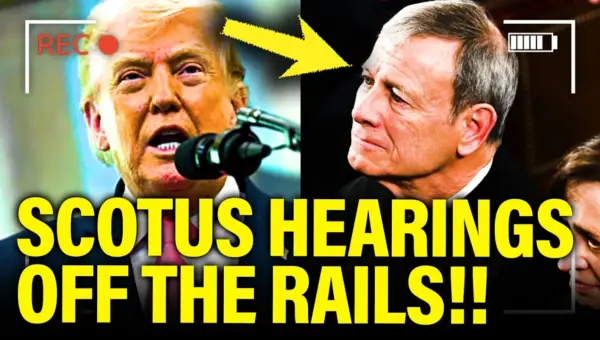
Supreme Court Cases Threaten Rights, But Congress Holds a Fix
The Supreme Court's recent hearings on mail-in ballots and asylum suggest rulings that could restrict voting access and limit refugee claims. However, these decisions are based on statutes, giving Congress the power to enact fixes if Democrats regain power, potentially safeguarding these rights.
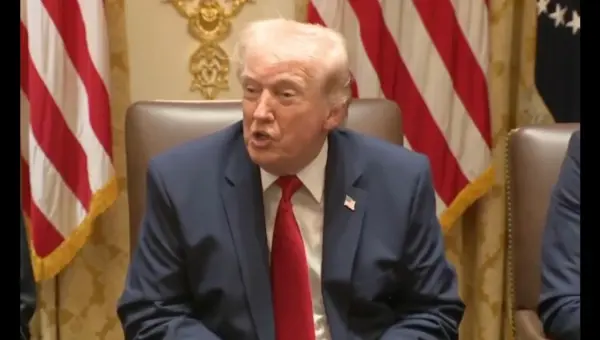
Trump’s Mail-In Ballot Hypocrisy Fuels Voter Suppression Debate
Donald Trump's personal use of mail-in ballots contradicts his public stance against them, fueling concerns about voter suppression. Evidence suggests widespread voter fraud is rare, and efforts to restrict voting access disproportionately affect marginalized communities.

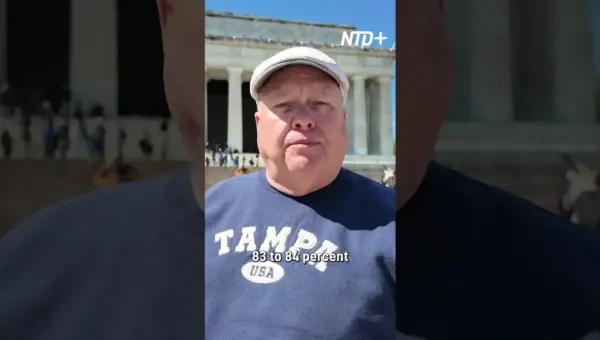
Voter ID Law Sparks Debate: Security vs. Access
The Save America Act proposes voter ID and proof of citizenship, sparking debate. Supporters cite election security, while critics fear voter suppression. The core issue is balancing accessibility with the need for secure elections.