Trump’s Loyalty Test: Betrayal Fuels MAGA’s Self-Destruction
Joe Kent's resignation from the National Counterterrorism Center exposes deep divisions within the MAGA movement over Iran policy. The incident highlights a pattern of Trump demanding loyalty and then punishing those who deviate, raising concerns about political retaliation and the weaponization of government power.


Trump’s Loyalty Test: Betrayal Fuels MAGA’s Self-Destruction
The MAGA movement, once a unified front, is now showing deep cracks, particularly regarding the approach to Iran. This internal conflict has exploded into the open with a high-profile resignation. Joe Kent, the Director of the National Counterterrorism Center, has stepped down, sparking a debate about his stance on Iran and his relationship with former President Donald Trump.
Kent’s resignation comes after he reportedly stated that Iran was not a threat. This view clashes with many intelligence assessments and military evaluations. However, the narrative around his departure is complex. While some criticize Kent for his views, others see his resignation as a symptom of a larger issue within the MAGA movement: a loyalty trap that punishes those who deviate, even slightly, from Trump’s narrative.
The Loyalty Trap Unveiled
The situation with Joe Kent highlights a pattern. Trump, who demands absolute loyalty, has a history of turning on individuals who were once praised but later become inconvenient. Videos show Trump enthusiastically endorsing Kent, even encouraging him to run for office. Yet, when Kent publicly resigned over the Iran conflict, Trump’s administration initiated an FBI investigation into him for allegedly leaking classified information. This move is seen by some as retaliation for Kent speaking truth to power about the Iran war.
This is particularly ironic given Trump’s own legal issues concerning classified documents. The timing of Kent’s investigation, so soon after his resignation, suggests a political motive. It appears that Trump is more concerned with silencing dissent than with the actual allegations of leaking.
A Pattern of Betrayal
The MAGA loyalty trap is not new. It’s a cycle where supporters are celebrated until they contradict Trump. Then, they are swiftly labeled as enemies or traitors. This has played out with numerous former allies and administration officials. Figures like Mike Pence, Nikki Haley, Mike Pompeo, John Bolton, and Bill Barr, all once part of Trump’s inner circle, have faced criticism or been publicly attacked when they did not offer unwavering support.
Trump’s rhetoric often involves claiming he always had doubts or saw potential problems coming. This narrative aims to position him as a wise observer who was merely working within a flawed system. However, critics argue this is a way to rewrite history and avoid accountability.
The Iran Conflict: A Case Study
The conflict surrounding Iran serves as a prime example of these dynamics. Trump’s administration took actions that escalated tensions, including withdrawing from the Iran nuclear deal, imposing sanctions, designating Iran’s military as a terrorist organization, and deploying more troops. These steps were presented as necessary to counter an imminent threat.
Yet, intelligence assessments, including those from the Defense Intelligence Agency, suggested Iran was not actively pursuing nuclear weapons. Furthermore, Iran had a religious ruling, a fatwa, against developing nuclear weapons since 2004. This raises questions about the justification for escalating conflict.
Lack of a Clear Plan
A significant criticism leveled against Trump’s approach to Iran is the alleged lack of a coherent plan. The Strait of Hormuz, a vital waterway for global oil transport, is a critical strategic point. Starting a conflict without a clear strategy for managing this area or the broader implications is seen as reckless.
Trump’s own statements have been contradictory. He has claimed to be winding down a war, yet also bragged about initiating actions that led to conflict. The lifting of sanctions on Russia and Iran, while simultaneously engaging in conflict with Iran, adds another layer of confusion to his foreign policy decisions.
The Joe Kent Controversy: Deeper Issues
While Joe Kent’s resignation brought the Iran issue to the forefront, it’s crucial to understand Kent himself. He has been described as an anti-Semitic white nationalist and conspiracy theorist with ties to extremist groups. His views and associations raise serious concerns about his suitability for a high-level national security position.
The fact that Trump appointed Kent to such a sensitive role, only to later investigate him after he voiced dissent, presents a dilemma. Either Trump deliberately placed someone he considered unqualified into a critical position, or he is now rewriting history to discredit someone who challenged his narrative.
The Role of Intelligence Leadership
The situation is further complicated by the role of the Director of National Intelligence, Tulsi Gabbard. Gabbard had previously voiced opposition to a war with Iran. However, when questioned by Congress, she appeared to defer to the President’s definition of an imminent threat, suggesting that the intelligence community’s role is to support the president’s decisions rather than provide independent assessments.
This dynamic is concerning. It implies that at a critical moment, with a nation potentially heading towards war, the head of intelligence is not providing an independent assessment of threats. Instead, the president’s word seems to be the ultimate authority, blurring the lines between political decision-making and objective intelligence analysis.
Weaponizing Government Power
The pattern of investigating or targeting individuals who cross Trump extends beyond Kent and Gabbard. Former FBI Director James Comey, Special Counsel Robert Mueller, and others who were part of investigations into Trump have faced public attacks or legal challenges. Even individuals appointed by Trump, like Federal Reserve Chair Jerome Powell, have faced calls for termination after disagreeing with his policies.
This behavior suggests a willingness to weaponize government institutions against perceived enemies. The goal is not necessarily to win legal cases, but to send a message: dissent will be met with severe consequences.
Why This Matters
The internal conflicts within the MAGA movement and Trump’s approach to loyalty are not just political theater. They have real-world implications, particularly in foreign policy. The lack of a clear, consistent strategy, especially concerning volatile regions like the Middle East, can lead to unpredictable escalation and put American lives at risk.
Furthermore, the erosion of trust in intelligence assessments and the politicization of government institutions weaken national security. When decisions are based on personal loyalty or political expediency rather than objective analysis, the nation is more vulnerable.
Future Outlook
The current situation suggests a continued trend of internal conflict within movements that center around a strong personality. The demand for absolute loyalty can create a brittle structure that is prone to fracturing when tested. The future outlook involves watching whether these internal divisions will lead to greater accountability or further entrenchment.
For those outside the MAGA movement, the events serve as a cautionary tale about the dangers of unchecked power and the importance of maintaining independent institutions. The ability to question authority, even when it comes from a beloved leader, is essential for sound decision-making, especially when national security is at stake.
Historical Context
Throughout history, leaders have often demanded loyalty. However, the intensity and the consequences of falling out of favor in the Trump era seem particularly stark. The way dissent is handled, often through investigations or public shaming, echoes tactics used to consolidate power and silence opposition.
The focus on Iran has historical roots, with the United States and Iran having a complex and often adversarial relationship for decades. Trump’s policies represented a significant shift from previous administrations, and the ongoing debate reflects differing views on how best to manage this relationship and ensure regional stability.
Source: Trump DESTROYS His Own Admin with DISASTER WAR (YouTube)

Related Articles


Israel Escalates Iran Strikes, Warns of Wider War
Israel has launched significant strikes inside Iran following continued missile fire, warning of further escalation. The conflict risks wider regional instability and economic disruption, especially concerning the Strait of Hormuz.

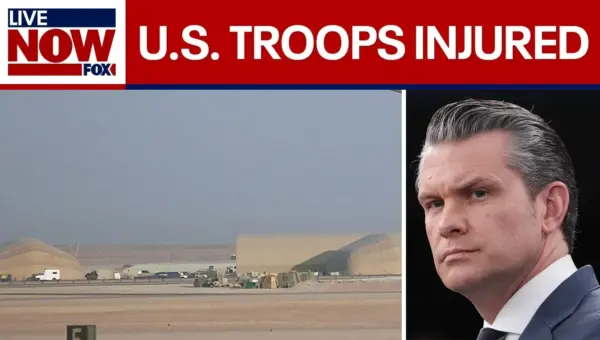
US Troops Wounded in Saudi Base Attack by Iran
An Iranian missile attack on Prince Sultan Air Base in Saudi Arabia wounded multiple U.S. service members and damaged aircraft. The incident highlights the ongoing risks in the Middle East and the limitations of air defense systems. Analysts discuss the strategic implications, economic pressures, and the isolation of Iran amidst the conflict.

MAGA Voters Divided Over Potential Iran War
The potential for a US war with Iran has sparked debate at CPAC, revealing a divided MAGA base. While some support military action, many express concerns over prolonged conflicts and rising economic costs, particularly higher gas prices.