Giant Space Telescope Mission Faces Uncertain Future
The ambitious LUVOIR telescope concept, designed to search for life on exoplanets, is currently in a state of uncertainty. While not actively in development, its goals continue to drive future space observatory designs and the ongoing quest to find life beyond Earth.


Giant Space Telescope Mission Faces Uncertain Future
A powerful concept for a next-generation space telescope, known as LUVOIR (Large Ultraviolet Optical Infrared Surveyor), is currently in a state of limbo, leaving many astronomers wondering about its fate. This ambitious mission, designed to search for life on planets orbiting distant stars, has not been in the headlines recently. However, its potential to transform our understanding of the universe remains immense.
What Was LUVOIR?
LUVOIR was envisioned as a colossal observatory, potentially up to 16 meters (about 52 feet) in diameter. To put that into perspective, the Hubble Space Telescope is 2.4 meters across, and the James Webb Space Telescope (JWST) is 6.5 meters. LUVOIR would have been significantly larger, allowing it to collect much more light and see fainter, more distant objects.
Its primary goal was to find and study exoplanets, planets outside our solar system. Specifically, LUVOIR would have focused on exoplanets within the habitable zones of their stars, the region where temperatures could allow liquid water to exist on a planet’s surface. Scientists hoped to analyze the atmospheres of these planets for biosignatures – gases like oxygen, methane, or water vapor that could indicate the presence of life.
The Science Behind the Search
Detecting life on exoplanets is incredibly challenging. These planets are light-years away, making them appear as tiny dots of light even to our most powerful telescopes. LUVOIR’s advanced instruments would have used a technique called transit spectroscopy. When a planet passes in front of its star from our point of view, a tiny bit of the star’s light filters through the planet’s atmosphere.
By analyzing the wavelengths of light that are absorbed or transmitted, scientists can figure out what gases are present in the exoplanet’s atmosphere. LUVOIR would have been able to do this with unprecedented detail, searching for combinations of gases that are difficult to explain without biological processes. Imagine looking for the faint chemical fingerprints of alien life across vast cosmic distances.
Historical Context: Building on Success
The idea for LUVOIR didn’t appear out of nowhere. It built upon the incredible successes of previous space telescopes. Hubble, launched in 1990, revolutionized astronomy by providing sharp images of the universe and allowing us to see farther back in time. The Kepler Space Telescope, which operated from 2009 to 2018, discovered thousands of exoplanets, proving that planets are common in our galaxy.
More recently, the James Webb Space Telescope, launched in December 2021, is already delivering stunning images and data. JWST is particularly good at observing in infrared light, which helps it see through dust clouds and study the early universe. However, JWST’s mirror is smaller than LUVOIR’s proposed size, and it is not optimized for studying exoplanet atmospheres in the way LUVOIR was designed to be.
Why the Silence on LUVOIR?
LUVOIR was one of several large mission concepts studied by NASA and the scientific community. These studies help determine which future flagship missions are most scientifically valuable and technically feasible. The process involves rigorous review and prioritization, often influenced by budget constraints and the scientific return on investment.
In recent years, NASA’s focus has shifted. The agency is now heavily invested in the James Webb Space Telescope and planning for future missions. The selection process for the next major astrophysics flagship mission is ongoing, and LUVOIR, along with other concepts like the Habitable Exoplanet Observatory (HabEx), has not yet been chosen. This doesn’t mean the science LUVOIR proposed is no longer important; it means the path to realizing such a mission is long and competitive.
What Comes Next?
The scientific community continues to advocate for missions that can directly image exoplanets and analyze their atmospheres. While LUVOIR itself may not be built in its original form, the technological advancements and scientific goals it represented are still driving future telescope designs. NASA and its international partners are exploring various pathways for future large observatories.
The findings from JWST will also play a crucial role. By studying exoplanet atmospheres with JWST, scientists will gain invaluable data that can inform the design and scientific objectives of future, even more powerful telescopes. The quest to find life beyond Earth is a marathon, not a sprint. Each new telescope and mission brings us closer to answering one of humanity’s oldest questions: Are we alone?
Why This Matters
The search for life beyond Earth is one of the most profound scientific endeavors humanity can undertake. Discovering evidence of life, even microbial life, on another planet would fundamentally change our perspective on our place in the cosmos. It would suggest that life is not a fluke unique to Earth but a common phenomenon in the universe.
Missions like LUVOIR, or whatever future telescopes emerge from these studies, represent our best chance to make such a discovery. They push the boundaries of engineering and science, requiring us to develop new technologies and innovative solutions. The knowledge gained from these ambitious projects not only expands our understanding of the universe but also often leads to unexpected technological spin-offs that benefit life here on Earth.
Source: Why Don't We Hear About LUVOIR Anymore? [Q&A Livestream] (YouTube)

Related Articles

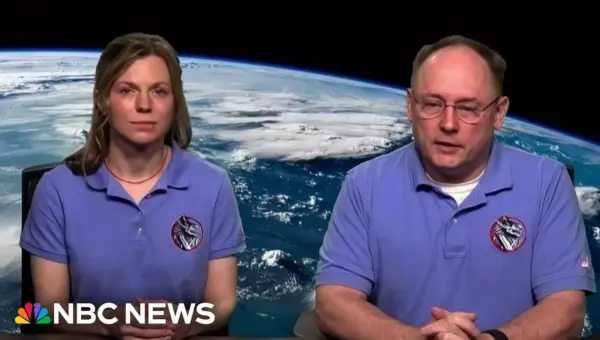
Astronaut Recounts Space Medical Scare, Informs Future Missions
Astronaut Mike Fincke detailed a recent medical emergency aboard the ISS that led to his return to Earth. While doctors ruled out serious conditions like stroke, the exact cause is still being studied, with theories pointing to a space-related anomaly. The experience is providing crucial data for future long-duration missions, including NASA's Artemis program.


Astronaut Recovers From Mystery Space Illness, Inspires Future Missions
Astronaut Mike Fincke has shared details about a mysterious medical emergency he experienced aboard the International Space Station, which led to his early return to Earth. While the exact cause is still under investigation, doctors believe it was space-related, providing crucial data for future deep space missions.

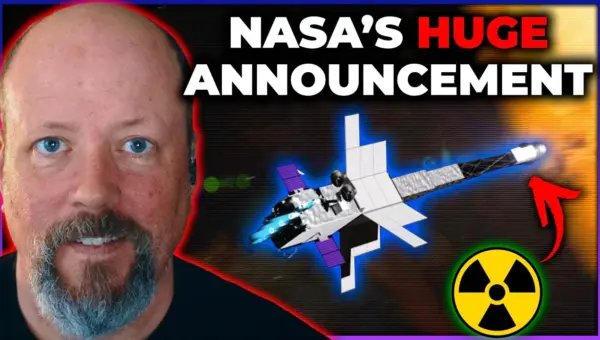
NASA Pivots: Mars Nuclear Probe, Moon Base Ahead
NASA is pivoting its exploration strategy, prioritizing a nuclear-powered Mars probe and accelerating plans for a moon base. The International Space Station's future is uncertain, with a shift towards commercial platforms. Meanwhile, new telescope data reveals overmassive black holes in dwarf galaxies and captures stunning images of Saturn and the Crab Nebula.