US Threatens Iran; Pahlavi Eyes Throne
The United States has issued a stern warning to Iran regarding the Strait of Hormuz, threatening military action against its power plants. Meanwhile, Crown Prince Reza Pahlavi's advisor suggests Iran's ruling regime is in its 'final endgame,' facing collapse due to internal dissent and international pressure.


US Threatens Iran; Pahlavi Eyes Throne
The United States has issued a stark warning to Iran, threatening to cripple its power plants if the Strait of Hormuz is not reopened within 48 hours. This move comes amid rising oil prices and heightened tensions in the Persian Gulf. Iran’s Foreign Minister responded on social media, stating the Strait is not closed and that ships hesitate due to insurers fearing conflict initiated by the U.S., not Iran.
Potential US Action Against Iran’s Oil Infrastructure
Reports suggest President Trump has considered a risky operation to seize Kharg Island. This island handles 90% of Iran’s crude oil exports. The goal would be to pressure Iran into reopening the Strait of Hormuz. In response to previous incidents, multiple strikes have already damaged oil and gas facilities in the region. Iran has vowed retaliation if the U.S. attacks its energy sites.
An Advisor’s View: The ‘Final Endgame’ for Iran’s Regime
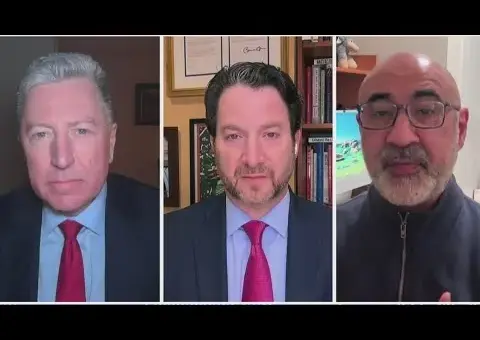
Shervin Pishavar, an advisor to Crown Prince Reza Pahlavi and the Iran Prosperity Project, believes Iran is nearing a critical turning point. He described the current situation as the ‘final endgame’ for the ruling regime. Pishavar noted that millions of Iranians have been calling for change, inspired by the Crown Prince’s leadership. He mentioned that on January 4th, millions took to the streets in response to the Crown Prince’s call, many risking their lives for freedom.
Regime Weakness and International Pressure
Pishavar argued that the current Iranian government is struggling to survive, with its leadership facing significant blows. He characterized the regime’s actions as irrational, pointing to its behavior across 14 nations. He expressed concern about Iran’s potential nuclear and advanced weapons capabilities, like ICBMs and hypersonic missiles, warning that they could be used against global targets. Pishavar stressed the importance of stopping this ‘mafia state’ from posing a threat to the world.
Crown Prince’s Role and Future Transition
When asked about the timing for Crown Prince Pahlavi to assume leadership, Pishavar stated that the Crown Prince has advised people to stay home until conditions are safe for their return. He believes these conditions are improving. Pishavar indicated that the regime is facing severe financial pressure, unable to even pay its military. World revenues are being cut off, making the regime’s collapse a matter of weeks or months. He mentioned a recent report outlining the next phase for a democratic Iran led by the Crown Prince.
Propaganda vs. Public Will
The discussion also touched upon recent videos showing the burning of American and Israeli flags in Tehran. Pishavar dismissed these images as propaganda, suggesting they represent a small, paid militia. He contrasted this with the millions of Iranians he believes are calling for the Crown Prince’s leadership. He stated that these millions are seeking change now and ensuring a better future.
Global Impact
The escalating tensions between the U.S. and Iran, particularly concerning the Strait of Hormuz and Iran’s energy infrastructure, have a direct impact on global oil prices. Any disruption in this vital shipping lane could significantly affect energy markets worldwide. The potential for wider conflict also raises concerns for regional stability and international security. Furthermore, the internal dynamics within Iran, with a potential transition of power, could reshape the geopolitical landscape of the Middle East. The involvement of the United States, with threats of military action, underscores the complex web of international interests at play. The situation highlights the ongoing struggle between established regimes and opposition movements, often with external powers playing a significant role.
Historical Context
The current standoff echoes historical patterns of U.S.-Iran relations, marked by periods of intense hostility and proxy conflicts since the 1979 revolution. The threat to disrupt oil flow through the Strait of Hormuz is a recurring tactic, as Iran has previously threatened to close it during times of heightened tension. The idea of supporting internal opposition to influence regime change in Iran also has historical precedents, though the specific role of a monarchical figure like Crown Prince Pahlavi represents a different approach compared to previous U.S. policies.
Economic Leverage
Economic factors are central to this conflict. U.S. sanctions aim to cripple Iran’s economy, cutting off its access to global markets and financial systems. The control over oil exports and transit routes like the Strait of Hormuz is a critical economic lever for both sides. Iran’s ability to export oil directly impacts its revenue, while the U.S. and its allies have an interest in maintaining stable global energy supplies. The reliance on insurance for shipping also shows how financial mechanisms can be used as tools of pressure or deterrence.
Future Scenarios
Several future scenarios are possible. The U.S. could follow through with its threats, leading to military strikes against Iranian infrastructure, potentially escalating into a wider conflict. Alternatively, diplomatic efforts could intensify, leading to a de-escalation and renewed negotiations. Iran might also face internal collapse due to economic pressure and popular discontent, paving the way for a transition. The success of any future government in Iran, whether democratic or otherwise, will depend heavily on internal support and the degree of external interference. The role of Crown Prince Pahlavi remains a significant variable in these potential outcomes.
Source: Fall of Iranian regime in ‘final end game’: Adviser to crown prince | NewsNation Live (YouTube)

Related Articles

U.S. Iran Tensions Rise Amid Shifting Alliances
Rising tensions between the U.S. and Iran are creating a volatile geopolitical situation. With conflicting signals on de-escalation and potential shifts in alliances like NATO and U.S.-Israel relations, the path forward remains uncertain. The global economy and regional stability hang in the balance.


Iran Targets US With Cyberattacks, Escalating Digital Warfare
Iran is increasingly using cyberattacks to challenge the U.S., as seen in a recent hack of the FBI director's account. Experts say this is a strategic shift due to Iran's limitations in conventional warfare. The U.S. needs to strengthen its digital defenses, focusing on encryption and cloud computing, rather than solely relying on traditional security measures.

Iran Hacks FBI Chief, Exposing U.S. Cyber Vulnerabilities
A recent hack of FBI Director Kash Patel's personal email by an Iran-linked group highlights Iran's growing cyber threat to the U.S. Experts explain how simple security oversights are exploited, emphasizing the need for basic defenses like two-factor authentication to protect against propaganda and potential infrastructure attacks.