Trump Links DHS Funding to Immigration Bill Approval
Former President Trump has linked crucial Department of Homeland Security funding to the approval of his "SAVE America Act." He stated no deal would be made until Democrats pass his immigration plan. This move intensifies the ongoing budget debate and highlights Trump's strategy of using government operations as leverage.


Trump Links DHS Funding to Immigration Bill Approval
Former President Donald Trump has stated he will not support any deal to fund the Department of Homeland Security (DHS) until Democrats approve his proposed “SAVE America Act.” This move links a critical government agency’s funding to a broader immigration policy debate.
DHS Funding Stalemate Continues
The U.S. is facing a potential shutdown of parts of the DHS. This agency handles many important tasks, including airport security and border protection. President Trump’s decision to withhold support for DHS funding creates a significant hurdle for lawmakers trying to reach an agreement.
Some lawmakers have suggested funding only parts of the DHS, like the Transportation Security Administration (TSA), while continuing to negotiate the rest. However, Trump has made it clear he opposes this piecemeal approach. He believes Democrats want to make a deal on DHS funding. He insists that no deal should be made until they approve his new immigration plan.
The “SAVE America Act”
The “SAVE America Act” is a new proposal from President Trump. Details of the act were not fully provided in the report. However, Trump’s stance suggests it contains significant immigration policy changes. He sees it as essential for national security and immigration control.
By tying DHS funding to this act, Trump is using a powerful bargaining chip. The DHS requires consistent funding to operate effectively. Any disruption can affect national security operations and public services. This strategy puts pressure on Democrats to consider his immigration agenda.
Trump’s Stance on ICE Agents
Regarding the deployment of Immigration and Customs Enforcement (ICE) agents to help at airports, Trump said they would stay as long as needed. This shows his commitment to maintaining border and airport security. He views this as a necessary measure during the funding uncertainty.
The Iran Threat and Strait of Hormuz
In a separate but related matter, the report touched on President Trump’s previous threat to target Iranian power plants. This threat was made if Iran did not reopen the Strait of Hormuz. The Strait of Hormuz is a crucial waterway for global oil transport. Disruptions there can significantly impact global energy markets.
Iran’s Foreign Minister stated that their country would not be swayed by threats. Trump responded cryptically, saying, “Let’s see whether or not he’s right.” This threat was set to expire 48 hours after the report was made. The situation highlights ongoing tensions in the Middle East and their potential impact on international trade and energy security.
Global Impact
This situation demonstrates how domestic political battles can have international implications. The potential disruption to DHS funding could affect U.S. security operations. Trump’s linkage of this funding to his immigration act shows a willingness to use government operations as leverage in policy disputes.
Furthermore, the ongoing tensions with Iran over the Strait of Hormuz underscore the fragility of global energy supplies. Any escalation could lead to higher oil prices and economic instability worldwide. The interplay between U.S. domestic policy and international security issues is complex and interconnected.
Historical Context
Linking government funding to policy demands is not new in U.S. politics. Historically, budget battles have often been used to force concessions on various issues. This tactic can lead to government shutdowns or delays in essential services.
The debate over immigration policy itself has deep historical roots. It has been a recurring issue in U.S. politics, shaping national identity and foreign relations. Trump’s focus on border security and immigration control echoes past debates and policies aimed at managing the nation’s borders.
Economic Leverage
The DHS budget is substantial, covering a wide range of security operations. Withholding funding impacts not just government employees but also the efficiency of border control and airport security. This can have ripple effects on trade and travel.
The Strait of Hormuz issue directly relates to economic leverage through energy. Control over this strait means control over a significant portion of the world’s oil supply. Threats and counter-threats in this region are attempts to gain economic or strategic advantage.
Future Scenarios
One scenario is that Democrats might agree to some aspects of Trump’s immigration proposals to secure DHS funding. This would be a significant political victory for Trump and could reshape immigration policy.
Another possibility is that the stalemate continues, leading to a partial government shutdown affecting DHS operations. This could create public pressure on both sides to compromise. A third scenario involves negotiations outside the “SAVE America Act,” allowing DHS funding to proceed independently, though Trump has signaled strong opposition to this.
Source: Trump: No DHS deal should be made until Dems approve 'SAVE America ACT' | NewsNation Live (YouTube)

Related Articles

House Republicans Reject Senate Deal, Sparking Government Funding Clash
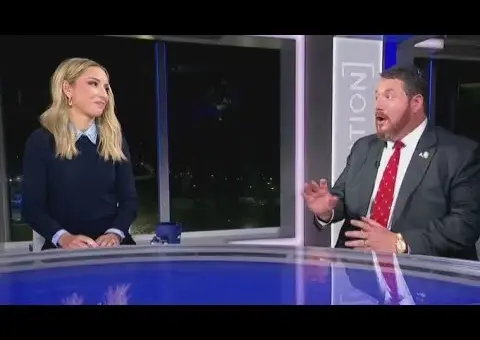
House Republicans have rejected a Senate bill to end the government shutdown, citing insufficient border security measures. Congressman Randy Fine called the Senate deal a "disgrace" and highlighted the ongoing fight for full government funding. President Trump's executive order to pay TSA agents offers temporary relief, but the core disagreement over border security continues to paralyze Washington.

Trump’s Name Everywhere: A ‘Stain’ on GOP Legacy?
Former President Donald Trump's efforts to brand national symbols, including a proposed signature on dollar bills, spark debate. Critics view this as an authoritarian attempt to embed his legacy, potentially staining the Republican Party's history and contrasting with democratic ideals of public ownership.


Trump’s War Talk Stuns Financial Crowd
Donald Trump's recent speech in Miami focused on his foreign policy, particularly his critical views on NATO and his vision for international relations. He declared the U.S. would no longer defend NATO allies, questioned the value of existing alliances, and suggested renaming the Strait of Hormuz. The speech also touched on his personal views of success, his allies, and his perceived role as a global peacemaker.