Mullin’s DHS Path Clears Amid Party Divide
Senator Mullin's nomination for DHS Secretary moves closer to confirmation after a key Senate vote, though divisions remain. Supporters praise his consensus skills, while some Democrats cite past votes against election certification as disqualifying. The agency faces ongoing challenges, including a partial shutdown affecting airports.


Senate Advances Mullin for DHS Secretary Role
The U.S. Senate has taken a significant step towards confirming Senator Mullin as the next Secretary of Homeland Security. A procedural vote on the Senate floor moved Mullin’s nomination closer to a final confirmation, which is expected soon, possibly as early as tomorrow. This vote shows that despite some opposition, Mullin is likely to secure the position.
Key Votes and Opposition
The procedural vote saw most Republican senators supporting Mullin, a sign of bipartisan cooperation within the party. However, Senator Rand Paul stood out, voting against his colleague. This opposition stems from a recent confirmation hearing where personal tensions between Paul and Mullin were evident, marked by a heated exchange. Most Democrats also voted against Mullin’s advancement. Exceptions included Senators John Fetterman and Martin Heinrich, who voted in favor.
Supporters Highlight Consensus-Building Skills
Supporters, including some senators from both parties, praise Mullin’s ability to work across the aisle. One senator described Mullin as smart, thoughtful, and a crucial connector. They believe he has strong relationships with colleagues in both the Senate and the House. This ability to bring different groups together is seen as essential for getting important work done, especially between the Senate, the House, and the White House.
Democrats Raise Concerns Over Leadership and Past Actions
Despite praise for his consensus-building, many Democrats remain unconvinced. Some, like Senator Chris Van Hollen, believe the Department of Homeland Security (DHS) needs a fundamental change. They question if Mullin is the right person to lead such a transformation. Other Democrats, including Senator Tim Kaine, cited Mullin’s 2020 vote against certifying election results as a reason for their opposition. They argue this past action makes him unsuitable for leading a department responsible for national security and democratic processes.
Agency Turmoil and Shutdown Concerns
Mullin’s potential appointment comes at a critical time for the DHS. The agency is currently facing significant challenges, including an ongoing partial shutdown that is causing major disruptions. NewsNation has been covering problems at airports resulting from this shutdown. Senate Majority Leader John Thune acknowledged the seriousness of the situation. He stated that a bipartisan group of senators is meeting to try and negotiate a deal to reopen the affected parts of the agency.
Global Impact
Why This Reshapes the World Order
The confirmation of a new DHS Secretary is more than just an internal U.S. personnel decision. It has broader implications for international cooperation on security matters. The DHS plays a key role in border security, counter-terrorism, and managing international travel and trade. A confirmed leader, especially one with a focus on consensus, could streamline these operations. This could impact how the U.S. works with other countries on shared security challenges. Conversely, continued division within the U.S. government over leadership could weaken its ability to act decisively on the global stage. This uncertainty can affect international partnerships and the perception of U.S. stability.
Economic Leverage and Security
The DHS oversees critical infrastructure and trade routes. Its leadership directly influences economic security. For instance, disruptions at airports due to shutdowns affect travel and tourism, costing billions. A stable DHS leadership can ensure smoother trade flows and protect supply chains. This is vital for the U.S. economy and its global trading partners. The agency also plays a role in enforcing sanctions and trade regulations, impacting international business dealings.
Historical Context
The Department of Homeland Security was created in 2003 in response to the September 11th attacks. It consolidated numerous agencies to improve national security coordination. Since its inception, the agency has seen various leaders, each facing unique challenges. The current debate over Mullin’s confirmation echoes past struggles to find leaders who can navigate complex political divides while addressing urgent security needs. The vote against certifying election results, a point of contention for some Democrats, highlights ongoing debates about democratic norms and institutional trust, which are central to the DHS mission.
Future Scenarios
Several future scenarios are possible. If Mullin is confirmed, he will likely face immediate pressure to resolve the ongoing shutdown and address internal agency issues. His ability to bridge divides, as praised by supporters, will be tested. Alternatively, if confirmation is delayed or faces further significant hurdles, it could signal deeper partisan rifts. This might lead to continued instability within the DHS, impacting its operational effectiveness. The long-term effect could be a weakened U.S. posture on international security cooperation, depending on how effectively the agency can function under prolonged uncertainty.
Source: Senate advances Mullin toward final vote to become head of DHS | NewsNation Live (YouTube)

Related Articles
House Republicans Reject Senate Deal, Sparking Government Funding Clash
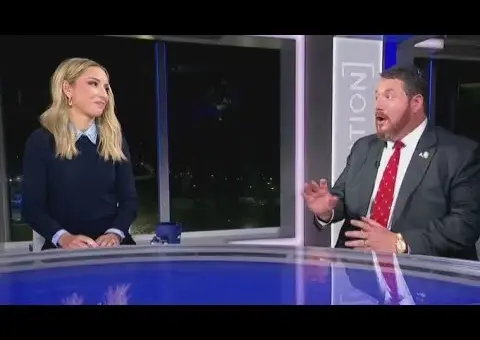
House Republicans have rejected a Senate bill to end the government shutdown, citing insufficient border security measures. Congressman Randy Fine called the Senate deal a "disgrace" and highlighted the ongoing fight for full government funding. President Trump's executive order to pay TSA agents offers temporary relief, but the core disagreement over border security continues to paralyze Washington.

Voter ID: Common Sense or Suppression?
A growing debate surrounds voter ID laws, with proponents calling them a common-sense measure against fraud and opponents fearing voter suppression. Many countries and U.S. states already require ID to vote.
Trump’s Iran War Plans Criticized Amid Border Funding Standoff
Lawmakers and analysts are criticizing the Trump administration's handling of the Iran conflict and its approach to border funding, arguing that a lack of clear planning and a focus on political battles are making the U.S. less safe. Concerns are particularly high regarding the FBI's priorities and the potential impact of these issues on national security.