MAGA Outrage Erupts After Governor Denied Service
Governor Sarah Huckabee Sanders was reportedly denied service at an Arkansas restaurant, sparking outrage among MAGA supporters and a debate on political intolerance. The incident highlights the deep divisions in American society and the ways political actions and beliefs intersect with daily life.


MAGA Outrage Erupts After Governor Denied Service
A recent event involving Sarah Huckabee Sanders, the Governor of Arkansas and former White House Press Secretary, has sparked a heated debate. Sanders reported being asked to leave a restaurant in Little Rock, Arkansas, with her friends. The owner of the establishment stated that her presence made employees feel threatened and uncomfortable due to her political views. This incident quickly drew a strong reaction from supporters of Donald Trump and the MAGA movement, who viewed it as an act of political intolerance.
The Incident and Initial Reactions
The story first gained widespread attention when reported by the Daily Wire. According to the report, as Sanders was leaving, she was reportedly given the middle finger by someone at the restaurant. This was not the first time Sanders had faced such a situation; in 2018, while serving as Press Secretary, a restaurant in Virginia called The Red Hen asked her and her family to leave for the same reasons. At that time, the owner received praise from some liberal media outlets for taking a stand.
In response to the Arkansas incident, Donald Trump commented on his social media platform, Truth Social. He called Sanders a “good person” and stated that such an event “shouldn’t happen.” However, the commentary quickly shifted to how Trump made the story about himself, noting his past comments and his response to the situation.
“Did you see that your former press secretary Sarah Sanders was asking to leave a restaurant like that who felt threat by her? Well, her politics are right down the center. She’s a good person and that shouldn’t happen. Where did that take place? Here or in Arkansas?”
Donald Trump
The speaker in the video expressed that Trump’s immediate reaction was to talk about how much he won Arkansas by, highlighting what they saw as a pattern of making everything about himself.
Deeper Political Divide and Contrasting Views
The incident has been framed by some as an example of “MAGA cancel culture” backfiring. The argument presented is that while Trump and his supporters often express strong, sometimes harsh, opinions and can be critical of others, they react with anger when similar actions are directed at them, especially from private businesses.
The employees of the restaurant responded to the public attention with a defiant Facebook post. They stated, “No amount of evil you send our way can ever take our smiles away. I’m proud AF to work here. I’m proud AF to be gay and I’m proud AF to be an Arkansas an AR.” This statement was seen by some as a powerful message of standing up for one’s beliefs, even in the face of backlash. The speaker noted that private businesses generally have the right to refuse service to customers for various reasons, as long as it’s not based on protected characteristics like race or religion.
Historical Context and Broader Issues
The video draws a connection between Sanders’ experience and broader criticisms of the Trump administration and its policies. It points to a July 2023 Truth Social post by Trump, made around the time of Robert Mueller’s death, where Trump wrote, “Good. I’m glad he’s dead. He can no longer hurt innocent people.” This statement is presented as an example of the “hateful culture” that some associate with Trump and his allies.
The speaker argues that Sanders, as a supporter of the Trump administration, is a reflection of its policies and actions, which they describe as “gross hatefulness” and “incompetence.” The video also touches upon the political climate surrounding issues like the funding of the Department of Homeland Security (DHS) and the SAVE Act. Sanders is quoted discussing Democrats fighting against these measures, which she believes are essential for national security and election integrity.
However, the video counters this by alleging that Democrats oppose funding DHS in its current form due to concerns about the actions of Immigration and Customs Enforcement (ICE). Specific accusations include ICE agents allegedly operating without body cameras, wearing masks, using unmarked cars, violating court orders, and deporting people without due process. The speaker suggests that Democrats are willing to fund DHS but want reforms to ICE’s operations, emphasizing the need for compromise in a democracy.
Further examples are given to illustrate what the video describes as corruption and misconduct associated with Trump allies and the administration. One instance involves a former Trump ally reportedly asking ICE to detain the mother of his child during a custody battle. Another mentions an Afghan who fought for U.S. forces dying in ICE custody.
Why This Matters
This incident and the surrounding reactions highlight a deep division in American society regarding political expression and tolerance. It raises questions about the extent to which individuals should be subjected to public scrutiny or refusal of service based on their political affiliations or roles in government. The debate also touches upon the responsibilities of private businesses and the rights of their employees to express their discomfort or opposition.
The contrasting viewpoints showcase a broader political narrative where actions against public figures like Sanders are seen by some as justified pushback against policies they oppose, while others view them as intolerant and unacceptable attacks on individuals. The way political figures, including former presidents, react to such events also plays a significant role in shaping public perception and fueling further division.
Implications, Trends, and Future Outlook
The incident suggests a continuing trend of political polarization where personal and professional lives are increasingly intertwined with political identity. As public figures become more prominent, they may face more public expressions of both support and opposition. The power of social media to quickly amplify such events and mobilize reactions from various political groups is also a key factor.
The future outlook indicates that such confrontations are likely to continue. The willingness of individuals and businesses to take public stands, and the intense reactions from political bases, suggest a future where political disagreements can spill over into everyday interactions. The role of media in framing these events will also remain critical in shaping public opinion.
The discussion also points to a potential shift in how political support is perceived. While loyalty to a political figure like Trump is strong within his base, the events suggest that dissent and opposition are also becoming more vocal and visible, even within traditionally supportive regions. This could influence electoral strategies and public discourse in the coming years.
Source: Trump PISSED after TOP STOOGE gets KICKED OUT! (YouTube)

Related Articles
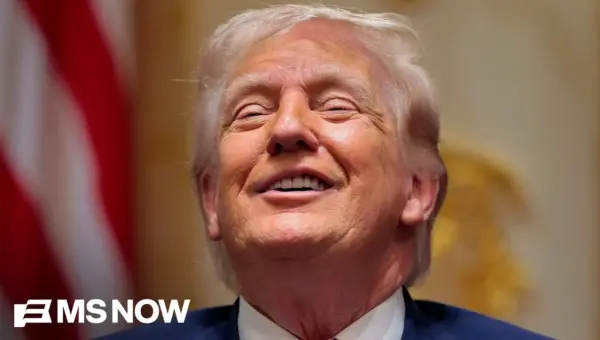
Trump’s Name Everywhere: A ‘Stain’ on GOP Legacy?
Former President Donald Trump's efforts to brand national symbols, including a proposed signature on dollar bills, spark debate. Critics view this as an authoritarian attempt to embed his legacy, potentially staining the Republican Party's history and contrasting with democratic ideals of public ownership.
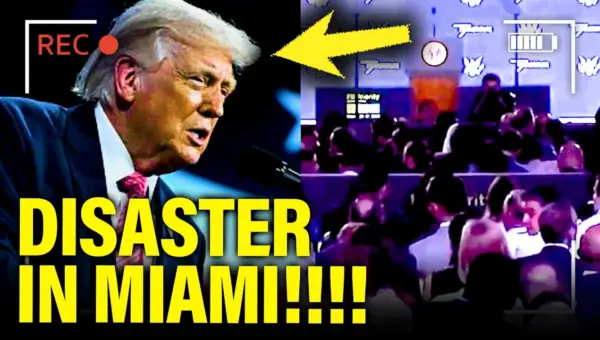
Trump’s War Talk Stuns Financial Crowd
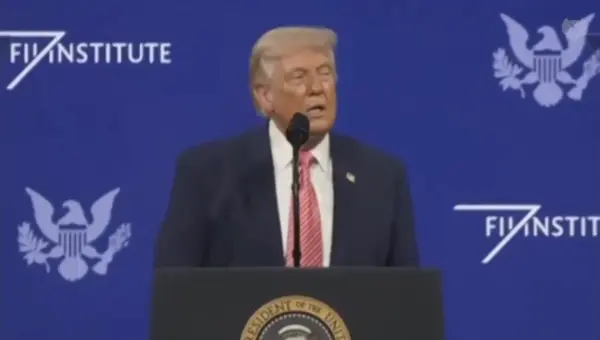
Donald Trump's recent speech in Miami focused on his foreign policy, particularly his critical views on NATO and his vision for international relations. He declared the U.S. would no longer defend NATO allies, questioned the value of existing alliances, and suggested renaming the Strait of Hormuz. The speech also touched on his personal views of success, his allies, and his perceived role as a global peacemaker.
Trump’s Warpath: New Threats Signal Imperial Ambitions
Recent statements from Donald Trump reveal a potential embrace of increased military action and interventionist foreign policy. This approach, characterized by critics as "imperialism 2.0," contrasts with his past promises of peace and has even drawn criticism from parts of his own base. The implications for U.S. global engagement and domestic priorities are significant.