Iran Threatens Regional Chaos if US Hits Power Plants
Former U.S. President Donald Trump has threatened to "obliterate" Iran's power plants if the Strait of Hormuz is not reopened within 48 hours. Iran has responded by vowing to shut down the vital waterway and retaliate against regional energy facilities. Experts suggest Iran may view the threat as rhetoric unless backed by military action, but the situation heightens regional tensions and risks economic disruption.


Iran Vows Retaliation as Strait of Hormuz Tensions Escalate
The Strait of Hormuz, a vital global oil and gas route, has become the flashpoint for a new international crisis. Former U.S. President Donald Trump issued a stark ultimatum to Iran on Saturday evening, demanding the immediate reopening of the strategic waterway. Trump stated on his Truth Social platform that if Iran does not fully open the Strait of Hormuz within 48 hours and cease threats, the United States will “hit and obliterate their various power plants, starting with the biggest one first.” This bold statement has been met with an equally forceful response from Tehran, which has threatened to shut down the strait entirely if the U.S. follows through. The escalating rhetoric raises fears of wider regional conflict.
Iran’s Infrastructure Threatens Wider Impact
In response to Trump’s threat, Iran has warned that targeting its energy infrastructure could lead to the irreversible destruction of energy facilities across the Middle East. This sentiment is echoed by the Iranian public, with one resident in Tehran stating, “We have responded to the US president. If Iran’s electricity is cut off, the entire region must be cut off.” The public largely views such threats as propaganda. However, they also express strong support for the military’s response, indicating a unified stance against perceived aggression.
Expert Analysis: Rhetoric vs. Reality
Rowena Binti Abdul Razak, a lecturer on Middle Eastern and African history at the University of London’s School of Oriental and African Studies, believes Iran is unlikely to view Trump’s threat as an immediate military reality. “Trump has said many things,” Razak noted, suggesting that Iran’s leadership typically responds to actions, not just words. “Whatever Trump says, at this point, I think from the perspective of the Iranian leadership, it’s just mere rhetoric,” she explained. Iran’s strategy has often involved economic pressure, such as threatening to push oil prices to $200 per barrel. Razak emphasized that Iran would only perceive the threat as serious if it were backed by substantive military action, rather than just political posturing.
Strait of Hormuz: A Critical Global Chokepoint
The Strait of Hormuz is a narrow waterway through which approximately one-fifth of the world’s oil and liquefied natural gas passes. Its strategic importance cannot be overstated. “The Strait of Hormuz is very important, and I think, as you rightly pointed out, it’s only with some sort of crisis like this do we really realize,” Razak stated. Even countries far from the region, like Malaysia, depend heavily on the strait, with 50% of its oil passing through it. Previous crises have seen Iran limit ship traffic, but the current situation is considered more dangerous due to heightened regional tensions. The ongoing conflicts and the presence of more warships in the area contribute to a volatile environment.
Wider Regional Instability and Economic Impact
The current crisis unfolds against a backdrop of broader instability in the Gulf region. Iran’s actions, including alleged attacks on its Arab Gulf neighbors, have increased tensions. While the U.S. may not find widespread military support for a mission in the Strait of Hormuz, the general unease is palpable. Limitations on what can pass through the strait are already affecting the global economy. “It does definitely feel a little bit more highly tensed than previously,” Razak observed, highlighting concerns over missile activity and disruptions to oil tankers.
Targeting Civilian Infrastructure: A Controversial Tactic
Trump’s threat to target Iran’s power plants is particularly controversial because these are civilian energy sites. While hitting civilian targets is not entirely unprecedented in conflicts involving Iran, explicitly naming them as targets is significant. Razak pointed out that Iran itself has targeted civilian sites, including desalination plants crucial for water supply in the Gulf. “It seems like one of America’s playbooks in terms of hitting a civilian site,” she noted, adding that “basic rules of conflict kind of going out the window in a way.” This suggests a blurring of lines between military and civilian targets, where “everything is almost fair game.”
U.S. Strategy: Weakening Iran Beyond Military Means
The explicit threat to civilian infrastructure suggests a broader U.S. strategy aimed at weakening Iran not just militarily, but also economically and socially. The goal may be to undermine the Iranian government’s legitimacy and potentially provoke internal dissent. Razak explained that targeting civilian sites could be an attempt to break the bond between the Iranian people and their government. “He wants to threaten not just the Iranian government, but the Iranian people as well,” she stated. By exposing the country’s vulnerabilities and the costs of conflict, the U.S. aims to erode public support for the regime.
Iran’s Likely Response: Tit-for-Tat Escalation
If the U.S. were to follow through on its threats, Iran’s response is likely to be a continuation of its existing strategy: tit-for-tat retaliation. As an asymmetrical power compared to the U.S., Iran cannot win a direct military conflict. Therefore, it is expected to continue targeting Arab Gulf states, potentially including energy sites beyond U.S. military bases. “I don’t think it’s going to necessarily change Iran’s tactics so far, strategic tactic, but we’ll definitely see more outpouring of grief from the Iran side and an escalation of what they’ve been doing so far,” Razak concluded. The situation remains highly tense, with potential for further escalation.
Source: How will Tehran respond if Washington follows through on Trump's threat? (YouTube)

Related Articles

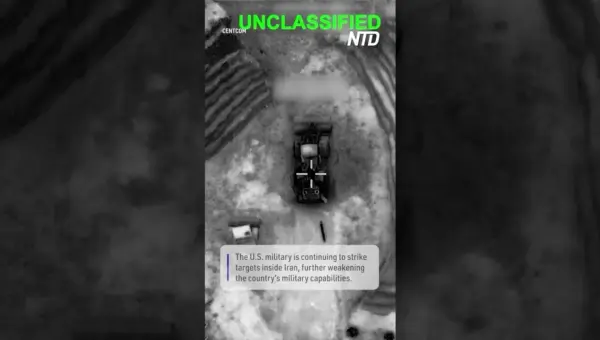
US Strikes Cripple Iran’s Military Might, CENTCOM Reports
U.S. Central Command reports ongoing strikes inside Iran are significantly weakening its military power. This direct action aims to reshape regional security dynamics, but carries risks of escalation. The long-term impact depends on Iran's response and ability to adapt.

U.S. Iran Tensions Rise Amid Shifting Alliances
Rising tensions between the U.S. and Iran are creating a volatile geopolitical situation. With conflicting signals on de-escalation and potential shifts in alliances like NATO and U.S.-Israel relations, the path forward remains uncertain. The global economy and regional stability hang in the balance.


Iran Targets US With Cyberattacks, Escalating Digital Warfare
Iran is increasingly using cyberattacks to challenge the U.S., as seen in a recent hack of the FBI director's account. Experts say this is a strategic shift due to Iran's limitations in conventional warfare. The U.S. needs to strengthen its digital defenses, focusing on encryption and cloud computing, rather than solely relying on traditional security measures.