Russia Admits Regions Unsafe Amid War Setbacks
Russia's Security Council Secretary has admitted that no Russian region is safe, signaling a major shift in the Kremlin's narrative. This acknowledgment comes as Ukraine continues to achieve strategic successes on the battlefield, impacting Russian forces and infrastructure. The admission suggests Russia is on the defensive, facing mounting internal and external pressures.


Kremlin Acknowledges Widespread Vulnerability
A significant admission from Russia’s security council secretary, who oversees the nation’s safety, has revealed that not a single Russian region is considered safe anymore. This statement, largely overlooked amid broader global conflicts, signals a critical shift in the Kremlin’s narrative and suggests internal acknowledgment of mounting pressures.
Security Chief’s Admission Sparks Concern
The secretary of Russia’s Security Council, a key figure within Vladimir Putin’s inner circle, has publicly stated that national security is compromised. This admission directly contradicts the council’s mandate to ensure safety across the entire Russian Federation. Analysts suggest this public acknowledgment of failure could lead to severe repercussions for the official, though he appears to retain presidential protection for now.
This development represents a crucial moment in the information war. For years, President Putin and his allies have meticulously controlled the narrative surrounding the conflict in Ukraine. Now, with this admission, the Kremlin may pivot to blaming NATO for attacks within Russia. Expect increased rhetoric portraying the war as an existential struggle against NATO expansionism, rather than a conflict with Ukraine itself.
Ukraine’s Strategic Gains Undermine Russian Position
Privately, this statement is seen as a clear admission that Russia is on the defensive. Over the past two years, Ukraine has achieved significant strategic successes. While international negotiations have reached a stalemate, Ukraine has effectively impacted Russia’s war effort at the operational and tactical levels.
Operational Impact: Targeting Infrastructure
Ukraine’s strategy of targeting Russia’s oil and gas infrastructure has severely impacted its economy. Although temporary sanctions relief has offered some mitigation, Ukraine maintains the initiative, dictating the pace of operations. Russia’s response has largely been to attack civilian targets within Ukraine, a tactic seen as reactive rather than strategic.
Tactical Successes: Disrupting Russian Forces
At the tactical level, Ukraine has not only halted Russian advances but has begun to reverse them in several areas. While front lines remain largely static, Ukraine’s actions are successfully disrupting Russian forces. This prevents Russia from concentrating its troops for planned offensives, further pushing Moscow onto the back foot.
Putin’s Strategic Miscalculation
The war’s trajectory shifted dramatically on the first day. Putin’s initial plan, designed for a swift takeover, failed due to underestimating Ukrainian resistance and over-relying on flawed intelligence. The failure to capture Kyiv and neutralize leadership, coupled with strong Ukrainian defense at key airfields, crippled the Russian advance.
Lessons from Early Failures
Russia’s military doctrine, often characterized by scripted exercises rather than adaptable real-world scenarios, proved inadequate. The failure of the initial airborne assault and subsequent ground link-up highlighted poor planning and execution. This strategic setback forced a shift in Russian objectives, allowing Ukraine to consolidate its forces and regain momentum.
The Wider Geopolitical Chessboard
The conflict in Ukraine is increasingly influenced by global events, particularly the war involving Iran. This has complicated political dynamics, especially concerning potential U.S. support. While former President Trump has shown less interest in Ukraine, he remains amenable to U.S. arms sales to Europe for Ukraine’s benefit, alongside continued U.S. intelligence sharing.
Shifting Alliances and Defense Contracts
Ukraine’s expertise in countering drone threats, particularly the Shahed-136, has become a significant diplomatic asset. This capability has garnered international attention and potential defense contracts for Ukrainian companies. This development positions Ukraine as a valuable military-industrial partner, potentially bolstering support from the Middle East and Europe.
Patriot Missiles and Supply Chain Concerns
A critical concern is the potential shortage of high-technology equipment, specifically Patriot air defense missiles. These are vital for countering advanced Russian threats. A reduction in supply could significantly impact Ukraine’s defensive capabilities, necessitating rapid alternative solutions.
Stalled Negotiations and Putin’s Calculus
Peace negotiations remain stalled, with Russia showing little willingness to compromise. Putin appears to believe a military victory is still possible, especially with perceived shifts in international support. The lifting of sanctions on Russian oil, even temporarily, reinforces his belief that he can influence global economic policies.
Putin’s Incentive to Continue the War
From Putin’s perspective, ending the war prematurely without a decisive victory could lead to severe internal consequences. Without a clear plan for reintegrating military personnel or revitalizing the war-strained economy, prolonged conflict offers a means of maintaining control. This makes continuing the war a strategic imperative for his regime’s survival.
The Trump Factor and Russian Strategy
The relationship between former President Trump and Ukrainian President Zelenskyy remains a complex factor. Trump’s apparent frustration with Zelenskyy’s support for Joe Biden and potential business interests linked to Russia, possibly facilitated through advisors like Steve Witkoff, influence his stance. While it’s unclear if Trump is a Russian asset, his actions and rhetoric suggest a willingness to prioritize personal or business dealings over traditional geopolitical alliances.
Conclusion: A War of Attrition and Information
The admission of regional vulnerability in Russia, coupled with Ukraine’s ongoing tactical and operational successes, indicates a protracted conflict. Both sides are engaged in a complex struggle, not just on the battlefield but also in the information domain. The international community’s attention remains divided, making sustained support for Ukraine a critical challenge.
Source: ⚡️Kremlin ADMITS collapse: not a single Russian region is SAFE @WorldatStake24 (YouTube)

Related Articles

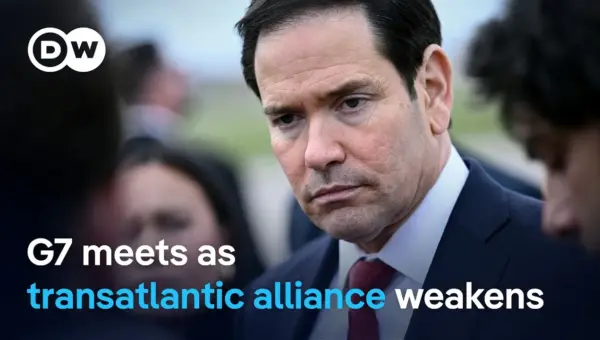
G7 Allies Clash Over Iran War Strategy, Urge Focus on Russia
G7 foreign ministers met in Paris, revealing deep divisions over the U.S. war with Iran. European allies urged the U.S. to pressure Russia, linking its actions to the conflict and fearing support for Ukraine will wane.

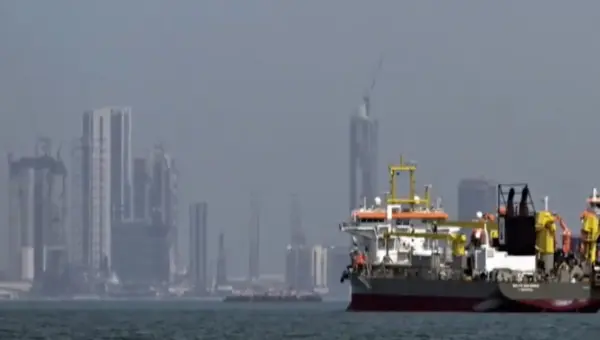
Iran Blocks China Ships, Exposing Beijing’s Weak Grip
Iran's recent decision to block Chinese ships at the Strait of Hormuz is exposing the limits of Beijing's influence in the Middle East. This action is causing delays and cancellations for Chinese manufacturers, turning a perceived geopolitical win into an economic strain.
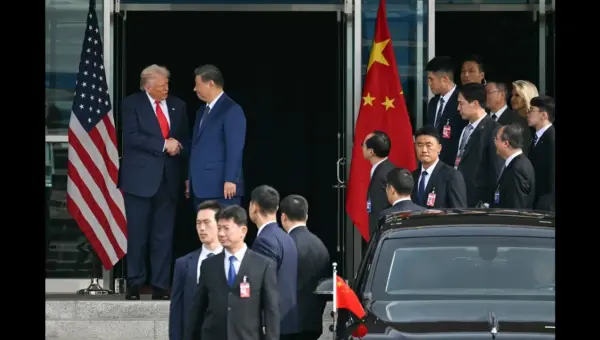
Trump’s “Walk Away” Tactic Signals Tougher Stance on China
Retired Air Force Brigadier General David Stillwell believes President Trump's strategy of being willing to walk away from negotiations puts pressure on China. This tactic, combined with US global actions and strengthened alliances, signals a more assertive American foreign policy.