Russia Hints at Talks Amid Regional Military Buildup
Moscow signals interest in renewed negotiations while bordering nations bolster defenses and Sweden warns of Russian intelligence gathering. Meanwhile, the EU faces internal divisions over Ukraine aid, and Ukraine develops advanced counter-drone tactics.


Kremlin Signals Negotiation Interest Amid Geopolitical Tensions
The Kremlin has again brought up the possibility of negotiations regarding Ukraine, though specifics remain scarce. Dmitry Peskov, a spokesperson for the Russian government, stated that Moscow hopes to return to a trilateral format for discussions. However, current interactions are limited to bilateral talks between Ukraine and Washington. The fundamental questions of when and where future meetings might occur remain unanswered.
This approach appears to be a familiar strategy to pause the process and gain time. “These will be bilateral contacts between the Ukrainians and the Americans,” Peskov noted. He added, “The pause is temporary. We hope it’s temporary regarding the continuation of the trilateral format. We hope that we will be able to continue these talks in the near perspective.”
Eastern Europe Bolsters Defenses
While Moscow speaks of negotiations, nations bordering Russia are preparing for a different reality. Lithuania plans to establish a new military training ground near the Suwalki Gap. This region, situated between Kaliningrad and Belarus, is considered one of Europe’s most sensitive strategic areas. The project is expected to cost around €100 million.
This development signals a shift from mere statements to concrete preparations for a prolonged confrontation. Poland initially expressed interest in the training ground but later withdrew. Reports suggest this decision is linked to Warsaw’s territorial interests and potential geopolitical consequences. The planned site near Kalvarija could impact security in the Suwalki Gap and influence military infrastructure development across Eastern Europe.
Sweden Warns of Russian Intelligence Operations
Sweden is also on alert, with its security service warning that Russia is preparing for more unpredictable actions. Intelligence indicates that Russian agents are systematically gathering information on Sweden’s critical infrastructure. This includes not only military sites but also energy, transport, and digital systems essential for the country’s functioning.
Ukraine’s Center for Countering Disinformation suggests this activity may signal the early stages of preparation for sabotage or disruptive operations. Sweden officially identifies Russia as a source of threats, citing cyber attacks, airspace violations, and potential sabotage in the Baltic Sea. Unusual methods, such as using religious sites for intelligence gathering, have also been noted. This coordinated approach, from reconnaissance to potential strikes, reflects a broader pattern of hybrid aggression by Russia against Europe.
Economic Factors Influence the Conflict
The ongoing conflict in the Middle East could provide a significant financial boost to Russia. If the conflict continues into the autumn, Russia might earn up to $250 billion more from rising oil and gas prices. Projections suggest oil prices could reach $100 per barrel in the short term and $140 long-term. Extended conflict could push prices to $200, potentially raising Russia’s total energy revenues above $380 billion, offering financial relief despite sanctions and war expenditures.
However, Russian officials acknowledge the situation’s complexity. The central bank has lowered its key interest rate to 15% to support a slowing economy. It warns that the Middle East conflict’s impact is mixed, offering short-term gains from higher energy prices but posing long-term risks to trade, logistics, and global demand. While higher commodity prices support export revenues and the ruble, a prolonged Middle East conflict could negatively affect global demand and investment, potentially leading to inflation in energy-importing nations and supply chain disruptions.
EU Faces Internal Divisions Over Ukraine Aid
The Kremlin has adopted more aggressive rhetoric towards the European Union, accusing it of provoking the continuation of the war. Peskov questioned why the EU supports Ukraine instead of pushing for peace, framing European policy as escalation rather than defense. This narrative shifts blame outward, sidestepping Russia’s role in initiating the conflict.
Simultaneously, Russia projects confidence in its energy sector, stating it is ready to redirect oil and gas exports to more profitable markets if Europe reduces its reliance. However, Europe has been steadily decreasing its dependence on Russian energy since 2022, suggesting Russia’s pivot is a forced adaptation.
Internal divisions within the EU persist regarding financial support for Ukraine. At a recent summit, EU leaders attempted to pressure Hungarian Prime Minister Viktor Orbán into approving a €90 billion aid package for Ukraine, but he maintained his opposition. This repeated blockage is seen as a systematic disruption of EU unity.
Ukrainian President Volodymyr Zelenskyy has refused to compromise on key issues, including the controversial Dneiper pipeline, which continues to fund Russia’s war. Despite expectations from some European leaders that Zelenskyy might offer Orbán a political concession, he did not. Orbán has used this stance in his political campaign, framing it as defending Hungarian interests against alleged Ukrainian actions.
The deadlock led EU leaders to postpone the decision. Attention now shifts to Hungary’s upcoming elections on April 12, which may influence future decisions. While Ukraine urgently needs the EU funding, President Zelenskyy secured a temporary reprieve with an $8.1 billion loan approval from the International Monetary Fund, expected to maintain solvency until early May.
Belarusian Negotiations and Shadow Fleet Risks
Belarusian President Alexander Lukashenko is reportedly planning a trip to the United States for a peace council. This development is viewed cynically, given that Russian military assets have operated from Belarusian territory against Ukraine. Lukashenko claims that representatives of Donald Trump offered him a deal involving partial sanctions relief, reopening the US embassy in Minsk, and discussions on nuclear materials and political prisoners.
Lukashenko has already released some prisoners and stated his agreement with the proposal. This situation highlights a regime actively supporting Russia’s war while negotiating normalization with Washington without fundamentally changing its stance. Belarus continues to serve as a military platform for threats against Ukraine, despite discussions about peace.
Meanwhile, a Russian tanker, believed to be part of Moscow’s “shadow fleet” used to evade sanctions, is drifting uncontrollably in the Mediterranean. The vessel has been adrift for nearly two weeks following a suspected sea drone strike. It is now moving towards Libya, posing a significant environmental risk with hundreds of tons of heavy oil and diesel on board. Officials are concerned about potential impacts on oil platforms and coastal areas, though the quantity of hydrocarbons on board is reduced from its original cargo.
Ukraine Develops Counter-Drone Capabilities
Ukraine is evolving beyond simply defending against Russian drones, actively developing capabilities to intercept them. At the Yatagan School for Unmanned Aerial Systems, cadets are training to destroy incoming drones, including Russian Shahed models, mid-air. Using interceptor drones like Sting, operators are learning to engage high-speed airborne targets, often at night, requiring real-time trajectory calculations.
This represents a new specialization in warfare, focusing on trained operators as much as technology. Ukraine’s experience in countering these threats is gaining international recognition, with Middle Eastern countries seeking Ukrainian expertise in combating Iranian-designed drones. This transformation of a perceived weapon of fear into a solvable problem highlights Ukraine’s adaptive advantage derived from the conflict.
Instructors express satisfaction as their graduating cadets successfully down enemy drones. “It’s very pleasant to realize this fact that I’ve taught someone and it works,” said one instructor. “The people I taught do it. And it’s great to shoot down this creature that prevents everyone from living, sleeping, and simply kills people.”
Source: ⚡️Moscow reacted to the talks with Kyiv! Peskov’s statement surprised everyone. Putin is alarmed (YouTube)

Related Articles

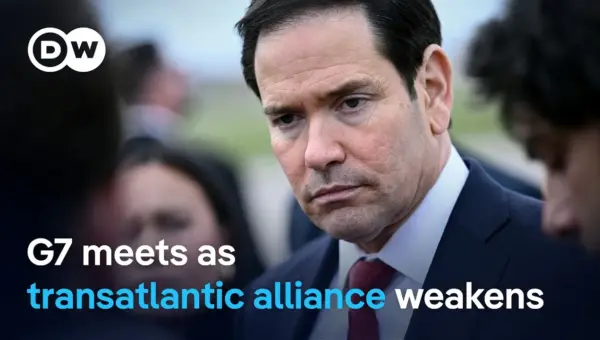
G7 Allies Clash Over Iran War Strategy, Urge Focus on Russia
G7 foreign ministers met in Paris, revealing deep divisions over the U.S. war with Iran. European allies urged the U.S. to pressure Russia, linking its actions to the conflict and fearing support for Ukraine will wane.
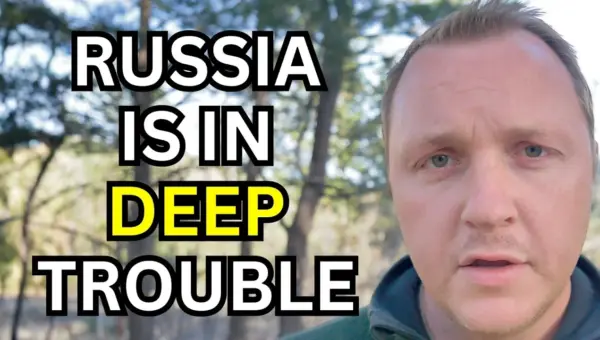
Ukraine’s New Strategy Cripples Russian Oil Exports
Ukraine's new multi-layered strategy is rapidly disabling Russia's oil export capabilities. By attacking loading facilities and working with allies to intercept the "shadow fleet," Ukraine is significantly reducing Russia's oil revenues, even amidst rising global energy prices.

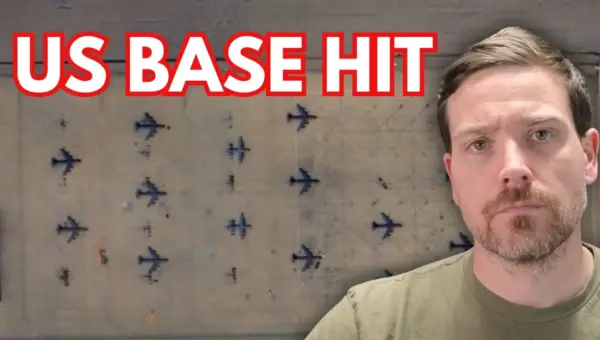
Iran Strikes US Base: Are We Learning from Mistakes?
A recent Iranian drone and missile attack wounded American service members and damaged aircraft in Saudi Arabia. This incident highlights concerns about military preparedness and the failure to learn from past mistakes, as exposed aircraft remain vulnerable targets. The ongoing conflict involves complex regional dynamics, including Iran's missile capabilities and the potential involvement of groups like the Houthis, raising questions about future stability.