Iran Strikes Israel; Trump Threatens “Obliteration”
Iran launched missile strikes on southern Israel and a remote U.S.-UK base, escalating a conflict now in its fourth week. President Trump responded with a stark warning, threatening to "obliterate Iran's power plants" if the Strait of Hormuz is not opened within 48 hours.


Middle East Conflict Escalates: Iran Targets Israel, Trump Issues Stark Warning
In a significant escalation of the ongoing conflict, Iran launched missile strikes targeting two communities in southern Israel late Saturday. The attacks, occurring near Israel’s primary nuclear research center, shattered buildings and injured dozens, marking a dangerous new phase as the war enters its fourth week. Simultaneously, President Donald Trump issued a severe threat, warning that the United States would “obliterate Iran’s power plants” if Iran did not fully open the Strait of Hormuz within 48 hours. This ultimatum prompted swift condemnation from Tehran, which vowed to retaliate against U.S. and Israeli energy and infrastructure assets in the region.
Iran’s Expanding Reach: Strikes Target Israel and Beyond
The missile attacks on southern Israel were not Iran’s only significant military action. The nation also targeted the joint U.S.-UK military base on Diego Garcia in the Indian Ocean, an astounding distance of approximately 2,500 miles. This long-range strike suggests Iran may possess missiles with a greater reach than previously acknowledged, or it may have utilized its space program for improvised launches. These actions underscore Iran’s growing capabilities and its willingness to project power far beyond its immediate borders.
International Pressure Mounts Over Strait of Hormuz
As Iran threatens shipping through the vital Strait of Hormuz, global pressure is increasing to ensure safe passage for maritime trade. The United Arab Emirates has joined 21 other nations, including the United Kingdom, Germany, France, and Japan, in expressing their readiness to contribute to efforts guaranteeing secure transit. The potential closure of this critical waterway, a major route for global energy supplies, poses a significant threat to the world economy.
Humanitarian Toll: Casualties and Displacement Rise
The escalating conflict has resulted in a grim humanitarian toll. Reports indicate that over 1,500 people have died in Iran, with more than 1,000 casualties in Lebanon. Israel has reported 15 deaths, while 13 U.S. military members have also been killed, alongside numerous civilians in the Gulf region. Millions of people in Lebanon and Iran have been displaced by the fighting, highlighting the devastating impact on civilian populations.
Netanyahu Condemns Iran, Calls for Global Action
Israeli Prime Minister Benjamin Netanyahu has strongly condemned Iran’s actions, citing the missile attacks on Israeli cities, near sacred sites in Jerusalem, and on the UK military base as clear evidence that Iran poses a global threat. In a video statement, Netanyahu stated, “If you want proof that Iran endangers the entire world, the last 48 hours have given it.” He detailed how Iran targeted civilian areas, fired missiles near holy sites of Judaism, Christianity, and Islam, and launched long-range missiles, all while attempting to blackmail the world by threatening a key energy route. “This regime that threatens the entire world has to be stopped,” Netanyahu declared, urging international leaders to join Israel and the United States in confronting what he termed a “terrorist fanatic regime.”
U.S. Strategy: Targeting the Regime, Not Civilians
In response to the attacks, Israeli officials stated they are responding with “great force,” but emphasized that their actions are directed at the Iranian regime, its leaders, and its assets, not at civilians. Prime Minister Netanyahu outlined clear goals for the campaign: to completely break Iran’s nuclear and missile programs and its capacity to produce related components. He also expressed a hope for creating conditions that would allow the Iranian people to overthrow their current government.
Expert Analysis: Iran’s Shifting Strategy and International Alliances
Jonathan S., an Iran program research analyst at the Foundation for Defense of Democracies, provided insights into Iran’s strategic decisions and its limited options for international support. He noted that Iran’s decision to involve proxies like the Houthis in Yemen, which had been relatively quiet until recently, suggests a sense of desperation and paranoia as the situation escalates. Iran’s best chance for support, according to S., would have been from neutral states, but by attacking regional neighbors, Iran has alienated potential mediators. He also highlighted that European nations have a greater stake in securing the Strait of Hormuz due to their reliance on oil flow and supply chains, urging them to increase their involvement alongside the United States.
Sanctions Relief and Its Implications
The report also touched upon a complex U.S. decision to lift some sanctions on Iranian oil, a move intended to ease pressure on global energy markets. However, S. cautioned that this is a temporary measure and carries significant risks for third-party actors. He stressed the need for robust mechanisms to ensure that any funds generated do not finance terrorism or Iran’s destabilizing activities, a concern that has not yet been fully addressed.
Houthis’ Role and the Strait of Hormuz Chokepoint
The involvement of Houthi rebels in Yemen in threatening the Strait of Hormuz is seen as a strategic move by Iran. S. explained that Iran doesn’t need sophisticated military might to target civilian vessels in these crucial chokepoints; basic drones and rockets can suffice. This strategy effectively holds the global economy hostage, impacting supply chains worldwide. The analyst also noted the difficulty and cost associated with dismantling the Houthis’ capabilities, as their network relies on relatively low-cost operations compared to the significant resources the U.S. must deploy.
Internal Repression: Executions and Protests
The discussion also turned to the internal situation within Iran, including reports of public executions, such as that of a 19-year-old wrestler. S. described these executions as medieval tactics used to terrorize the population and deter unrest, often following sham trials. He emphasized that this brutal practice continues regardless of political shifts or international negotiations, highlighting Iran’s status as a state with one of the highest execution rates per capita. While there are signs of potential unrest and calls for Iranians to resist, the population appears to be on standby, waiting for momentum. Notably, Turkey has reported more Iranians entering the country than leaving, suggesting a sense of finality among some citizens.
Information Flow and Future Outlook
Despite government efforts to control information, Iranians are largely aware of the international response, or lack thereof, to the conflict. State media even boasts about targeting civilian infrastructure as an achievement. Citizen reporting on social media plays a crucial role in verifying claims about Iran’s military operations. Looking ahead, analysts believe that effectively dismantling the Iranian regime requires a dual strategy: decapitating its leadership and weakening its vast apparatus. The coming week is seen as critical, as a stalemate is an undesirable outcome for all parties involved, pushing towards a decisive resolution.
Source: Iran hits southern Israel as President Trump issues new threats (YouTube)

Related Articles


Israelis Forge Resilience Amidst Constant Bomb Shelter Drills
Life in Israel is a blend of resilience and constant vigilance, with many families adapting to frequent bomb shelter drills and even sleeping in makeshift shelters. Despite ongoing missile attacks, Israelis strive to maintain normalcy, though businesses face disruption and emotional fatigue is a growing concern.
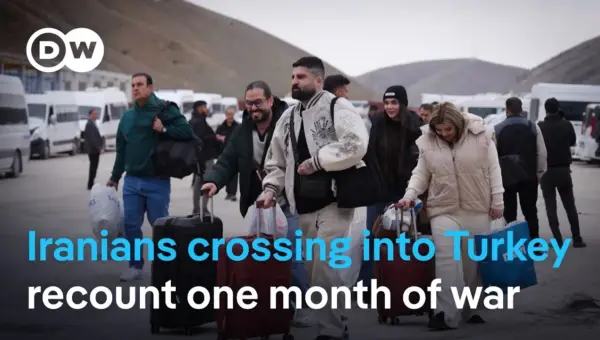
Iran War Exodus: Refugees Flee to Turkey Amidst Bombings
A train from Tehran brings refugees to Turkey, fleeing daily bombings and economic collapse. Many express deep fear for loved ones left behind, while some hold onto national pride and hope for victory. The conflict's impact is also felt economically in Turkey, with rising gas prices.


Israel Escalates Iran Strikes, Warns of Wider War
Israel has launched significant strikes inside Iran following continued missile fire, warning of further escalation. The conflict risks wider regional instability and economic disruption, especially concerning the Strait of Hormuz.