Cuba Responds to Trump’s Threats: Military Ready, Seeks Respectful Ties
Cuba's Deputy Foreign Minister, Carlos Fernandez de Cossio, stated the nation is sovereign and will not be taken over by the U.S., emphasizing military preparedness amidst threats. While open to dialogue, Cuba rejects U.S. demands for regime change and views internal matters as non-negotiable. The nation faces severe fuel shortages due to alleged U.S. actions but insists it is not collapsing, attributing hardship to external economic aggression.


Cuba Rejects U.S. Takeover Threats, Military on Alert
Cuba’s Deputy Foreign Minister, Carlos Fernandez de Cossio, has strongly rejected any notion of the United States taking over Cuba, stating the nation is sovereign and will not accept becoming a dependent state. Speaking in response to President Trump’s recent remarks about potentially “taking” or “freeing” Cuba, Cossio emphasized Cuba’s right to self-determination. “Cuba would not accept to become a vassal state or a dependent state from any other country or any other superpower,” he declared.
The Cuban government has made it clear that any external aggression would be met with “impregnable resistance.” While hoping for no military conflict, Cossio confirmed that Cuba’s military is actively preparing for the possibility of aggression. “We would be naive if looking at what’s happening around the world we would not do that,” he stated, though he stressed there is no justification for military action against Cuba, which he described as a peaceful country not posing a threat to the U.S.
Dialogue Over Domination: Cuba’s Stance on Negotiations
Despite the strong rhetoric, Cuba remains open to dialogue with the United States. Cossio clarified that while discussions are ongoing, they do not involve negotiating the nature or structure of the Cuban government. “The nature of the Cuban government, the structure of the Cuban government and the members of the Cuban government are not part of the negotiation,” he explained. “That is something that no sovereign country negotiates.”
Cuba believes that many of the challenges it faces are a direct result of U.S. policies aimed at harming its economy and society. Cossio asserted that the U.S. government understands this pressure makes it difficult for Cuba to manage its affairs effectively. He stressed that regime change is “absolutely off the table” in any discussions.
U.S. Demands vs. Cuban Sovereignty
The United States has outlined specific conditions for lifting the embargo, including scheduled elections, recognition of political parties and unions, a free press, and the release of all political prisoners. Cuba views these demands as internal matters, not subjects for negotiation with a foreign power.
Regarding political prisoners, Cossio stated, “It’s a domestic issue of Cuba. It is not a bilateral issue with the United States.” He drew a parallel to the U.S. having a large number of incarcerated individuals who hold strong political positions. Similarly, he argued that the U.S. system of two major political parties is not something it would negotiate with another country.
Seeking Common Ground: Areas for Cooperation
Cuba’s ultimate goal in discussions is to build a respectful relationship. The Deputy Foreign Minister highlighted several areas where cooperation could benefit both nations. These include working together to fight drug trafficking, organized crime, and regional threats. He also pointed to potential business opportunities, noting recent changes in Cuba’s investment policies and property structures that could interest American businesses, which are currently prohibited from operating in Cuba by their own government.
“We can work together to fight drug trafficking. To fight organized crime in our region, to fight threats in general in our region,” Cossio stated. “Those are the kinds of issues that we believe are of interest of the people of the United States and for the government of the United States.”
Navigating Complex Relations: Dialogue with Secretary Rubio
When asked about negotiating in good faith with Secretary of State Marco Rubio, whose family history involves strong criticism of the Cuban government, Cossio maintained Cuba’s consistent position. “We are ready to negotiate with the person that the US Government as a sovereign nation designates as their spokesperson,” he said. “We don’t interfere with that.” He emphasized that dialogue is the logical and necessary path for resolving issues between the two countries, despite past instances where the U.S. has reversed agreements.
Cossio acknowledged reports of Secretary Rubio dealing directly with Raul Castro’s grandson but declined to go into detail, stating that the Cuban political leadership is united on this matter, led by Raul Castro and the President of Cuba. He stressed that Cuba’s commitment to dialogue is a long-standing and logical position, viewing it as the only viable alternative to having problems with another country.
Cuba’s Resilience Amidst Economic Hardship
The interview also addressed the severe fuel shortage affecting Cuba, which the U.S. has described as an oil blockade. Cossio explained that while it is legal for any country to export fuel to Cuba (except the U.S. due to blockade regulations), the U.S. is threatening punitive measures against nations that do so. This has led to severe consequences, including thousands of Cubans awaiting surgery due to lack of energy.
Despite these challenges, Cossio insisted that Cuba is not in a state of collapse. “We’re being as creative as possible. We’re mustering all our creativity, our ingenuity to try to find ways in which we can cope with the reality that we did not choose,” he stated. He firmly rejected claims that Cuba’s system has failed, attributing the current suffering to U.S. economic aggression rather than internal systemic flaws. He highlighted Cuba’s strong human development indicators, even when compared to developed nations, focusing on the welfare of the population over the wealth of a few.
A Message of Peace and Openness
In his closing remarks, Deputy Foreign Minister Carlos Fernandez de Cossio conveyed a message of peace and openness to President Trump. “Cuba has no quarrel with the United States. We do have the need and the right to protect ourselves, but we are willing to sit down,” he said. “We’re open for business and we’re open to having a respectful relationship.” He expressed confidence that such a relationship would be supported by the majority of Americans if meaningful discussions could take place.
Source: Cuban deputy FM reacts to Trump’s threats to take over Cuba: Full interview (YouTube)

Related Articles

MAGA Voters Divided Over Potential Iran War
The potential for a US war with Iran has sparked debate at CPAC, revealing a divided MAGA base. While some support military action, many express concerns over prolonged conflicts and rising economic costs, particularly higher gas prices.
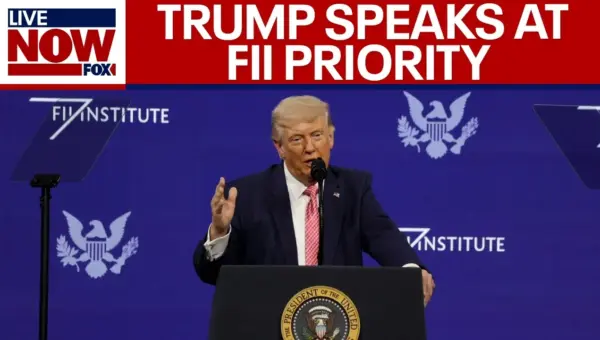
Trump Boasts Military Might, Slams Iran at Investment Summit
Former President Donald Trump spoke at the FII Priority Summit, detailing his administration's assertive stance against Iran and emphasizing the strength of the U.S. military. He claimed credit for dismantling Iran's military capabilities and preventing its nuclear ambitions. Trump also criticized NATO while praising Middle Eastern allies and touched on domestic issues like border security.

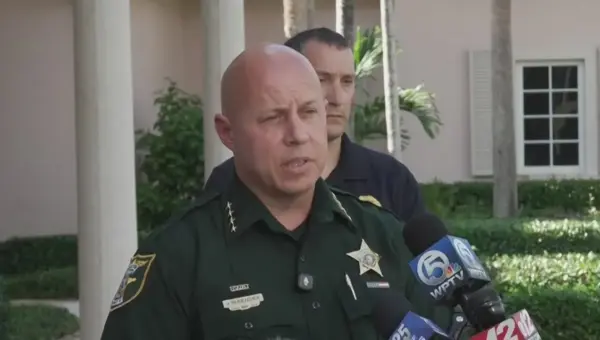
Tiger Woods DUI Arrest Sparks Political Ripples
Golf legend Tiger Woods was arrested for DUI in Florida after a rollover crash, showing signs of impairment not related to alcohol. President Trump commented on the incident, noting a personal connection through Woods' girlfriend.