US Faces Global Scrutiny Over War Strategy, Domestic Issues
The United States faces growing scrutiny over its foreign policy and domestic challenges. Questions linger about the effectiveness of current military actions, while concerns mount over government transparency regarding sensitive documents and the impact of political gridlock on essential services like airport security.


US Faces Global Scrutiny Over War Strategy, Domestic Issues
The United States is currently navigating complex international challenges and domestic pressures, sparking debate about its foreign policy decisions and their impact at home. Recent events highlight concerns over the effectiveness of military actions, the handling of sensitive information, and the growing economic strain on American citizens.
Questions Arise Over War Aims and Execution
Despite declaring victory in a conflict, referred to as ‘Operation Epic Fury,’ nearly two weeks ago, the targeted regime remains intact and continues to inflict harm on its own people. This situation raises questions about the stated goals and actual outcomes of the military campaign. The president’s declaration of victory contrasts sharply with the ongoing violence and the request for thousands of additional troops and substantial funding.
Adding to the complexity, a second front in Lebanon has rapidly escalated, creating a more dangerous and bloody situation. The administration’s approach to the conflict has been questioned, particularly regarding transparency about civilian casualties and collateral damage. A previous incident involving the bombing of a school, which was reportedly mishandled, has fueled these concerns. The conflicting messages from the president—declaring victory while seeking more resources and allies, after previously criticizing allies—leave many confused about the long-term strategy.
Furthermore, the administration’s stated position of not seeking a ceasefire but also not pursuing regime change presents a dilemma. If the regime poses an imminent threat, why isn’t a complete removal of its power the objective? Conversely, if the goal is not regime change, why not pursue quicker, less intrusive methods like remote bombing, as done previously?
Domestic Concerns Mount Amidst Foreign Engagements
While the nation is focused on international conflicts, significant domestic issues are being overshadowed. A partial government shutdown continues, and crucial programs like Obamacare subsidies have not been extended. Americans are facing rising gas prices, increasing national debt, and climbing healthcare costs. The job market and stock markets are also showing signs of decline, suggesting that the current economic climate is not being improved by ongoing foreign engagements.
Epstein Files Transparency Under Scrutiny
The release of documents related to Jeffrey Epstein’s case has become another area of public debate. The Trump administration’s handling of these files has drawn criticism, with a recent closed-door briefing to the House Oversight Committee by Attorney General Pam Bondi and Deputy AG Todd Blanch. Democrats walked out of this meeting, describing it as a tactic to avoid a subpoena and sworn testimony. They argue that the process should be more open and transparent.
Deputy Attorney General Todd Blanch defended the administration’s actions, stating that they have been transparent by voluntarily meeting with members of Congress and offering access to unredacted documents. He emphasized that the law requires the redaction of victim names, particularly those who identify as victims of sexual assault. Blanch explained that mistakes in redaction have occurred due to the sheer volume of documents—over 6 million pages—but that any identified errors have been corrected. He pushed back against the idea that the administration is intentionally hiding information, pointing out that members of Congress have reviewed the redacted materials and found few complaints about inappropriate redactions.
The discussion also touched upon the extensive resources dedicated to reviewing these files. Blanch clarified that while significant effort is being put into the Epstein case due to a specific law passed by Congress, the Department of Justice dedicates far more resources to protecting vulnerable populations and prosecuting predators nationwide. He highlighted that over 7,000 arrests were made last year in such cases.
Regarding specific witness testimonies, Blanch explained that all claims are investigated by trained professionals. He noted that while a woman recently came forward with allegations, her account was tested, and based on the evidence available at the time, investigators determined there was not enough to pursue charges. He stressed that the files themselves contain the information for the public to review the decisions made by agents.
The interview also addressed Ghislaine Maxwell’s potential cooperation. Blanch confirmed he personally interviewed Maxwell, who faces a lengthy prison sentence. He stated that she did not provide actionable evidence that would lead to further prosecutions, despite the opportunity. He asserted that the Department of Justice remains committed to investigating all credible claims, especially those involving underage victims.
Airport Security Concerns Highlight Systemic Issues
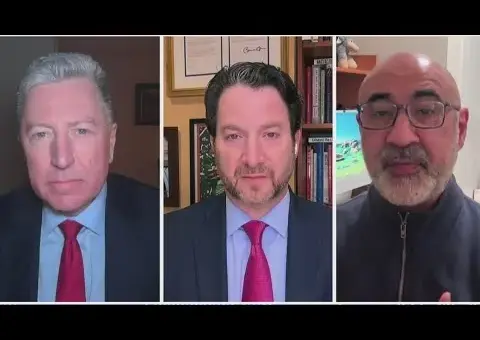
Beyond foreign policy and document releases, the state of airport security and travel has become a pressing domestic issue. Reports suggest that lines are worsening, and the situation is expected to deteriorate further. This is attributed to ongoing political disputes, including a government shutdown, which impacts essential services like those at the Transportation Security Administration (TSA). Former TSA Administrator John Pistole expressed deep concern, noting that long lines at security checkpoints create ‘soft targets’ for potential terrorists. He emphasized that the chaos is not merely inconvenient but actively dangerous, stemming from the security framework established after 9/11.
Global Impact and Shifting World Order
The confluence of these events—a complex and seemingly unresolved foreign conflict, domestic economic instability, and concerns about government transparency and security—creates a challenging environment for the United States. The administration’s foreign policy approach is being scrutinized internationally for its coherence and effectiveness. Domestically, the focus on these external issues risks neglecting pressing needs at home, potentially eroding public trust and confidence in government institutions. The way these issues are managed will significantly shape perceptions of American leadership and stability on the global stage.
Source: Todd Blanche, Airport Lines Getting Worse? 'American Inferno' | CUOMO Full Show 3/20 (YouTube)

Related Articles


Stocks Ignore War Risks, Focus on “Taco Moments”
Stock markets appear to be overlooking the severe supply chain risks stemming from the Iran conflict, focusing instead on potential diplomatic de-escalations. While the S&P 500 shows resilience, bond and commodity markets signal deep concern over disruptions to critical resources like LNG, helium, and fertilizers.

U.S. Iran Tensions Rise Amid Shifting Alliances
Rising tensions between the U.S. and Iran are creating a volatile geopolitical situation. With conflicting signals on de-escalation and potential shifts in alliances like NATO and U.S.-Israel relations, the path forward remains uncertain. The global economy and regional stability hang in the balance.


Iran Targets US With Cyberattacks, Escalating Digital Warfare
Iran is increasingly using cyberattacks to challenge the U.S., as seen in a recent hack of the FBI director's account. Experts say this is a strategic shift due to Iran's limitations in conventional warfare. The U.S. needs to strengthen its digital defenses, focusing on encryption and cloud computing, rather than solely relying on traditional security measures.