Iran’s Leadership Crisis Fuels Regional Instability
Iran's regime faces mounting pressure, running out of leaders and strategic options. While the U.S. targets military assets, Israel focuses on internal weakening. European allies' hesitation to secure vital shipping lanes highlights a broader crisis of will and capability.


Iran’s Leadership Crisis Fuels Regional Instability
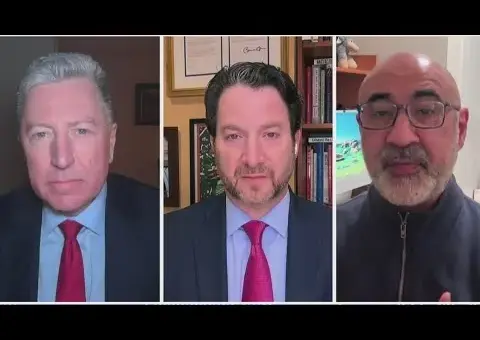
Recent military actions, dubbed ‘Operation Epic Fury,’ have highlighted significant challenges for Iran’s regime, suggesting it is not only running out of strategic options but also losing key leaders. An analyst suggests this internal weakness is a major problem, even as Iran appears to be escalating its actions on the global stage.
US Aims for Lasting Impact
The United States’ objective in the ongoing conflict appears to be more than just halting Iran’s military operations. President Trump has indicated a desire to prevent Iran from rebuilding its military capabilities. This involves targeting its missile stockpiles, including enriched uranium, and its ability to disrupt vital shipping lanes like the Strait of Hormuz. The ultimate goal is to cripple Iran’s capacity to fund proxy groups that pose both regional and global terrorist threats. This strategy aims to provide a long-term insurance policy against future aggression.
The best way to solve this is to get rid of the guys who run Iran. But to have an insurance policy just in case they survive.
Israel’s Strategic Role
While the United States focuses on dismantling Iran’s heavy military assets, Israel is reportedly employing a different tactic. Analysts suggest Israel is conducting surgical strikes targeting the regime’s command and control centers and key deployment locations. This approach aims to weaken the regime from within, potentially paving the way for internal dissent or even an overthrow by the Iranian people.
Europe’s Hesitation on Strait of Hormuz
President Trump has voiced frustration with NATO allies, calling them ‘cowards’ for refusing to contribute ships to patrol the Strait of Hormuz. This waterway is critical for global oil transport. The reluctance from European nations is attributed to a perceived loss of the ‘will to fight.’ European countries fear that direct intervention could make them targets for Iranian missile attacks. They also worry about their own military’s ability to defend themselves effectively against modern threats.
UK’s Limited Support
The United Kingdom has approved the use of its bases for potential U.S. strikes on Iran but has stated it will not be directly involved. This stance has drawn criticism, with President Trump expressing surprise at the delay and lack of fuller support from a long-standing ally. The U.S. has had to rely on bases much farther away, like Diego Garcia, increasing flight times and operational risks for its aircraft. This situation highlights a strain in the traditionally strong U.S.-UK alliance.
Operational Impact of Base Restrictions
The inability to use closer bases has had a significant operational impact on U.S. military actions. Flying bombers like the B-1, B-52, or B-2 from distant locations, including the United States itself, means fewer missions can be flown. It also increases the risk to aircraft and personnel. Basing aircraft in regions like Israel, which are under missile threat, or flying extremely long distances, makes operations more dangerous and extends the conflict. The U.S. could conduct many more, safer missions if closer bases were available.
Internal Instability in Iran
Inside Iran, the regime’s stability is increasingly questioned. The government appears uncertain about its standing with its own population, who are widely believed to resent the current leadership. Communication channels are reportedly broken, leaving the public in the dark about the true situation. There are signs of severe internal strain, including reports of defections and even infighting among Iranian Revolutionary Guard Corps (IRGC) units. The regime may be struggling to field effective forces, with key personnel reportedly going into hiding.
Future Governing Options
Looking ahead, the potential collapse of the current Iranian regime raises questions about future leadership. Analysts suggest that remaining visible figures within the regime might become targets for further action. Beyond that, an ‘invisible structure’ could emerge, where neither the rank-and-file of the IRGC nor the opposition sees a clear focal point. This leadership vacuum could break the morale of those loyal to the regime and embolden those who oppose it. Key indicators to watch include defections from military units, internal fighting, and signs of IRGC members or their families attempting to flee the country.
Why This Matters
The situation in Iran has far-reaching implications. A weakened or collapsing Iranian regime could lead to increased regional instability as various factions vie for power. It also impacts global security, particularly concerning Iran’s nuclear ambitions and its support for terrorist organizations. The reluctance of key allies to fully support U.S. actions in the region also raises questions about the future of international alliances and collective security. The potential for a leadership vacuum within Iran could create an unpredictable environment, affecting everything from oil prices to global counter-terrorism efforts.
Trends and Future Outlook
The trend suggests a continued focus on dismantling Iran’s military and nuclear capabilities. The strategy of weakening the regime from within, potentially through internal dissent or targeted strikes, is likely to continue. The international community faces a challenge in managing the fallout from a potentially unstable Iran, including the risk of further conflict and the spread of terrorism. The future outlook depends heavily on the success of these efforts and the response of regional and global powers.
Historical Context
The current tensions are part of a longer history of complex relations between Iran, the United States, and its allies. Decades of political and military friction, including the 1979 revolution and subsequent international sanctions, have shaped Iran’s current geopolitical position. The ongoing conflict can be seen as an extension of these historical rivalries, with efforts to reshape the regional balance of power.
Source: Iran ‘Running Out of Leaders’: Analyst (YouTube)

Related Articles

U.S. Iran Tensions Rise Amid Shifting Alliances
Rising tensions between the U.S. and Iran are creating a volatile geopolitical situation. With conflicting signals on de-escalation and potential shifts in alliances like NATO and U.S.-Israel relations, the path forward remains uncertain. The global economy and regional stability hang in the balance.


Iran Targets US With Cyberattacks, Escalating Digital Warfare
Iran is increasingly using cyberattacks to challenge the U.S., as seen in a recent hack of the FBI director's account. Experts say this is a strategic shift due to Iran's limitations in conventional warfare. The U.S. needs to strengthen its digital defenses, focusing on encryption and cloud computing, rather than solely relying on traditional security measures.


Iran Hacks FBI Chief, Exposing U.S. Cyber Vulnerabilities
A recent hack of FBI Director Kash Patel's personal email by an Iran-linked group highlights Iran's growing cyber threat to the U.S. Experts explain how simple security oversights are exploited, emphasizing the need for basic defenses like two-factor authentication to protect against propaganda and potential infrastructure attacks.