Judge Halts RFK Jr.’s Vaccine Policy Overhaul
A federal judge has blocked Health Secretary Robert F. Kennedy Jr.'s significant changes to childhood vaccine policies. The ruling restored previous recommendations and highlighted concerns about replacing scientific process with ideology in public health.


Judge Halts RFK Jr.’s Vaccine Policy Overhaul
A federal judge has put a stop to major changes made by Health Secretary Robert F. Kennedy Jr. concerning childhood vaccines. This ruling is a significant moment for public health and raises important questions about who decides how our children are protected from diseases.
The Backstory: A Shake-Up at the CDC
Last summer, RFK Jr. made a bold move by firing all 17 members of the Advisory Committee on Immunization Practices (ACIP). This committee is crucial for setting vaccine recommendations in the U.S. Kennedy claimed this was needed to rebuild trust in vaccine science. However, he replaced these experienced experts with individuals who were seen as vaccine skeptics or critics.
This wasn’t just a simple change in personnel. It was described as a takeover of the scientific process. The newly appointed ACIP members then made some significant decisions. They voted against recommending the birth dose of the Hepatitis B vaccine, which is highly effective. They also voted to delay a combined vaccine for measles, mumps, and chickenpox (MMR and Varicella). Furthermore, they decided not to recommend the COVID-19 vaccine for everyone six months and older. This happened in March 2026, years after the world dealt with the COVID-19 pandemic. The committee suggested leaving these decisions to individuals.
Changes to the Schedule and Presidential Influence
In January 2026, the Department of Health and Human Services (HHS) completely changed the childhood vaccine recommendations. The number of recommended vaccines dropped from 17 to 11. This included removing guidance on vaccines for rotavirus, influenza, and hepatitis A. A key directive behind these changes came from President Trump, who asked Kennedy to make the U.S. vaccine schedule similar to those in other wealthy nations. This coordinated effort was seen by critics not as a review, but as a dismantling of public health systems built over decades on scientific evidence.
Medical Community Fights Back
The medical community did not stand by silently. Many doctors and health organizations that rely on evidence-based science fought hard against these changes. Key groups like the American Academy of Pediatrics, the American Public Health Association, and the Infectious Diseases Society of America filed a lawsuit. They argued that Kennedy’s actions were not just bad policy, but illegal. Their argument focused on how Kennedy appointed new members after firing the existing ones. They claimed this bypassed the proper scientific process and administrative procedures.
The Judge’s Ruling
U.S. District Court Judge Brian Murphy sided with the medical organizations. He issued a preliminary injunction, effectively stopping Kennedy’s overhaul of vaccine policy. The judge found that the appointment of new members violated the Federal Advisory Committee Act. This law requires such panels to maintain a fair balance and avoid improper influence. Judge Murphy stated that RFK Jr., despite being a lifelong vaccine skeptic, had promised not to change existing recommendations but did so anyway. He noted that the government had disregarded the established scientific methods for making these decisions.
The judge also pointed out gaps in the expertise of some new members concerning the committee’s specific tasks. He made it clear that simply filling a committee with people who agree with you is not science. Crucially, the ruling invalidated everything the new members had voted on. This included the reduced childhood vaccination schedule and the downgraded recommendations for diseases like Hepatitis B. The judge stated that the CDC had failed both technically and procedurally by bypassing the ACIP.
What This Means for Families
The immediate impact of this ruling is significant. All vaccine recommendations that were in place at the end of President Biden’s term remain active. Any changes made by the CDC, ACIP, or HHS since May 2025 are not currently valid. This also protects insurance coverage. The Centers for Medicare & Medicaid Services (CMS) and the Vaccines for Children program are still required to cover the vaccines they covered as of January 2025. This is vital, as about half of the nation’s children receive vaccines through these programs.
The ruling has effectively shut down the ACIP committee for now. A scheduled meeting was immediately postponed. The court found that the process used to make these changes was broken from the start.
The Administration’s Response and Future Outlook
An HHS spokesman stated that the department expected the ruling to be overturned and called the decision an attempt to prevent the administration from governing. However, critics view the court’s action as upholding the law and holding the administration accountable. One of the appointees called the judge a “rogue judge,” and an appeal is expected. This is a preliminary injunction, not a final decision, and the case will continue.
Experts who were removed from the panel expressed that while the ACIP had fallen into despair, its recommendations still held legal weight. They believe the court ruling has put public health back on the right track. The broader concern is that this case highlights a pattern of attempting to replace science with ideology in public health. This approach, critics argue, involves making changes first and then dealing with the legal consequences.
Why This Matters
This ruling is more than just a legal battle; it’s about the integrity of public health decisions. The vaccine schedule is not a political opinion but the result of decades of research, clinical trials, and expert review. For communities that have historically been the most vulnerable when public health systems fail, such as Black and Brown communities, protecting these systems is crucial. Outbreaks of diseases like measles and whooping cough have shown the real-world consequences of weakened public health infrastructure. The court’s decision ensures that for now, the science-based vaccine schedule remains in place, protecting children and public health.
Historical Context
Vaccine advisory panels like ACIP have a long history of providing evidence-based recommendations. Their role has been to guide public health policy based on scientific consensus and data. The process involves rigorous review and expert consensus. Historically, changes to the vaccine schedule have been incremental and based on thorough scientific evaluation. The actions taken by RFK Jr.’s administration represented a significant departure from this established process, leading to the legal challenge.
The Takeaway
The legal challenge and the judge’s ruling underscore the importance of adhering to established scientific and administrative processes. It shows that medical organizations and the courts can act as checks on executive power when they believe public health is at risk. The fight to maintain science-based public health policy continues, but for now, the existing childhood vaccine schedule stands protected.
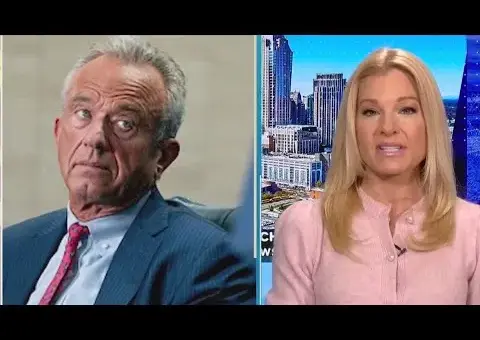
Source: Trump and RFK Jr. Finally BLOCKED Over HEALTH SCARE (YouTube)

Related Articles


New COVID Variant Fuels Health Concerns Amid Allergy Season
A new, more contagious COVID-19 variant from the Omicron family is spreading across the U.S., detected in wastewater and potentially evading vaccines. The timing complicates symptom identification as allergy season begins, with experts advising symptom duration and accompanying fever as key differentiators.


Vaccine Hesitancy: A Doctor’s Warning on Health Risks
A doctor warns that jokes about science and vaccines can have dangerous real-world health consequences. The rise of misinformation is linked to outbreaks of preventable diseases like measles and the rejection of essential newborn care.

RFK Jr. Eyes Peptide Access, Sparking Health and Safety Debate
Health Secretary Robert F. Kennedy Jr. is advocating for expanded access to synthetic peptides, sparking debate over their safety and regulation. While proponents believe increased oversight can improve quality, critics worry about potential health risks from less-tested compounds.