Hero’s Fall: Chavez Abuse Allegations Shake Civil Rights Legacy
Disturbing allegations of sexual abuse against civil rights icon Cesar Chavez are forcing a re-evaluation of his legacy. Survivors like Anna Murria and Dolores Huerta have bravely come forward, sharing decades of trauma. These revelations spark crucial conversations about accountability, women's rights, and the pervasive issue of power abuse.


Hero’s Fall: Chavez Abuse Allegations Shake Civil Rights Legacy
The legacy of Cesar Chavez, a towering figure in the Latino civil rights movement, is facing intense scrutiny following disturbing allegations of sexual abuse. New York Times reporting has brought to light accounts from women who claim Chavez, whom they once saw as a hero, sexually assaulted them over many years. These revelations are forcing a difficult conversation about how we view historical figures and the importance of accountability.
One of the most prominent accusers is Anna Murria, who described being summoned to Chavez’s office as a young teenager. She recounts instances where Chavez, a man she admired, locked his office door, kissed her, and then proceeded to sexually assault her. Murria stated that these encounters happened dozens of times over four years, leading to immense pain and even suicidal thoughts. The bravery of individuals like Murria and Dolores Huerta, Chavez’s longtime partner, in coming forward after decades of silence is crucial to understanding the full impact of these allegations.
Dolores Huerta’s Painful Revelation
Dolores Huerta, a co-founder of the United Farm Workers and a revered activist in her own right, revealed that she too was a victim of Chavez’s abuse. She shared that two instances of rape resulted in pregnancies. Huerta explained that she kept this secret for 60 years, prioritizing the farmworkers’ movement above her personal trauma. Her statement emphasizes the difficult choices survivors sometimes make to protect larger causes, but also her current resolve: “My silence ends here.” At 95 years old, Huerta’s decision to speak out offers a powerful message of hope and justice for other survivors.
Broader Implications for Justice and Rights
These allegations against Cesar Chavez are not happening in a vacuum. They are being discussed in the context of broader concerns about justice, accountability, and the rights of women and children. The Midas Touch Network, in its reporting, connects these revelations to current political issues, particularly the handling of the Epstein files and accusations against Donald Trump. The argument is made that if even revered historical figures are found to have committed such acts, it highlights a systemic problem of powerful men evading consequences.
A significant point of discussion is the United States’ vote against a UN document aimed at affirming and protecting women’s rights. This action is seen by some as a sign of the country actively undermining protections for women and girls. The document itself, described as non-radical, focused on access to justice, repealing discriminatory laws, and strengthening legal protections against violence. The sole vote against it by the U.S. is presented as evidence of a government not prioritizing women’s safety and equality.
“Being a woman in the world, you are constantly worried, looking over your shoulder, checking are did you lock your doors? Who’s that guy over there? Because of men.”
This sentiment underscores a pervasive feeling of vulnerability that many women experience. The discussion draws a parallel between personal safety concerns and what is perceived as a governmental failure to protect its citizens, referencing the actions of ICE and broader policies that may harm women and children. The idea is that when a government seems to neglect or actively harm women, it creates an environment where abuse can flourish unchecked.
Concerns Over Women’s Autonomy and Political Power
The conversation extends to concerns about women’s autonomy and their place in society and politics. Some viewpoints expressed in the discussion suggest a rollback of women’s rights, with fears that the Republican party, through measures like the “Save Act,” aims to restrict voting rights and bodily autonomy. The argument is that by limiting women’s choices and their ability to participate fully in public life, the goal is to push them back into more traditional roles, subservient to men. This is viewed as a dangerous path that threatens not only women’s futures but the future of society itself.
The commentary also touches on a perceived celebration of male excellence in certain fields, contrasting it with a lack of similar celebration for women. Some express a concern that this focus on male achievement, without equal opportunity or recognition for women, could lead to a society where women are seen as less capable or essential. The fear is that a future built on such a foundation, where women’s contributions are devalued, is not a future worth having.
The Through Line: Power, Abuse, and Accountability
A recurring theme is the connection between power, abuse, and the tendency for men to exploit women. The allegations against Chavez, and the discussion around Trump and the Epstein files, are presented as examples of a pattern where powerful men use their positions to abuse and control women, viewing them as property. The commentary emphasizes that while not all men are abusive, “it is always men” who are implicated in these specific kinds of power abuses. This perspective suggests that the fight for justice and accountability is a continuous struggle against deeply ingrained societal issues.
The courage of survivors like Murria and Huerta is highlighted as essential in breaking cycles of abuse. Their willingness to speak out, even after decades, serves as a call to action for others and for society to finally provide justice and accountability. The message is clear: it is never too late to seek justice, and the fight for the rights and safety of women and children must continue, especially in the face of what is described as an effort by some to “burn it all down.”
Source: Trump Rushes to BURN IT DOWN over EPSTEIN TERROR (YouTube)

Related Articles

Americans Rise Up: History Shows Protests Drive Change
History shows that significant societal change in America often begins with citizens demanding action, not government initiative. From factory safety laws after the Triangle Shirtwaist fire to civil rights legislation spurred by the March on Washington and environmental protections born from Earth Day, public outcry has been a powerful catalyst. As new protests emerge amid current political and economic challenges, the nation watches to see if this historical pattern of people power will once again drive meaningful change.

Prison Staff Accused of Abuse at ‘Club Fed’ Lock-up
Staff at the federal prison camp in Bryan, Texas, nicknamed 'Club Fed,' are facing accusations of sexual abuse from at least six female inmates. Investigations reveal claims of coerced sexual acts and a culture of fear, with a whistleblower alleging widespread misconduct. While some accused staff members have been cleared, the whistleblower was fired, sparking claims of retaliation.

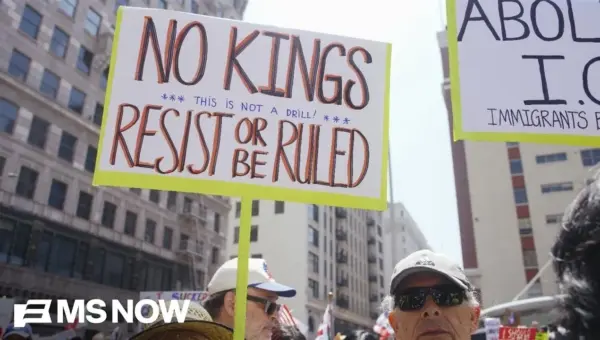
Millions Rally Nationwide for ‘No Kings’ Protests
Millions of Americans are set to participate in nationwide 'No Kings' protests, marking the largest demonstrations against the current administration's policies. The protests, fueled by issues including the war in Iran and immigration enforcement, are planned across all 50 states. Experts draw parallels to historical movements, emphasizing the power of sustained grassroots dissent in driving change.