Iran Tests Missile Reach, Shifting Mideast Power Play
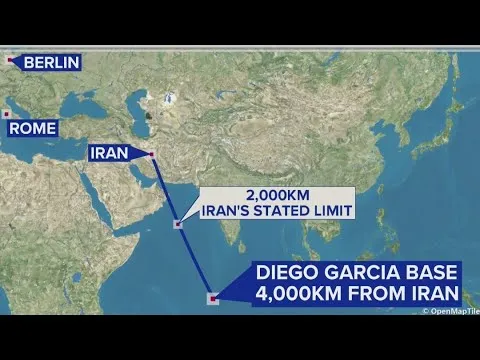
Iran has demonstrated a significant expansion of its missile capabilities by firing ballistic missiles toward a U.S.-U.K. base on Diego Garcia, over 2,500 miles away. This move signals a new level of reach, potentially putting European capitals within Iran's strike range and reshaping regional power dynamics amid ongoing conflicts and concerns over the Strait of Hormuz.

Iran Tests Missile Reach, Shifting Mideast Power Play
Iran has fired ballistic missiles toward a U.S.-U.K. base on Diego Garcia in the Indian Ocean. This event signals a significant expansion of Iran’s missile capabilities. The missiles traveled about 2,500 miles. Neither missile hit the base, but the distance traveled suggests Iran’s missiles can reach much further than previously thought. This demonstration of range is a major development in the region’s ongoing conflicts and power struggles.
Iran’s Strategic Message
The missile launch toward Diego Garcia, located far from the Middle East, serves as a clear message. It shows Iran can project power across vast distances. Experts believe this range extends significantly beyond what was thought possible. This capability could potentially put European capitals within Iran’s missile reach. This is a new development that changes how regional powers and global allies view Iran’s military reach.
Escalation in Regional Conflicts
The missile test occurs while other conflicts are happening. The U.S. and Israel have conducted strikes inside Iran. These strikes targeted a nuclear enrichment site. It was one of three such sites the U.S. had previously hit. Meanwhile, strikes inside Israel have also been reported. One missile landed near Jerusalem, and its debris hit the Al-Aqsa Mosque area. This suggests a widening cycle of attacks and counter-attacks across the region.
Global Concerns Over Strait of Hormuz
Adding to the tension, the UAE, the UK, and several European countries issued a rare joint statement. They demanded that Iran stop its actions in the Strait of Hormuz. This vital waterway is crucial for global oil transport. Iran’s actions have threatened oil flow through this critical passage. The statement urges Iran to allow oil to flow freely again. Iran has not yet responded to this demand.
Motivations of Key Actors
Iran: Iran appears to be using its missile program to project strength and deter adversaries. The long-range test shows a growing ability to strike targets far beyond its immediate borders. This could be an attempt to gain leverage in ongoing regional disputes and counter perceived threats from the U.S. and its allies.
United States: The U.S. views Iran’s expanding missile capabilities and regional actions as a significant threat. The U.S. is involved in strikes against Iranian targets and supports allies facing Iranian aggression. The U.S. aims to maintain regional stability and protect its interests and those of its allies.
Israel: Israel faces direct threats from Iran and its proxies in the region. The reported strikes inside Israel highlight this ongoing conflict. Israel’s actions are aimed at neutralizing threats, particularly those related to Iran’s nuclear program and military support for its adversaries.
United Arab Emirates (UAE) and European Countries: These nations are concerned about regional stability and the disruption of global energy markets. Their joint statement on the Strait of Hormuz shows a unified front demanding de-escalation and the unimpeded flow of oil. They seek to protect their economic interests and prevent a wider conflict.
Historical Context
Iran’s missile program has been a growing concern for decades. The country has invested heavily in developing ballistic missiles. This is partly due to international sanctions that limit its access to advanced conventional weapons. Past conflicts, such as the Iran-Iraq War, highlighted the importance of missile technology for defense and deterrence. The current actions can be seen as an evolution of this long-standing strategy.
Economic Leverage
The Strait of Hormuz is a critical chokepoint. About 30% of the world’s seaborne oil trade passes through it. Any disruption here has immediate global economic consequences. Iran has previously threatened to close the strait, which would send oil prices soaring. The joint statement from UAE, UK, and European countries directly addresses this economic vulnerability, highlighting the interconnectedness of regional security and global markets.
Global Impact: Why This Reshapes the World Order
Iran’s demonstrated missile range is a significant development. It suggests a shift in the regional balance of power. If Iran can indeed threaten targets across Europe, it changes the strategic calculations for many nations. This expands the scope of potential conflict beyond the Middle East. It forces a reassessment of security alliances and military readiness. The increased reach also raises concerns about proliferation and the potential for further escalation, impacting global stability and international relations.
Future Scenarios
One scenario involves continued escalation, with more missile tests and retaliatory strikes. This could lead to wider regional conflict, impacting global energy supplies and economies. Another possibility is de-escalation, driven by international pressure and a realization of the costs of prolonged conflict. Diplomacy could regain prominence, potentially leading to new agreements or a temporary pause in hostilities. A third scenario is a prolonged ‘gray zone’ conflict, characterized by cyberattacks, proxy skirmishes, and limited missile exchanges, which is a constant underlying threat.
Source: Iran fires missiles toward Diego Garcia: Report | NewsNation Live (YouTube)

Related Articles


U.S. Iran Tensions Rise Amid Shifting Alliances
Rising tensions between the U.S. and Iran are creating a volatile geopolitical situation. With conflicting signals on de-escalation and potential shifts in alliances like NATO and U.S.-Israel relations, the path forward remains uncertain. The global economy and regional stability hang in the balance.


Iran Targets US With Cyberattacks, Escalating Digital Warfare
Iran is increasingly using cyberattacks to challenge the U.S., as seen in a recent hack of the FBI director's account. Experts say this is a strategic shift due to Iran's limitations in conventional warfare. The U.S. needs to strengthen its digital defenses, focusing on encryption and cloud computing, rather than solely relying on traditional security measures.


Iran Hacks FBI Chief, Exposing U.S. Cyber Vulnerabilities
A recent hack of FBI Director Kash Patel's personal email by an Iran-linked group highlights Iran's growing cyber threat to the U.S. Experts explain how simple security oversights are exploited, emphasizing the need for basic defenses like two-factor authentication to protect against propaganda and potential infrastructure attacks.