Saha Activist Warns of Russian Federation’s Looming Dissolution
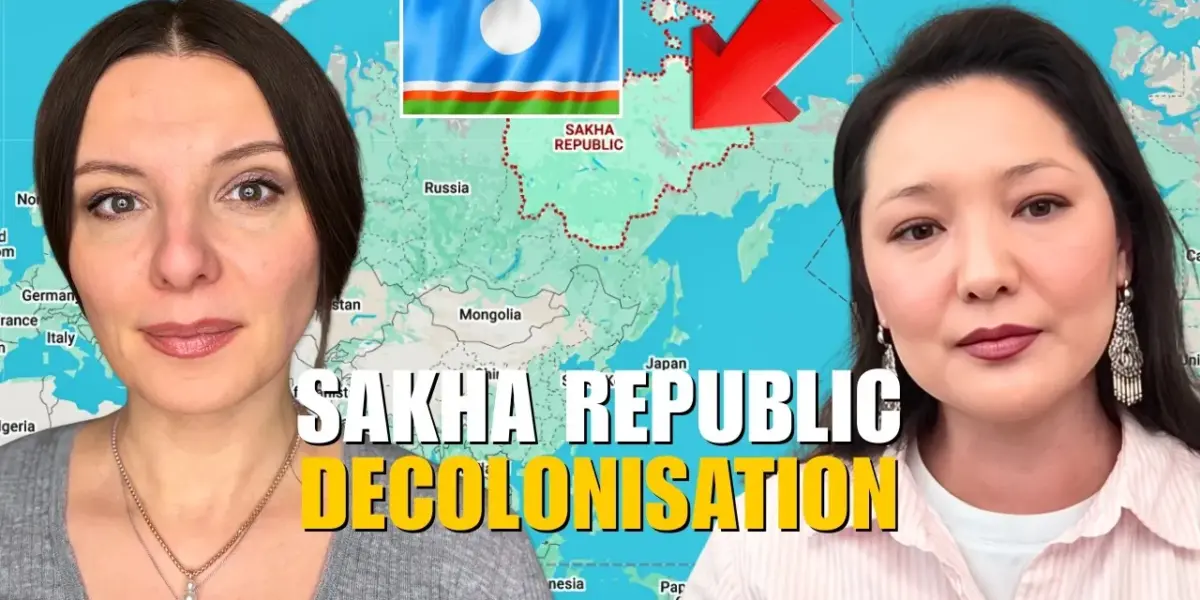
Saha activist Vuyacho Inova discusses the internal pressures facing the Russian Federation, highlighting the struggles of indigenous nations like the Saha people. She details the republic's rich resources, the history of colonization, and the growing desire for independence amidst disproportionate conscription and economic exploitation by Moscow.

Saha Activist Warns of Russian Federation’s Looming Dissolution
The vast Russian Federation, often perceived as a monolithic entity, faces growing internal pressures that could lead to its dissolution, according to Vuyacho Inova, a Saha activist. Inova highlighted the struggles of numerous indigenous nations within Russia, who are fighting for their cultural rights and autonomy against what she describes as the Kremlin’s oppressive regime.
Saha Republic’s Distinct Identity
Inova introduced the Republic of Saha, also known as Yakutia, emphasizing its significant size and rich natural resources. The republic is home to six indigenous nations, with the Saha people being the largest group. Other indigenous peoples include the Chukchi, Yukaghir, Dolgans, Evenks, and Evens. While the Dolgans share linguistic similarities with the Saha, allowing for mutual understanding akin to Swedish and Norwegian speakers, the other groups possess distinct languages.
The Saha people have a history of resisting Russian colonization for the past 400 years. Contrary to official narratives taught in schools, this was not a voluntary union but a prolonged struggle. The national hero, Sigindan, is credited with uniting various tribes to resist the encroaching Russian forces. Further resistance efforts occurred centuries later, aiming to establish an autonomous republic, and again in the 1990s, a movement for greater independence gained momentum.
Resource Extraction and Economic Disparity
Despite the Republic of Saha’s immense wealth in natural resources like diamonds, gold, and oil, its people see little benefit. Inova explained that the wealth is primarily extracted and sent to Moscow, with the republic receiving only a fraction back. The Power of Siberia gas pipeline, for instance, passes through Saha en route to Europe, yet 80% of the republic remains un-gasified, and its residents do not benefit from the income generated.
Since the early 2000s, major taxpayers are required to register in Moscow, diverting tax revenues away from the republics. Saha receives only 30% of its own generated income, a situation Inova described as deeply painful and a direct consequence of its status as a resource colony.
Activism Under Pressure
Inova stressed that any form of activism within Russia poses a threat to the current regime. Activists are seen as potential organizers capable of mobilizing people. In national republics, environmental issues and indigenous rights are intrinsically linked, as the land is vital to the peoples’ identity and way of life. Protests concerning environmental damage can easily escalate into broader political and cultural movements, encompassing language and land rights.
The Kremlin views indigenous activists with suspicion, often labeling them as separatists or terrorists. This perception extends to cultural figures, not just political organizations seeking independence. Last year, the designation of 172 organizations as terrorist groups included many indigenous ones, blurring the lines between cultural preservation and political dissent in the eyes of the authorities.
Misclassification of Indigenous Peoples
A federal law in Russia defines indigenous peoples as those with populations of 50,000 or fewer, who still practice traditional ways of life like hunting and gathering. This classification excludes larger groups and those who have integrated modern infrastructure and technology. According to Inova, this legal framework denies these peoples the right to protect their land, which can then be used for federal purposes.
Disproportionate Conscription and War Fatigue
Inova confirmed that conscription disproportionately targets the poorest regions and national republics, including indigenous communities. An investigative report in the Republic of Saha indicated that indigenous people constitute 60% of the reported 3,000 war dead, significantly higher than their proportion of the republic’s population, while Russians and others make up the remaining 40%. In contrast, major cities like Moscow have been largely unaffected by mobilization efforts.
While many in Saha are anti-war and support Ukraine, a significant portion of the population remains detached due to the vast geographical distance and perceived lack of direct connection. However, grievances against Moscow are growing, with negativity increasingly directed towards the central government rather than Ukraine. Inova expressed hope that the prolonged war and its failures will eventually lead to increased dissent against Putin’s leadership.
Aspiration for Independence
The Republic of Saha has a history of seeking independence or greater autonomy, a desire rooted in its experience as a resource colony. Inova recalled the 1990s, when the republic declared sovereignty, drafted its constitution, and established direct economic agreements with countries like Finland, the UK, and South Korea. This period, referred to as a “demo version of independence,” saw resources remaining within the republic, infrastructure development, and vibrant international exchange programs.
Today, the republic faces significant isolation, with its international airport in Yakutsk offering no direct international flights, forcing all travel through Moscow or Novosibirsk. Inova believes that independence now serves as a form of protection, allowing the republic to utilize international law to defend itself, a right not available to it as an internal problem of Russia. She argued that national republics, given the chance, could build stable democracies, contrasting their potential with Russia’s repeated failures in establishing democratic governance.
Saha Identity: “Children of Nature”
Inova shared a distinct aspect of Saha identity: the term “Uruu Sangha,” which translates to “children of nature.” This reflects a deep connection to the natural world, contrasting with the concept of being a “slave of God” found in some interpretations of Russian Orthodoxy. She noted that while Ukrainians are also predominantly Orthodox Christian, the religion was used as a tool of oppression in Saha, unlike the more humanistic branch of their own spiritual traditions.
She concluded by emphasizing that the responsibility for the war lies with Russia’s imperial ideology, not with the individual soldiers who have lost their agency. Inova urged Western nations not to seek a return to pre-war relations with Russia but to dismantle the system that perpetuates imperial wars. She expressed confidence that independent national republics could establish healthy democracies, offering a contrast to Russia’s historical struggles with governance.
Source: RUSSIA DISSOLUTION: FREE SAKHA REPUBLIC (YouTube)

Related Articles

G7 Allies Clash Over Iran War Strategy, Urge Focus on Russia
G7 foreign ministers met in Paris, revealing deep divisions over the U.S. war with Iran. European allies urged the U.S. to pressure Russia, linking its actions to the conflict and fearing support for Ukraine will wane.

Iran Blocks China Ships, Exposing Beijing’s Weak Grip
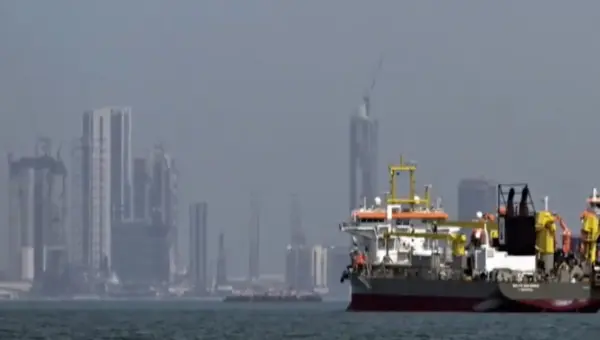
Iran's recent decision to block Chinese ships at the Strait of Hormuz is exposing the limits of Beijing's influence in the Middle East. This action is causing delays and cancellations for Chinese manufacturers, turning a perceived geopolitical win into an economic strain.
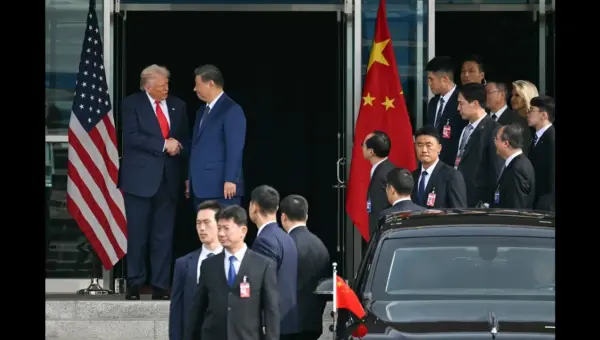
Trump’s “Walk Away” Tactic Signals Tougher Stance on China
Retired Air Force Brigadier General David Stillwell believes President Trump's strategy of being willing to walk away from negotiations puts pressure on China. This tactic, combined with US global actions and strengthened alliances, signals a more assertive American foreign policy.