TSA Workers Face Financial Crisis Amid Funding Standoff
TSA officers are facing severe financial hardship and low morale due to repeated government funding disputes. One officer described being unable to afford transportation to work, highlighting the critical need for stable funding and fair compensation for essential security personnel.


TSA Workers Face Financial Crisis Amid Funding Standoff
The U.S. Transportation Security Administration (TSA) is facing a severe morale crisis as many of its officers are struggling financially due to ongoing government funding disputes. One TSA officer, a single mother of four, recently had to call out of her job at Harry Reid International Airport in Las Vegas because she couldn’t afford to get to work. This situation highlights the deep financial strain placed on essential government workers during periods of shutdown.
Community Support and Financial Hardship
The officer explained that in Las Vegas, there has been strong community support, with the Las Vegas Convention Center donating gas cards. However, for the first three weeks of the recent shutdown, officers received no assistance, forcing some, like herself, to miss work. “We just cannot afford to keep coming to work with no money,” she stated, emphasizing that this is a problem many officers face. She expressed disbelief that essential workers are being treated this way, especially when it has happened multiple times in a short period.
Impact on Essential Workers and Families
As a mother, the cost of childcare is a significant concern. The officer warned that if the situation doesn’t improve, she will have to look for another job within a month. This highlights the precarious position many TSA officers are in, balancing the need for a steady paycheck with the risks of working without one. Her job is critical for national security, as she helps prevent dangerous individuals and items from passing through airports. The thought of losing her job on top of facing repeated shutdowns is deeply concerning.
Low Morale and Feeling Overlooked
Morale among TSA officers is reportedly very low. The officer noted that the Department of Homeland Security, which includes the TSA, is often the only agency left unfunded during these disputes. She feels her agency is being singled out, which has led to a sense of being overlooked by the government. This is not the first time TSA workers have faced such hardship. Many are still recovering from a previous 43-day shutdown, and unlike before, creditors are less willing to work with them this time. More than 50,000 TSA security officers are currently going without pay, with over 350 having already quit, according to DHS figures.
Privatization as a Potential Solution?
The idea of privatizing TSA services has been mentioned as a potential solution, especially by those who believe the current federal funding model is failing. While Elon Musk has offered to pay TSA workers’ salaries, legal experts view this as an unlikely fix. However, the repeated shutdowns are prompting discussions about whether TSA should remain federally funded. The officer fears that privatization could lead to job losses on top of the ongoing financial instability.
Calls for a Pay Raise
The salary range for TSA officers, often between $40,000 and $50,000 annually, leaves little room for savings, especially after previous shutdowns depleted their funds. The officer believes that after years of dedicated service protecting the nation, TSA officers deserve a pay increase. They have been working to serve and protect communities and the country for 25 years, and it’s time for their compensation to reflect that commitment.
Global Impact
This situation goes beyond just TSA officers. It shines a light on the vulnerability of essential government workers across the United States when funding mechanisms fail. When individuals responsible for critical infrastructure, like airport security, face such instability, it can impact public trust and national security. The constant threat of shutdowns can lead to a loss of experienced personnel, creating gaps in essential services. This also affects the broader economy, as these workers have less disposable income, and it can strain community resources that step in to help.
Historical Context
Government shutdowns are not new in U.S. history. They occur when Congress and the President cannot agree on spending bills. These disputes can halt government operations and furlough employees. The current situation echoes past shutdowns, but the repeated nature of this problem for the TSA in such a short timeframe is particularly damaging to morale and financial stability. The long-term shutdown in late 2018 and early 2019, which lasted 35 days, also caused significant hardship for federal workers.
Economic Leverage and Future Scenarios
The primary economic leverage in this situation is the government’s ability to fund its operations. The TSA officer’s inability to afford transportation to work is a stark example of how a lack of funding directly impacts the workforce. The threat of privatization looms, which could change the employment structure for TSA officers. One scenario is that Congress eventually agrees on a funding bill, providing back pay and restoring stability, though the trust and morale may take time to rebuild. Another scenario is that these shutdowns continue, pushing more experienced officers to leave for more stable employment, potentially impacting security standards.
Source: Morale at TSA has been low since funding fight, TSA officer says | NewsNation Live (YouTube)

Related Articles

Iran Hacks FBI Chief, Exposing U.S. Cyber Vulnerabilities
A recent hack of FBI Director Kash Patel's personal email by an Iran-linked group highlights Iran's growing cyber threat to the U.S. Experts explain how simple security oversights are exploited, emphasizing the need for basic defenses like two-factor authentication to protect against propaganda and potential infrastructure attacks.
TSA Staff Cuts Create Airport Chaos for Travelers
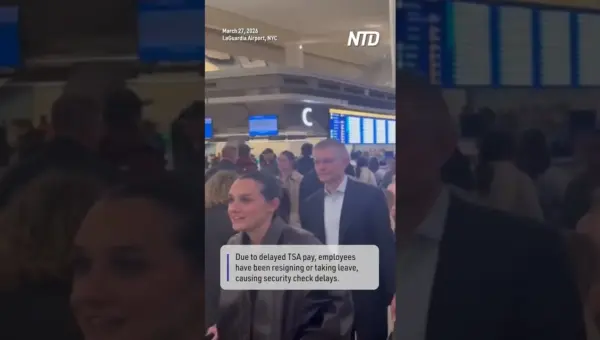
Recent TSA agent shortages, fueled by a government shutdown and delayed pay, have caused significant delays and long security lines at major airports. This situation highlights the critical role of TSA staff and the impact of funding issues on essential services.
House Funds DHS, But Senate Deal Unlikely Amid Shutdown
The House of Representatives has passed a bill to fund the Department of Homeland Security, but the measure is unlikely to pass the Senate. TSA workers, who have faced missed paychecks and disruptions, may receive some pay soon due to a presidential order, but the broader shutdown continues.