Oil Price Shocks: How History Shows Costs Will Rise
History shows that oil price spikes, driven by conflicts and supply disruptions, have severe economic consequences. From the 1973 embargo to the 2022 Ukraine war, rising oil costs have led to inflation, recessions, and increased prices for everyday goods. The current surge, fueled by Middle East tensions, echoes these past shocks, suggesting sustained economic pressure.

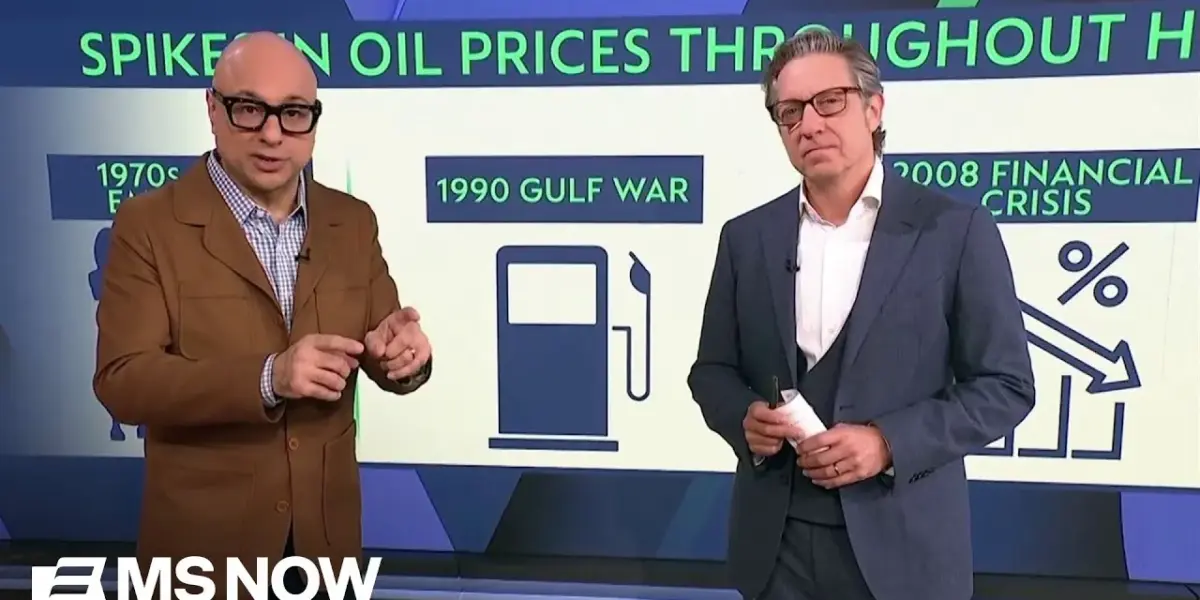
Oil Prices Soar Amid Global Tensions, Echoing Past Crises
Gas prices are surging across the nation, with the national average nearing $4 a gallon and hitting even higher in places like California. This sharp increase is largely due to the ongoing conflict in Iran and a near-total blockade of the vital Strait of Hormuz. However, this situation is not new. History shows that spikes in oil prices have repeatedly shaken the global economy, impacting everything from grocery bills to job markets.
The 1973 Oil Embargo: A Nation Gripped by Shortages
The first major oil shock many Americans remember occurred in October 1973. Members of the Organization of Petroleum Exporting Countries (OPEC) imposed an oil embargo on nations supporting Israel in the Arab-Israeli War. For Barbara, a mother in the 1970s, this meant long hours and stress. “Between doctor’s appointments and grocery runs, Barbara, Betty’s mother, was keeping busy, and she was feeling the pain at the gas pump,” the transcript notes.
By the time the embargo ended in March 1974, oil prices had quadrupled, jumping from $3 to $12 a barrel. This dramatic price hike had severe consequences. The stock market contracted by 48%, and a recession lasted until the spring of 1975, with unemployment reaching 9%. This period, known as stagflation, combined high prices with low economic growth and high unemployment, creating a difficult environment for many families.
The 1973 crisis also led to significant changes in consumer behavior. “It got rid of big cars in America and created the small car,” the transcript states, marking a shift towards more fuel-efficient vehicles.
1990 Gulf War: Doubling Prices and Economic Slowdown
Fast forward to 1990, during the Gulf War. For Betty, now a high school senior, and her mother, college road trips became financially challenging. Oil prices more than doubled, climbing from $17 to $36 a barrel. This surge in energy costs contributed to a collapse in consumer confidence and another recession that peaked in the spring of 1992 with 7.8% unemployment.
This event shares similarities with today’s situation. “This is supply destruction in a key part of the world where oil is produced,” the transcript explains, referencing the importance of regions like the Strait of Hormuz. “This was very much like kind of what we’re seeing today.” The Federal Reserve responded by raising interest rates to control inflation, a move that further burdened consumers already paying more for gas and energy.
The impact was widespread: “Everything just costs more.” This period highlighted how oil price increases ripple through the economy, affecting everyday life and potentially leading to higher inflation and interest rates.
2008 Financial Crisis: Oil Prices Swing Wildly
In 2008, amid a massive financial crisis, oil prices experienced extreme volatility. Demand for oil was strong globally, while production struggled to keep up. Prices more than doubled, soaring from $60 to $143 a barrel. However, they quickly collapsed to $35 a barrel by the end of the year.
While not the direct cause of the financial crisis, these high oil prices exacerbated the situation. “It just shows you how profound the impacts of these rising oil prices have on all of us,” the transcript emphasizes. “It’s not just at the gas pump… but everything.” From food transportation to air travel, the cost of oil affects the price of nearly every product and service.
The surge in oil prices, alongside the housing market collapse, contributed to a roughly 50% drop in the stock market and significantly impacted many careers, with some people taking years to recover economically.
2022 Ukraine War: Sanctions and Supply Chain Chaos
The early months of 2022 saw another major disruption. Russia’s invasion of Ukraine led to widespread international sanctions on Russian oil. This removed a significant amount of oil from the global market, causing prices to jump 70%, from $70 to $120 a barrel. This price level has been seen again recently.
Although this event didn’t immediately trigger a recession, it significantly impacted real incomes as prices rose. The U.S. responded by aggressively hiking interest rates, which contributed to a bear market. “This caused a tremendous amount of instability. Supply chains were blocked every which way. We didn’t know where oil was going to come from,” the transcript states.
Ironically, the U.S. has since begun buying oil from Russia to ensure sufficient supply. This period upended global oil supplies and capital markets. The transcript warns that unlike other goods where price increases might be partially absorbed, “100% of the increase in the price of oil will be felt.”
The Ripple Effect: From Gas Pumps to Airfares
The current situation, with oil prices hovering around $120 a barrel, suggests further increases at the pump. “Every $10 increase in crude oil prices means about a quarter a gallon, another quarter to a half dollar a gallon,” the transcript explains. This means higher gas prices are likely.
However, the impact extends far beyond gasoline. Crude oil is the base for diesel, jet fuel, and fuels powering large trucks and industrial machinery. “Those prices are spiking,” the transcript notes. Major companies, like United Airlines, are already anticipating higher costs. “We can see oil prices of 150, 160. We’re going to cut capacity. We may have to charge more for our seats,” the transcript quotes.
This overall inflationary effect, driven by oil price hikes, creates economic uncertainty. As Caleb Silver, Chief Business Editor at People Inc. and Editor-in-Chief at Investopedia, noted, “We don’t know how long it’s going to last.” The unpredictable nature of global oil markets means consumers and businesses must prepare for continued economic pressure.
What to Watch Next
As tensions persist in the Middle East and geopolitical factors continue to influence global energy markets, all eyes will be on oil production levels, diplomatic efforts to ease conflict, and the potential for further supply disruptions. The response of central banks to rising inflation, including interest rate adjustments, will also be crucial in determining the broader economic fallout. Consumers should brace for sustained higher prices across a wide range of goods and services, reflecting the fundamental role of oil in the global economy.
Source: Oil price spikes throughout history: ‘Everything just cost more’ (YouTube)

Related Articles

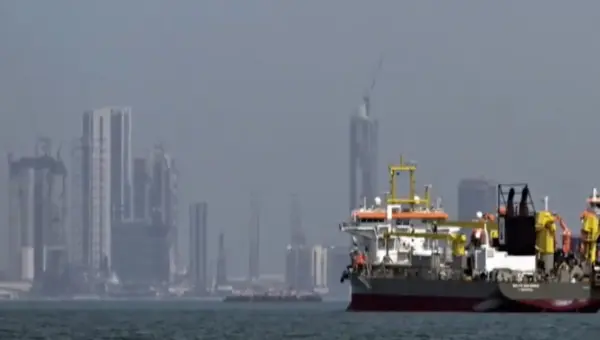
Iran Blocks China Ships, Exposing Beijing’s Weak Grip
Iran's recent decision to block Chinese ships at the Strait of Hormuz is exposing the limits of Beijing's influence in the Middle East. This action is causing delays and cancellations for Chinese manufacturers, turning a perceived geopolitical win into an economic strain.
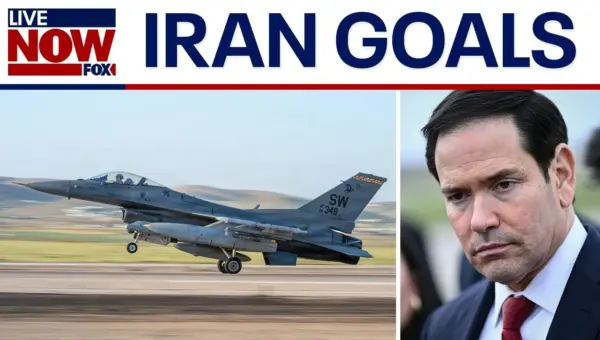
Rubio: US Can Achieve Iran War Goals Without Troops
Senator Marco Rubio outlined a strategy to counter Iran without deploying U.S. ground troops, focusing on weakening the regime and enhancing maritime security. He also criticized Cuba's economic system and expressed concerns about West Bank violence.


Israel Escalates Iran Strikes, Warns of Wider War
Israel has launched significant strikes inside Iran following continued missile fire, warning of further escalation. The conflict risks wider regional instability and economic disruption, especially concerning the Strait of Hormuz.