Iran’s Missile Reach Challenges US Strategy, Ex-Minister Warns
Former UK Defence Minister Tobias Ellwood warns that Donald Trump has underestimated Iran's strategic capabilities, particularly its long-range missile program. The recent launch of missiles targeting Diego Garcia reveals Iran's preparedness and poses a significant threat to global stability and European defenses. Ellwood criticizes the current approach as 'tactics without strategy,' emphasizing the need for a comprehensive plan to counter Iran's ideology and actions.

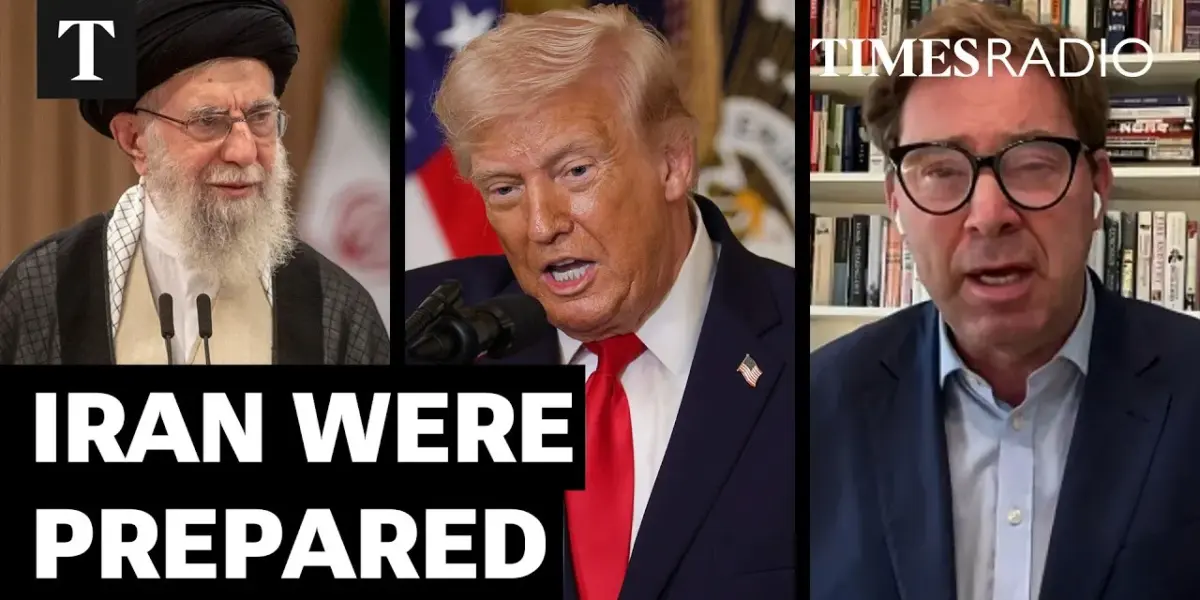
Iran’s Missile Capabilities Surprise, Threaten Global Stability
In a stark warning, former UK Defence Minister Tobias Ellwood argues that former President Donald Trump has underestimated Iran’s military reach and strategic planning. Despite recent strikes, the Iranian regime remains intact and continues to influence regional conflicts and develop advanced weaponry, including long-range ballistic missiles. Ellwood, a defense and security commentator, highlighted the launch of two ballistic missiles by Iran targeting Britain’s Diego Garcia military base in the Indian Ocean, a distance of nearly 4,000 kilometers from Iran. While neither missile hit its intended target, one reportedly fell during flight, and the other was intercepted by a U.S. warship. This demonstration of Iran’s intermediate-range ballistic missile capabilities has sent alarm bells ringing across Europe, underscoring a significant shift in the geopolitical landscape.
Missile Test Reveals Iran’s Strategic Preparedness
The attack on Diego Garcia, a highly protected base, suggests Iran possesses weapon systems that surprised many, including the U.S. Department of Defense and the White House. Ellwood believes this indicates Iran has been preparing for a potential conflict with America for a long time. They have been acquiring weapon systems, stockpiling ammunition, and identifying potential targets. This long-term strategy appears designed to distract and catch Western powers off guard. The incident also follows a security breach attempt at HMS Clyde near Glasgow, Scotland, where the UK’s nuclear capabilities are held. These actions, Ellwood suggests, are aimed at creating distractions and making the UK question its support for the United States.
Critique of “Tactics Without Strategy”
Ellwood sharply criticized the current approach, labeling it a textbook example of “tactics without strategy.” He noted that the war, now in its fourth week, is costing over a billion dollars daily, yet the Iranian regime is not only surviving but actively shaping the conflict’s progression. The disruption in the Strait of Hormuz, crucial for global trade, is a prime example of Iran’s economic leverage. Ellwood expressed concern that Trump is not listening to the right advisors, citing the dismissal of over 80 State Department specialists in recent years who could have provided vital expertise on Iran’s capabilities and strategic thinking. He emphasized that experts would have warned about the regime’s resilience and its dispersed decision-making structure, developed precisely for such scenarios.
“The regime is not only able to survive, but it’s clearly able to shape how this war is progressing.”
Europe’s Vulnerability and Defense Shortcomings
While the missiles aimed at Diego Garcia did not hit their mark, Ellwood cautioned against complacency. He described the incident as a massive wake-up call, particularly for European nations. Unlike highly defended U.S. bases, many European targets, including naval bases like Portsmouth and Davenport, lack adequate air defense systems. Ellwood stated that these locations are now vulnerable, especially to swarm drone attacks, a tactic increasingly seen in the Gulf. He pointed out that even Israel, with its advanced air defense, remains vulnerable. The core issue, according to Ellwood, is underinvestment in defense over the past decade and a half. He called for cross-party commitment to ring-fence defense spending, removing it from political debate and prioritizing immediate investment. The current defense investment plan, meant to outline spending priorities after a defense review, has been delayed until after local elections, leaving defense contracts unsigned and the sector in a state of inaction during a period of rising global tensions.
Economic Interdependence and Security Risks
The ongoing conflict and Iran’s actions have significant economic repercussions. Rising oil and gas prices, potential interest rate hikes, and increased inflation are already impacting global economies. Ellwood stressed the powerful link between national security and economic stability. He explained that modern warfare extends beyond traditional battlefields, directly involving society. Disruptions to critical infrastructure, such as undersea cables, and a lack of robust air defense leave economies vulnerable. He drew a parallel to the impact of grain ship blockades from Odessa on food inflation in the UK, illustrating how geopolitical events directly affect everyday life and economic well-being.
Challenging Iran’s Ideology: A Strategic Imperative
Addressing listener questions about whether military action is justified due to Iran’s behavior, Ellwood argued that simply bombing military capabilities does not address the regime’s underlying ideology and desire to cause harm. He believes that lasting change requires challenging this mindset and supporting the Iranian people who may seek a different future. Without addressing the core ideology, the cycle of violence will continue, with Iran regrouping and rearming after diminished capabilities. Ellwood reiterated that Trump’s strategy lacks a clear plan to prevent Iran from supporting proxy groups like Hamas, Hezbollah, and the Houthis, developing long-range missiles, or pursuing nuclear weapons. The knowledge and intent to cause harm remain, even if immediate capabilities are hindered.
Intelligence Gaps and Unforeseen Threats
The effectiveness of intelligence gathering, even by allies like Israel, was also questioned. Ellwood acknowledged that while Israel has agents on the ground in Iran, certain clandestine programs may still evade detection. He highlighted the significant threat posed by the Shahed 136 drone, the same type used to attack a British sovereign base in Cyprus. Iran possesses thousands of these drones, widely distributed, presenting a persistent challenge. Even with effective air defenses, the sheer volume of such attacks can disrupt shipping, daily life in the Gulf, and potentially reach further afield. This highlights the formidable and embedded nature of Iran’s military capabilities.
UK’s Involvement and Future Outlook
Ellwood confirmed that the UK is involved in the current conflict, not just through allowing its air bases to be used for offensive operations but also due to its regional obligations and the presence of expatriates needing protection. However, he questioned whether the UK has any meaningful say in how the conflict unfolds from an American perspective, especially with Donald Trump being the sole decision-maker. While Trump may claim victory, Ellwood suggested that Iran is likely observing the situation with a degree of satisfaction, having weathered the storm and survived. He expressed regret that significant effort has been expended to weaken the regime, only for it to be allowed to continue its activities. Ellwood hopes for a future where mechanisms for regime change, such as supporting defectors and diasporas, are explored, rather than relying solely on military pressure that fails to address the root causes of Iran’s actions.
Source: Trump Has Underestimated Iran: They Are 'Shaping How This War Is Progressing' | Tobias Ellwood (YouTube)

Related Articles
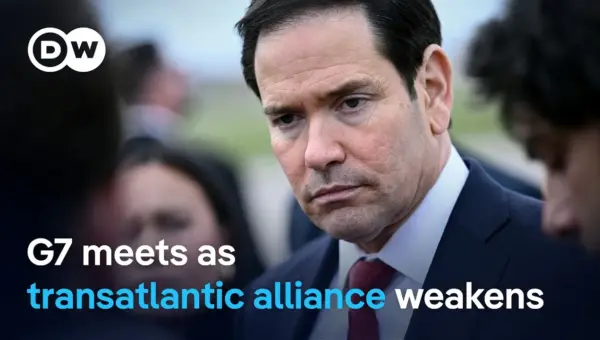
G7 Allies Clash Over Iran War Strategy, Urge Focus on Russia
G7 foreign ministers met in Paris, revealing deep divisions over the U.S. war with Iran. European allies urged the U.S. to pressure Russia, linking its actions to the conflict and fearing support for Ukraine will wane.

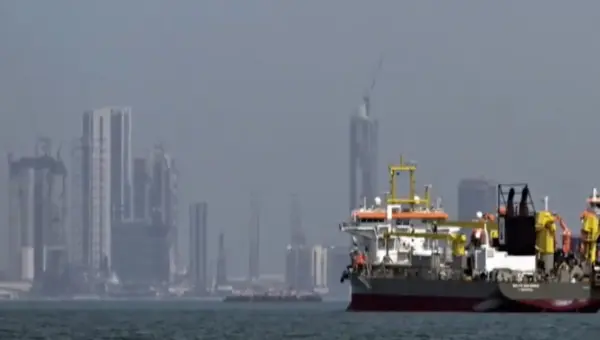
Iran Blocks China Ships, Exposing Beijing’s Weak Grip
Iran's recent decision to block Chinese ships at the Strait of Hormuz is exposing the limits of Beijing's influence in the Middle East. This action is causing delays and cancellations for Chinese manufacturers, turning a perceived geopolitical win into an economic strain.
Rubio: US Can Achieve Iran War Goals Without Troops
Senator Marco Rubio outlined a strategy to counter Iran without deploying U.S. ground troops, focusing on weakening the regime and enhancing maritime security. He also criticized Cuba's economic system and expressed concerns about West Bank violence.