Iran’s Red Sea Threat Exposes Trump’s Chaotic Foreign Policy
Iran has issued a direct threat to Donald Trump, warning of Red Sea disruptions if specific actions are taken. Amidst this global tension, Trump's focus appears to be on domestic issues like airport security using ICE agents. The situation highlights Iran's growing influence over vital shipping lanes and raises questions about US foreign policy effectiveness and leadership priorities.

Iran Escalates Tensions, Threatens Red Sea Access
Iran has directly threatened Donald Trump, warning of severe consequences if he attempts to seize control of Carg Island. The Iranian government, through its semi-official Tasnim news agency, stated that if expeditionary units sent by Trump to the Middle East move towards Carg Island or try to enter the Strait of Hormuz, Iran will retaliate. Their threat is clear: they will shut down passage through the Red Sea, mirroring actions previously seen in the Strait of Hormuz.
This warning comes as Iranian officials indicated they are prepared to escalate the conflict. They specifically mentioned activating the Houthis, a group that has previously disrupted cargo and fuel ship traffic in the Red Sea. The situation highlights a dangerous escalation, with Iran positioning itself to control vital global shipping lanes.
Trump’s Domestic Distractions Amidst Global Crisis
While international tensions flare, Donald Trump’s focus appears to be elsewhere. He has proposed using ICE (Immigration and Customs Enforcement) agents for airport security. Trump posted a statement suggesting that if Democrats do not agree to his terms for airport safety, he will deploy ICE agents to airports for security, including arresting undocumented immigrants. He specifically mentioned those from Somalia and criticized figures like Ilhan Omar, linking them to issues in Minnesota.
This proposal has been met with criticism, with opponents viewing it as a distraction from pressing international issues and a potential overreach of authority. The contrast between the global crisis and Trump’s domestic focus raises questions about his priorities and leadership during a volatile period.
Economic Repercussions and Shifting Alliances
The video suggests that Trump’s foreign policy decisions, particularly the removal of oil sanctions on Iran and Russia, have inadvertently benefited these nations and China. This is seen as a strategic misstep that fuels conflict and destabilizes economies. Experts quoted in the video argue that Iran is leveraging its control over crucial waterways like the Strait of Hormuz to create new revenue streams.
Iran is reportedly planning to implement fees for ships passing through the Strait of Hormuz, effectively turning it into a major toll booth. This move, combined with Iran’s ability to guide ships like Indian tankers, demonstrates a strategic economic advantage. Countries like India and Japan are engaging directly with Iran to ensure safe passage for their vessels, indicating a complex web of diplomacy that bypasses traditional US influence.
Historical Context and Geopolitical Shifts
The situation echoes past geopolitical challenges, but the video argues that Trump’s approach is alienating the United States. While tariffs were previously used to exert pressure, the current strategy is seen as isolating America further. The increasing engagement between nations like India and Japan with Iran suggests a shift in global alliances, where economic stability and trade routes are prioritized over geopolitical alignment with the US.
The video also touches on past incidents, like Trump’s alleged mocking of Japanese Prime Minister Fumio Kishida during a state visit. This is presented as an example of Trump’s unconventional diplomatic style, which may have damaged relationships and created opportunities for rivals like Iran to strengthen their own international standing.
Domestic Political Maneuvering
Meanwhile, Republican senators are reportedly working over the weekend to address what they deem emergencies. However, the video questions the nature of these priorities, suggesting they are focused on cultural issues like transgender participation in sports, rather than addressing the escalating international conflicts or the war in the Middle East. This is framed as a deliberate tactic to divide the electorate and distract from more critical issues.
The discussion also brings up concerns about immigration and border security, with a transportation secretary expressing views on the anger of the Republican base regarding immigration policies. This highlights the deep divisions within the US political system, even as global crises unfold.
Economic Instability and Ignoring Warnings
The video paints a picture of widespread economic instability, with stock markets and even gold prices crashing. This is linked to the geopolitical uncertainty. Furthermore, it suggests that warnings from countries like Qatar about potential disruptions to energy facilities were ignored by US officials, leading to significant setbacks in the region.
The narrative portrays Donald Trump as a figure who prioritizes personal gain and erratic behavior over stable governance. The comparison to a con artist who ultimately reveals his true nature under pressure is used to describe his leadership style. The lack of attention given to disasters like the flooding in Hawaii is also cited as an example of misplaced priorities.
Why This Matters
The events described highlight a critical juncture in international relations and US foreign policy. Iran’s direct threats and its growing influence over vital shipping lanes demonstrate a significant challenge to global stability. The potential for conflict escalation in the Middle East has far-reaching economic and security implications for the entire world.
Moreover, the perceived disconnect between global crises and domestic political priorities raises concerns about effective leadership. The video suggests that a focus on culture wars and personal vendettas distracts from addressing fundamental issues like international peace, economic security, and disaster relief. This dynamic could lead to further isolation of the United States on the global stage and a weakening of its influence.
Implications and Future Outlook
The current trajectory suggests a continued period of geopolitical tension and economic volatility. Iran’s demonstrated ability to control key waterways and its strategic partnerships could reshape global trade routes and energy markets. The effectiveness of US foreign policy in navigating these complex challenges remains a significant question.
The future outlook points towards a world where regional powers play a more assertive role. The ability of nations to secure their own trade interests, even through direct negotiation with countries like Iran, suggests a potential shift away from traditional US-led security architectures. Domestically, the ongoing political divisions and the focus on divisive issues could hinder the US’s capacity to respond cohesively to both international and domestic emergencies.
Source: Trump CRASHES OUT as Iran THREATENS HIM in WAR!! (YouTube)

Related Articles


G7 Allies Clash Over Iran War Strategy, Urge Focus on Russia
G7 foreign ministers met in Paris, revealing deep divisions over the U.S. war with Iran. European allies urged the U.S. to pressure Russia, linking its actions to the conflict and fearing support for Ukraine will wane.
Iran Blocks China Ships, Exposing Beijing’s Weak Grip
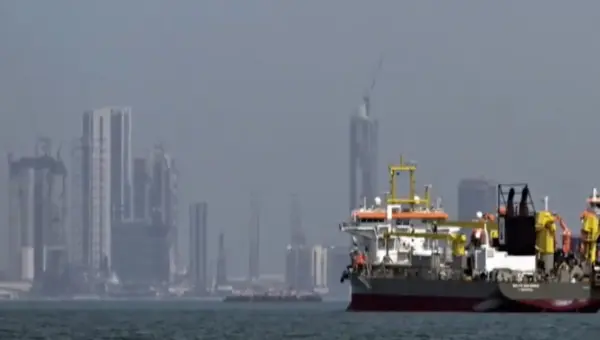
Iran's recent decision to block Chinese ships at the Strait of Hormuz is exposing the limits of Beijing's influence in the Middle East. This action is causing delays and cancellations for Chinese manufacturers, turning a perceived geopolitical win into an economic strain.
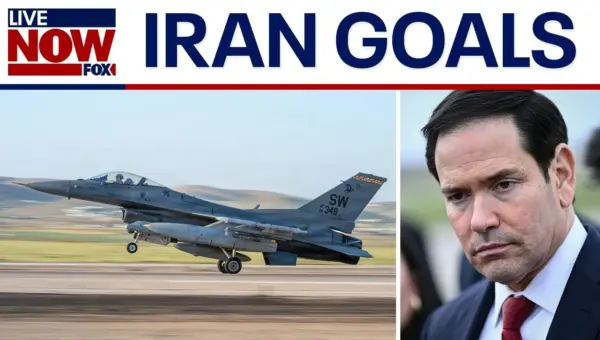
Rubio: US Can Achieve Iran War Goals Without Troops
Senator Marco Rubio outlined a strategy to counter Iran without deploying U.S. ground troops, focusing on weakening the regime and enhancing maritime security. He also criticized Cuba's economic system and expressed concerns about West Bank violence.