Iran’s Missile Reach Grows: A New Threat Emerges
Iran's recent ballistic missile launch towards Diego Garcia reveals a far greater strike capability than previously believed. This, coupled with ongoing US strikes and leadership uncertainty in Iran, signals a dangerous escalation. The potential for Iran to threaten distant targets and the ongoing efforts to secure nuclear materials paint a complex and volatile geopolitical picture.

Iran’s Missile Reach Grows: A New Threat Emerges
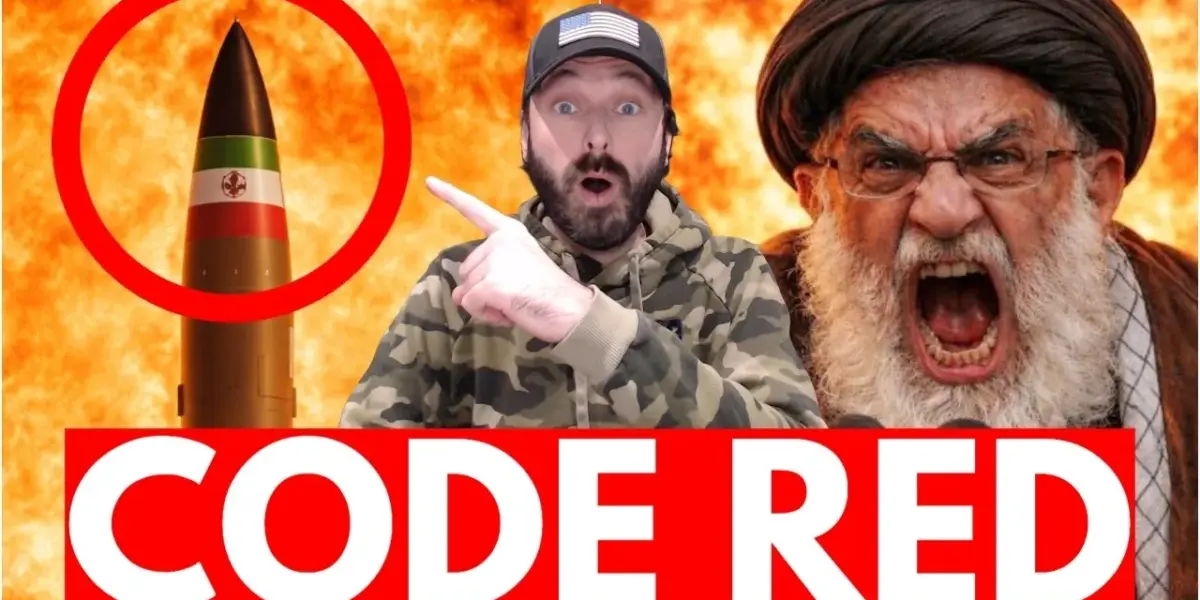
Recent events suggest Iran’s military capabilities are far more advanced than previously understood. A ballistic missile launch on March 21st targeted Diego Garcia, a joint US-UK military base located in the middle of the Indian Ocean. This location is about 4,000 kilometers from Iran, a range many experts did not believe Iran possessed. The missile launch signals a significant escalation, as Iran appears to be reaching far beyond its traditional regional sphere of influence.
According to reports from US officials, neither of the two intermediate-range ballistic missiles fired actually hit Diego Garcia. One missile reportedly failed during its flight. A US warship intercepted the other with an SM3 interceptor, though it remains unclear if the interception was successful. This incident is a major concern because it reveals Iran’s strike capabilities far exceed what was publicly known. Previously, it was thought Iran’s missiles had a range of around 2,000 kilometers, mainly threatening the Middle East. Now, it seems Iran may have the ability to strike targets up to 4,500 kilometers away, potentially putting all of Europe and vital US bases like Diego Garcia within reach. Notably, B2 stealth bombers are housed at Diego Garcia, making it a high-value target.
Leadership Questions and Continued Strikes
Adding to the complex situation, there has been significant speculation about the health of Iran’s Supreme Leader, Moshaba Homini. While he missed his usual public address for the Iranian New Year, US officials now believe he is alive, though his condition remains unknown. This uncertainty about leadership has led to predictions that hardliners within the IRGC (Islamic Revolutionary Guard Corps) might be taking more control. They could potentially use Homini as a figurehead while they continue to direct the country’s actions.
Meanwhile, the United States has continued its own military operations. Massive strikes have been conducted against various Iranian targets. These include underground missile storage facilities, which appear to have been hit by bunker-buster munitions. US forces have also targeted mobile missile launchers and radar systems. Footage shows successful strikes on these assets. Furthermore, a major Iranian drone manufacturing plant, responsible for producing Shahid drones used in regional attacks, was reportedly destroyed by US precision strikes.
Despite these US operations, Iran has continued to launch missiles, including cluster munitions. Some of these launches have been intercepted by US forces, with debris from an intercepted ballistic missile visible in released footage. This ongoing exchange highlights the persistent conflict and the challenges in neutralizing Iran’s military capabilities.
Military Assessment and Strategic Concerns
President Trump has stated that the war with Iran has been won militarily, claiming that Iran’s navy, air force, and anti-aircraft systems have been disabled. He asserts that from a military standpoint, Iran is finished. While this assessment may hold true regarding conventional military power, the strategic challenge of reopening the Strait of Hormuz, a crucial oil shipping route, remains. Iran has used its influence, particularly through Houthi allies, to threaten shipping in the Red Sea and the Strait of Bab el-Mandeb.
A new point of concern is Car Island, through which about 90% of Iranian oil passes. Reports suggest that if the US were to conduct a military operation on Car Island, Iran would threaten shipping in the Bob el-Mandeb Strait. This potential move is significant because Iran has not yet directly involved the Houthis in this specific conflict, possibly indicating a planned ground operation by Iran or its allies.
Nuclear Material and Future Operations
There is also ongoing discussion about securing Iran’s enriched uranium. Reports indicate that the Trump administration is strategizing methods to secure or extract this nuclear material. While no final decision has been made, planning for such an operation is reportedly underway, likely involving special operations forces such as Delta Force or SEAL Team 6. This potential operation could be a critical step in preventing Iran from developing nuclear weapons.
In summary, the current situation is marked by Iran’s demonstrated long-range missile capabilities, ongoing US strikes against Iranian military infrastructure, uncertainty surrounding Iranian leadership, and strategic concerns over critical shipping routes and nuclear materials. The conflict appears to be entering a new phase with significant implications for regional and global security.
Why This Matters
The revelation of Iran’s extended ballistic missile range is a significant development. It fundamentally changes the perceived threat landscape. Previously, the focus was on regional instability. Now, the potential for Iran to strike targets much farther afield, including Europe and distant US bases, raises the stakes considerably. This could lead to increased defense spending and a reassessment of security alliances globally. The uncertainty surrounding Iran’s leadership also creates a volatile environment, as it becomes harder to predict their actions or engage in meaningful diplomacy. The continued military strikes by the US, while aimed at degrading Iran’s capabilities, risk further entrenching hardline elements and escalating the conflict. The potential operation to secure nuclear material, if it proceeds, would be a highly sensitive and dangerous undertaking with far-reaching consequences.
Implications, Trends, and Future Outlook
The current situation points towards a prolonged period of heightened tension in the Middle East. Iran’s demonstrated missile capabilities suggest a strategic shift towards projecting power beyond its immediate neighbors. This trend could encourage other nations to bolster their own missile defense systems and seek closer security cooperation. The US approach of sustained military pressure, combined with potential covert operations like securing nuclear material, indicates a strategy focused on degrading Iran’s offensive and WMD capabilities. However, this approach also carries the risk of miscalculation and unintended escalation. The future outlook involves a delicate balance between deterrence and de-escalation. International efforts to find a diplomatic solution will be crucial, though challenging given the current adversarial dynamics. The stability of global energy markets also remains a key concern, given the importance of the Strait of Hormuz and surrounding waterways.
Historical Context and Background
Iran’s ballistic missile program has been a source of international concern for decades. Following the 1979 revolution, Iran began developing its missile capabilities, partly as a response to perceived external threats and regional rivalries. The Iran-Iraq War (1980-1988) further spurred its efforts to develop offensive and defensive missile systems. Over the years, Iran has expanded its arsenal, often testing the limits of international sanctions and diplomatic pressure. The development of longer-range missiles, capable of reaching beyond the Middle East, has been a recurring issue in international relations. This recent launch and the apparent expansion of its missile range represent a significant, albeit perhaps not entirely surprising, evolution in this long-standing geopolitical challenge.
Source: Iran LAUNCHES Secret Ballistic Missile – Military SCRAMBLING (YouTube)

Related Articles

U.S. Iran Tensions Rise Amid Shifting Alliances
Rising tensions between the U.S. and Iran are creating a volatile geopolitical situation. With conflicting signals on de-escalation and potential shifts in alliances like NATO and U.S.-Israel relations, the path forward remains uncertain. The global economy and regional stability hang in the balance.


Iran Targets US With Cyberattacks, Escalating Digital Warfare
Iran is increasingly using cyberattacks to challenge the U.S., as seen in a recent hack of the FBI director's account. Experts say this is a strategic shift due to Iran's limitations in conventional warfare. The U.S. needs to strengthen its digital defenses, focusing on encryption and cloud computing, rather than solely relying on traditional security measures.

Ukraine Strikes Russian Oil Refinery, Eyes Iran Threat
Ukrainian forces struck a key Russian oil refinery, disrupting Moscow's war capabilities. Meanwhile, Finland's president urged continued U.S. support for Ukraine, as Kyiv shares its air defense expertise globally amid growing geopolitical complexities involving Iran and potential sanctions against Hungary.