Realistic Fire Simulation Achieves Chemical Accuracy
A new simulation technique achieves unprecedented accuracy in modeling fire dynamics and extinction. By bridging disparate computational methods, it allows for realistic interactions between fire and extinguishing agents like water, paving the way for advanced safety training and disaster preparedness.

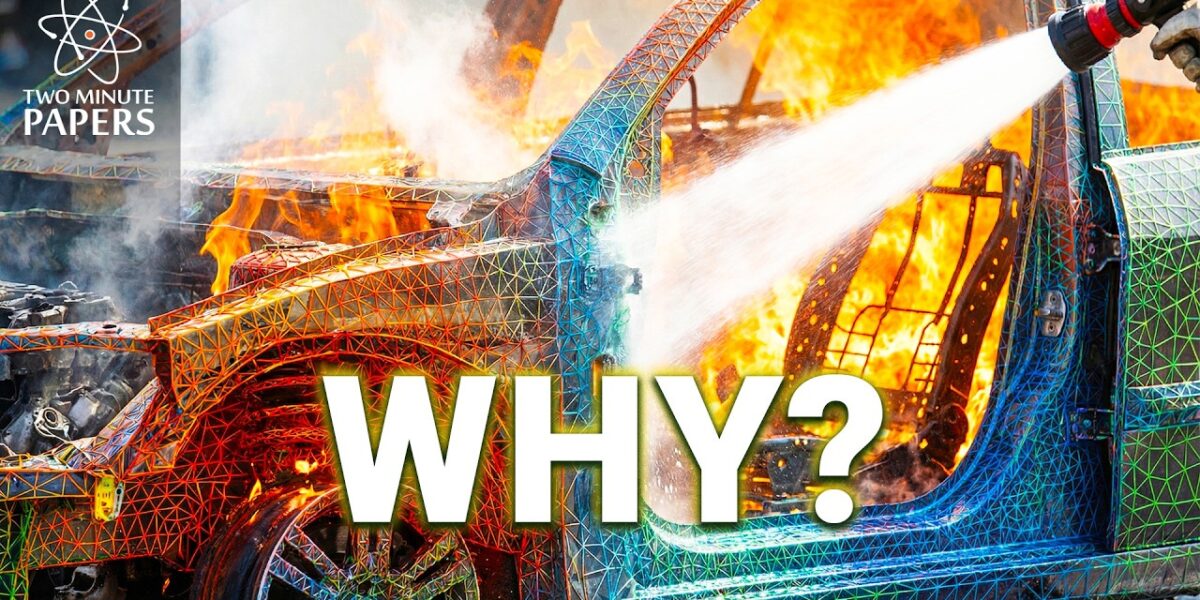
Revolutionary Fire Simulation Models Real-World Extinction Dynamics
For years, digital fire has been a visually convincing but physically shallow element in simulations, from video games to large-scale wildfire models. While rendering flames that spread and consume virtual environments has become increasingly sophisticated, the crucial aspect of fire extinguishment has remained a significant challenge.
Until now. A groundbreaking research project has introduced a new simulation technique that models fire dynamics with unprecedented chemical accuracy, allowing for realistic interactions with extinguishing agents like water.
Beyond Visuals: The Problem with Traditional Fire Simulation
Previous fire simulations, often found in video games, treated fire more like a visual effect than a complex chemical reaction. This meant that attempts to interact with the fire, such as spraying it with water, would often result in the water passing through the flames unrealistically, a phenomenon described as ‘clipping’.
This lack of physical accuracy limits the potential applications of these simulations, particularly in critical areas like fire safety training. Imagine training firefighters in a virtual reality environment where the water from their virtual hoses has no effect on the simulated fire – the training would be fundamentally flawed.
A Chemically Rigorous Approach to Fire Extinction
The new research tackles this problem head-on by developing a simulation that considers the fundamental chemistry of fire. By providing the simulation with the geometry of the scene, a fuel source, and a water source, it generates chemically rigorous results. This means the fire can be realistically extinguished by starving it of oxygen or cooling it down, mirroring real-world physics.
One of the striking advancements is the ability to model different types of flames based on varying fuel and oxygen ratios. The simulation accurately depicts how these variations lead to distinct flame behaviors.
When water is introduced, the simulation now realistically generates vapor. The effectiveness of water as an extinguishing agent is also modeled with nuance:
- Laminar Water Flow: A solid beam of water, characterized by its minimal surface area, is less effective. It struggles to absorb enough heat from the flames, limiting its cooling capacity.
- Water Spray: Breaking water into a fine spray dramatically increases its surface area. This allows for rapid heat absorption, cooling the fire zone effectively. The resulting steam also plays a key role by suffocating the fire by displacing oxygen.
Simulating Environmental Memory and Complex Interactions
The simulation’s capabilities extend beyond just extinguishing flames. It also models the environmental impact of fire, such as scorching and soot deposition.
When a wall is exposed to fire, the simulation doesn’t just apply a pre-determined texture. Instead, it tracks the formation of soot during incomplete combustion and deposits it onto the surface, creating a visual representation of the environment ‘remembering’ being burned.
The research also demonstrates an understanding of advanced firefighting techniques. In one example, the simulation models the Venturi effect by spraying water *out* of a window. This action creates a low-pressure zone that effectively vacuums smoke and heat from the room, a principle vital in real-world fire suppression.
Adding another layer of realism is the simulation of annealing. When a metal rod is heated and the flame removed, the rod continues to glow and slowly cools down, even becoming a temporary light source. While not the primary focus of the research, this detail significantly enhances the fidelity of the simulation.
Multiphase Dynamics and Real-World Implications
The simulation tackles complex multiphase scenarios, where solids, liquids, and gases interact simultaneously. This is crucial for understanding events like car fires, where liquid fuel, hot gases, and solid components all play a role.
The simulation accurately models how water interacts with hot gas, turning into steam, which then mixes with smoke. This chaotic interplay of thermodynamics is calculated in real-time, a feat that drastically advances the field.
Why This Matters: A Virtual Safety Lab
The most compelling aspect of this research lies in its potential to revolutionize safety training and disaster preparedness. By accurately simulating fire behavior and extinction, the technology offers a powerful ‘virtual safety lab’.
Consider a kitchen fire scenario: a slight delay in activating a sprinkler system can lead to a catastrophic outcome, with the fire spreading rapidly and filling the room with smoke. However, by simulating the ‘what if’ scenario of activating the sprinkler just moments earlier, the fire can be instantly cooled and extinguished.
This capability allows for the testing of millions of variables – different sprinkler positions, activation delays, and fuel types – without any real-world risk or cost. It provides invaluable insights into how small changes can have significant impacts, ultimately leading to better safety protocols and potentially saving lives.
The Technical Breakthrough: Bridging Simulation Worlds
The core innovation behind this advanced simulation is not AI, but a sophisticated computational technique that bridges the gap between previously incompatible simulation methods. Traditional fire simulations often operate on a grid-based system (like a 3D spreadsheet calculating airflow and temperature), while water is typically modeled as discrete particles.
The researchers developed a high-speed ‘translator’ that allows these two distinct simulation worlds to communicate and interact effectively. This translator ensures that when water particles interact with the fire’s grid, the physics are calculated correctly. This connection enables water to realistically absorb heat, turn into steam, and displace oxygen, thereby extinguishing the fire.
Underpinning the fire’s behavior is the Arrhenius equation, a fundamental formula in chemistry that governs reaction rates. This equation makes the simulation highly sensitive to temperature. Even a small drop in heat caused by water instantly slams the ‘brakes’ on the chemical reaction, physically stopping the fire from burning.
Limitations and Future Potential
While this simulation represents a significant leap forward, it’s not without limitations. Currently, the solid elements within the simulation are static; the geometry cannot deform or change dynamically.
This means simulations are more likely to feature inanimate objects like metal rather than dynamic elements like growing trees. However, the researchers emphasize that this is an acceptable trade-off, and future iterations are expected to address these constraints.
The potential for this technology is immense. While the current focus is on accurate chemical simulation, future developments could lead to simulations capable of modeling entire cities, offering unprecedented tools for urban planning, disaster management, and advanced virtual training. This research highlights the ongoing progress in computational physics and its profound implications for safety, training, and our understanding of complex phenomena.
Source: The Most Realistic Fire Simulation Ever (YouTube)

Related Articles


Meta’s $88 Billion Metaverse Bet: A Virtual Reality Check
Meta's ambitious metaverse project, backed by an $88 billion investment, has faced significant criticism and technical setbacks. Despite initial market hype, the virtual world's slow progress and questionable user experience raise doubts about its future success. Investors watch closely as Meta navigates these challenges.


Bob Lazar’s Alleged UFO Base Recreated in Stunning VR Film
Luigi Vendittelli's 'Project Gravitator' uses advanced VR technology to recreate Bob Lazar's alleged UFO research base, S4. The film offers a visually stunning and detailed look at Lazar's controversial claims, marking a new era for visual storytelling in the UFO community.
New Physics Engine Merges “Cops” for Realistic Simulations
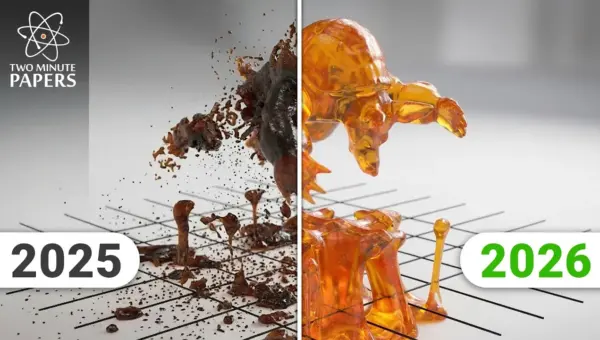
A new physics simulation technique merges two distinct computational methods, Finite Element Method and Material Point Method, to achieve unprecedented realism in simulating complex interactions. This breakthrough allows for simultaneous simulation of rigid structures and chaotic fluids, promising to revolutionize visual effects and scientific research.