X-Men: First Class Still Shines Years Later
Looking back at 2011's X-Men: First Class, the film that expertly blended mutant origins with historical events. It revitalized the franchise with strong performances and stylish direction, setting a high bar for superhero storytelling.

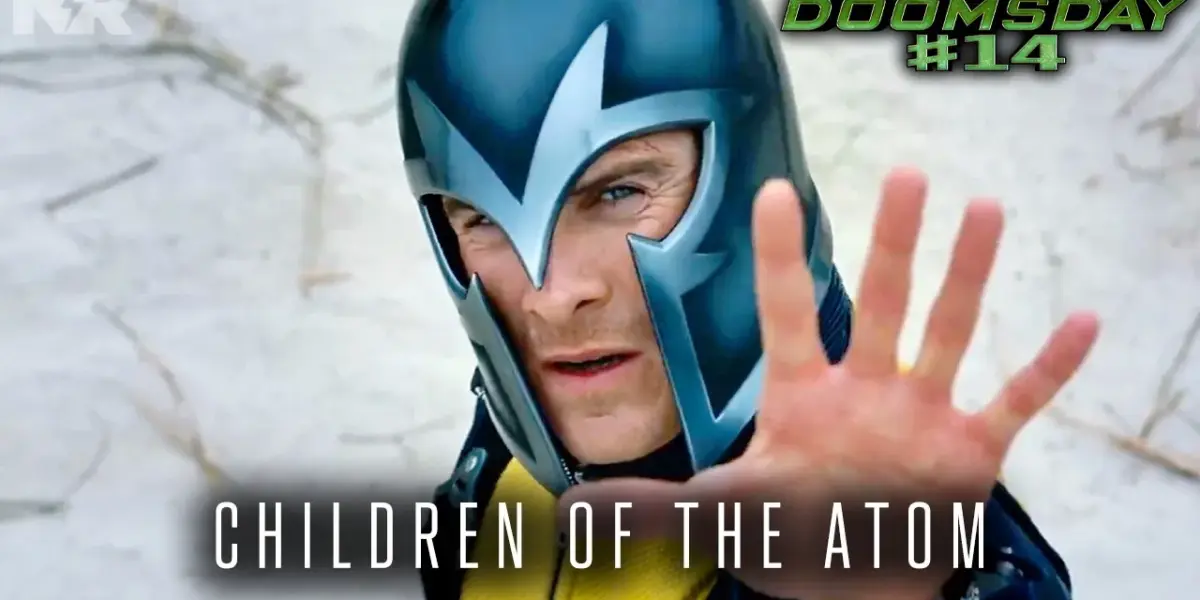
X-Men: First Class Still Shines Years Later
With mutants seemingly on the horizon for the Marvel Cinematic Universe, it’s the perfect time to look back at how the X-Men franchise tackled mutations in the past. 2011’s X-Men: First Class did a fantastic job of introducing these characters and their powers. The film blended mutant origins with historical events and showed how their abilities were a natural part of who they were. This revisited episode of the ‘Road to Doomsday’ podcast series dives deep into this gem.
A Fresh Start for the X-Men
Released on June 3, 2011, X-Men: First Class served as a reboot and prequel to the existing X-Men movies. Directed by Matthew Vaughn, the film brought a fresh energy to the franchise. It starred James McAvoy as a young Charles Xavier and Michael Fassbender as a young Erik Lehnsherr, who would later become Professor X and Magneto, respectively. The movie also featured Jennifer Lawrence as Raven, also known as Mystique, and Nicholas Hoult as Hank McCoy, who would become Beast.
Blending History and Superheroics
The film masterfully weaves its mutant narrative into real-world history, starting in 1944. We see a young Erik Lehnsherr’s powers emerge as he’s separated from his mother by Nazis. Sebastian Shaw (Kevin Bacon), a powerful mutant himself, witnesses this and forces Erik to use his metal-bending abilities. This origin story is powerful and sets the stage for Erik’s lifelong mission.
The story then jumps to 1962. Charles Xavier is a brilliant geneticist at Oxford, living with his shape-shifting adopted sister, Raven. Meanwhile, Erik is a man driven by revenge, hunting down former Nazis, including Shaw. CIA agent Moira MacTaggert (Rose Byrne) gets involved when she uncovers Shaw and his Hellfire Club plotting world domination. She brings Charles and Raven into the fold, leading to the formation of Division X, a secret government agency. Here, they meet Hank McCoy, a brilliant mutant scientist.
Building the X-Men Team
A significant part of the film involves Charles and Erik recruiting other mutants to join their cause. This leads to several memorable sequences, including a montage where they use Cerebro to find potential recruits. We meet Angel (Zoe Kravitz), Darwin (Eddy Gathegi), Banshee (Caleb Landry Jones), and Havoc (Lucas Till). The film even includes a hilarious cameo from Hugh Jackman as Wolverine, who tells them to “go f*** yourselves.” This moment, along with the film’s globe-trotting adventure style, often compared to a James Bond film, makes it incredibly fun to watch.
The Cuban Missile Crisis and Mutant Futures
The climax of X-Men: First Class takes place during the Cuban Missile Crisis in 1962. Shaw’s plan is to escalate the Cold War, believing that a global conflict will usher in a new era for mutants. The X-Men, now a team, must work together to stop him. During a confrontation, Erik’s powers are fully unleashed, leading to a brutal showdown with Shaw. In a pivotal moment, Erik kills Shaw by driving a coin through his head, mirroring the way Shaw killed Erik’s mother years earlier.
However, the battle comes at a cost. A stray bullet, fired by Moira, ricochets and paralyzes Charles. This event marks a turning point, solidifying Erik’s belief that humans and mutants cannot coexist peacefully. He embraces his destiny as Magneto, taking Raven and other mutants with him.
Legacy and Future Implications
X-Men: First Class was praised for its strong performances, particularly from McAvoy and Fassbender, its stylish direction, and its ability to revitalize the franchise. It successfully set up future X-Men stories by showing the origins of the iconic characters and their complex relationship. The film’s exploration of mutation as a natural evolution and its integration into historical events provided a solid foundation for how Marvel Studios might introduce mutants into the MCU.
The movie’s success led to several sequels, including X-Men: Days of Future Past, which further explored the timeline and character arcs. While some plot points have been debated over the years, the core of X-Men: First Class remains a compelling origin story that holds up as a fantastic superhero film.
Source: X-MEN FIRST CLASS (2011) REVISITED! | Road to Doomsday Ep 14 (YouTube)

Related Articles


Marvel’s Next Billion-Dollar Blockbuster: Who Will Reign Supreme?
Marvel's box office reign has hit a rough patch, with upcoming films like 'Avengers: Doomsday' facing stiff competition. While 'Black Panther 3,' 'X-Men,' and potential team-ups offer hope, the studio faces challenges in recapturing its billion-dollar streak.

Daredevil Strikes Back: Season 2 Drops Shocking Twists!
Daredevil: Born Again Season 2 kicks off with 'The Northern Star,' revealing Matt Murdock's new black suit and a city under Mayor Fisk's control. The premiere features a daring ship raid, the return of the anti-Fisk resistance, and a shocking intervention by Bullseye.


Daredevil Dons Black Suit, Faces Fisk’s Wrath
Daredevil returns in a new black suit, battling Mayor Fisk's oppressive regime in the premiere of Born Again. The episode reveals Fisk's tightening grip on New York, a mysterious government conspiracy, and a shocking unmasking that leads to an unexpected intervention from Bullseye.