Supreme Court Weighs Election Scheme’s Fate
The Supreme Court is reviewing a case that could drastically alter mail-in voting procedures across the U.S. At the heart of the matter is whether ballots arriving after Election Day, but postmarked by Election Day, should be counted. This legal challenge, brought by the RNC, is seen by voting rights advocates as a significant threat to election access.

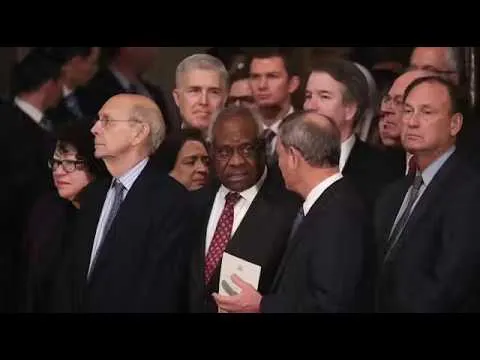
Supreme Court Weighs Election Scheme’s Fate
The Supreme Court is currently examining a case with major impact on upcoming elections. This case centers on mail-in ballots that voters send before Election Day but which arrive at election offices a day or two late due to postal delays. While about half of U.S. states count these ballots, the other half do not. This legal battle could significantly shape how Americans cast their votes.
A Challenge to Mail-In Voting
The Republican National Committee (RNC) has filed a lawsuit challenging Mississippi’s practice of counting mail-in ballots that arrive shortly after Election Day, even if postmarked by Election Day. This is happening in Mississippi, a state that does not even offer no-excuse absentee voting and is run by Republicans. The RNC argues that allowing these late ballots violates the federal law setting Election Day as the Tuesday after the first Monday in November. Mark Elias, involved in the case, believes this is a crucial fight for voting rights.
“This is an all-out assault on free and fair elections. They’re trying to rig it by doing away with mail-in voting. And this case in the US Supreme Court, it is the lynch pin.”
Elias suggests this lawsuit is part of a broader Republican strategy to restrict mail-in voting, seen in various state laws and proposed federal legislation like the Save Act. He warns that if the court rules against counting these late ballots, it could lead to challenges against other voting methods, such as early voting.
The RNC’s Strategy and Legal Arguments
The choice of Mississippi as the state to sue is notable. Elias points out that suing a state without no-excuse absentee voting and being in the Fifth Circuit court might have been a strategic move by the RNC. His team is actively involved in the case, representing groups like Vet Voices and the Alliance for Retired Americans, to ensure strong arguments are made to protect voting rights. Elias recalls a past Supreme Court case where justices questioned if Republicans would stop at challenging one law, and he predicts this is just the beginning if they succeed.
The core of the RNC’s argument is that federal law defines Election Day strictly as the Tuesday following the first Monday in November. They contend that only ballots received by this date should count. This interpretation, Elias argues, is not a natural reading of the law and contradicts how many states currently operate, especially when considering early voting and mail-in ballots that are often returned before Election Day.
Historical Context and Precedents
The case brings to mind the 2000 presidential election in Florida. In that election, federal courts allowed late-received military ballots, postmarked by Election Day, to be counted. These ballots ultimately proved critical, and some argue they were the deciding factor in George W. Bush winning the presidency. The RNC, however, dismisses this precedent, stating, “that was too bad then and now is now.” The Department of Justice has also weighed in, siding with the RNC’s position that ballots must be received by Election Day, except for military ballots.
Why This Matters
This Supreme Court case is more than just about a few late ballots. It represents a significant potential shift in voting access. If the court sides with the RNC, it could invalidate practices used in many states, potentially disenfranchising voters whose ballots are delayed by mail. It could also set a precedent for further restrictions on mail-in and early voting, methods that have become increasingly popular. The outcome directly affects the ability of citizens to participate in elections, especially those who rely on mail-in options due to convenience, accessibility, or circumstances beyond their control.
Implications, Trends, and Future Outlook
The legal battle highlights a growing partisan divide over voting methods. While historically mail-in voting was not a partisan issue, it has become one, largely due to rhetoric surrounding it. Republicans argue that restricting mail-in voting and focusing on Election Day voting could lead to more secure elections, though critics argue this is a tactic to suppress votes. The current trend suggests continued legal challenges to voting rules, particularly around mail-in and early voting. The Supreme Court’s decision will undoubtedly influence future election administration and voter access across the country.
Elias emphasizes the importance of citizens staying informed and engaged. He urges supporters to subscribe to outlets like Democracy Docket, which provide in-depth coverage of voting rights issues. He stresses that despite the challenges and potential for cynicism, the courts remain a vital check on power, and winning cases like this is essential for maintaining free and fair elections.
The Broader Fight for Voting Rights
The discussion also touched upon the doctrine of PCEL (Programmatic Contract Enforcement Litigation), which courts sometimes use to prevent changes to election rules too close to an election. Elias suggests PCEL should apply here, given the proximity to the midterms, but notes that its application can be inconsistent. The case is also seen in the context of broader voting rights battles, including challenges to Section 2 of the Voting Rights Act, which protects minority voting rights.
Ultimately, the case before the Supreme Court is a critical test for the future of voting in America. It forces a national conversation about how accessible and secure elections should be, and who gets to decide the rules of participation.
Source: BREAKING update at Supreme Court over election scheme (YouTube)

Related Articles

Supreme Court Cases Threaten Rights, But Congress Holds a Fix
The Supreme Court's recent hearings on mail-in ballots and asylum suggest rulings that could restrict voting access and limit refugee claims. However, these decisions are based on statutes, giving Congress the power to enact fixes if Democrats regain power, potentially safeguarding these rights.
Trump’s Mail-In Ballot Hypocrisy Fuels Voter Suppression Debate
Donald Trump's personal use of mail-in ballots contradicts his public stance against them, fueling concerns about voter suppression. Evidence suggests widespread voter fraud is rare, and efforts to restrict voting access disproportionately affect marginalized communities.

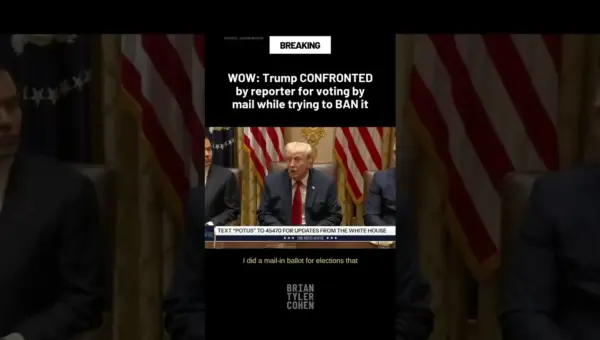
Trump Votes by Mail While Attacking Mail-In Ballots
Former President Donald Trump was confronted for using mail-in ballots while publicly opposing the practice. This contradiction raises questions about trust in democratic processes and highlights the polarized debate surrounding voting methods.