Trump Eyes Iran War Exit, Shifts Strait of Hormuz Burden
President Trump is signaling a potential drawdown of U.S. forces in the Iran conflict, suggesting other nations should secure the Strait of Hormuz. Analysts point to internal U.S. divisions and Iran's strategic asymmetric warfare as key factors shaping the ongoing crisis.

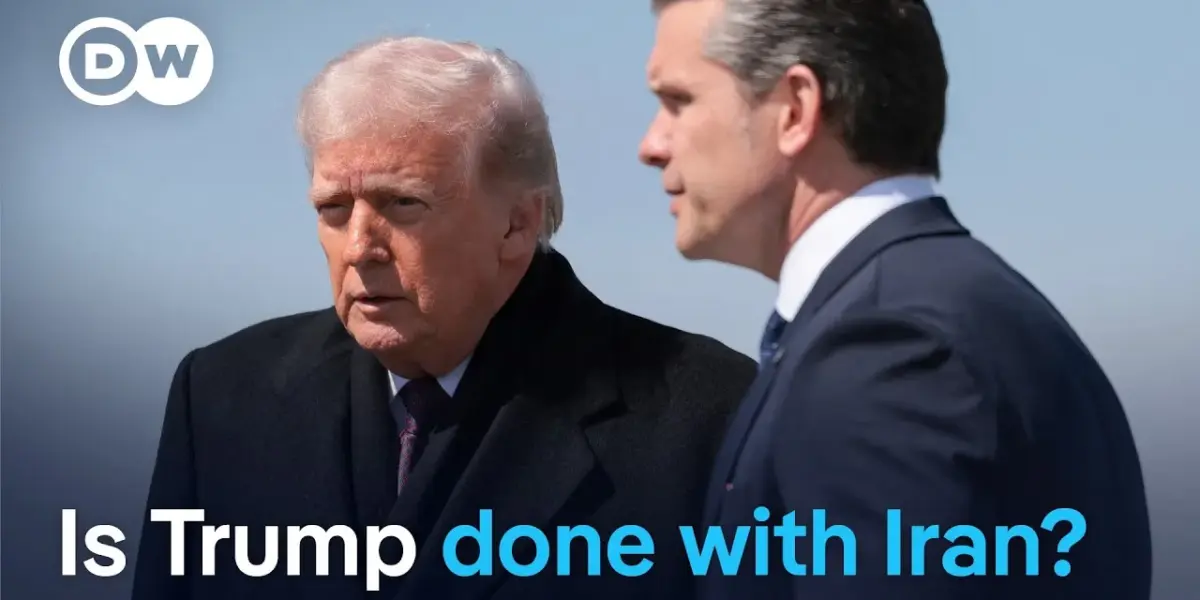
Trump Mulls Iran Conflict Drawdown, Eyes Global Partners
U.S. President Donald Trump has signaled a potential winding down of military operations in the ongoing conflict with Iran, suggesting a shift in strategy that could place the responsibility for securing vital international waterways onto other nations. The remarks, made via social media and public statements, come three weeks into the conflict and introduce a new layer of complexity to the geopolitical situation.
Conflicting Signals on Ceasefire and Military Action
President Trump has sent mixed messages regarding the future of U.S. involvement. In a recent statement, he indicated a reluctance to pursue a ceasefire, stating, “You don’t do a ceasefire when you’re literally obliterating the other side.” He described Iran’s military capabilities as severely degraded, with their navy, air force, and leadership significantly impacted. However, a subsequent post on Truth Social suggested a move towards “winding down military efforts” due to this perceived degradation.
“The Hormuz Strait will have to be guarded and policed as necessary by other nations who use it.”
– President Donald Trump
This suggestion that other nations should take over policing the Strait of Hormuz, a critical chokepoint for global oil transport, has raised questions about the feasibility and implications of such a unilateral withdrawal.
Internal Divisions and Shifting War Aims
Analysts suggest that conflicting objectives within the U.S. government may be influencing the President’s stance. William Alber, a former NATO official and senior fellow at the Pacific Forum, noted a “real dichotomy” regarding war aims. These range from complete regime change to merely degrading Iran’s military capabilities, including its nuclear program.
Alber also pointed to internal political pressures, particularly the sensitivity to market shifts like rising oil prices, which can impact elections. He highlighted potential infighting within the White House, with figures like Vice President J.D. Vance favoring less Middle East engagement, while others like National Security Adviser Marco Rubio adopt a more interventionist stance.
Iran’s Nuclear Program Under Scrutiny
Amidst the conflict, reports emerged of a U.S.-Israeli attack on Iran’s Natanz uranium enrichment facility. Israel has stated it was unaware of such an attack. Alber, a nuclear non-proliferation expert, discussed the potential impact on Iran’s nuclear capabilities.
He explained that while Iran possesses facilities for uranium enrichment, including at Fordo and Natanz, these are believed to have been heavily damaged. Iran was also reportedly developing a third facility at Natanz. Alber clarified the nature of the threat posed by enriched uranium, describing it as contained in large metal tanks of uranium hexafluoride gas. While toxic if inhaled, he emphasized that destroying these containers would not cause a widespread radiation release or a nuclear explosion, likening the danger to a localized event.
The key challenge, Alber noted, is accounting for or destroying the substantial amount of 60% enriched uranium, which is close to weapons-grade. He stressed that bombing alone makes it difficult to confirm the destruction of all such materials, underscoring the need for on-the-ground verification, which the International Atomic Energy Agency (IAEA) has been seeking from Iran.
Ballistic Missile Strikes and Strategic Signaling
The conflict has also seen reports of Iran launching ballistic missiles toward the joint U.S.-U.K. base on Diego Garcia in the Indian Ocean, a distance of approximately 4,000 kilometers from Iran. According to U.S. media reports, citing officials, these missiles reportedly missed their target.
Sarah Kmanian from the University of Sussex described these potential strikes as symbolic gestures rather than direct military threats. She suggested Iran might be using longer-range missiles with reduced payloads to achieve a “strategic shock” and destabilize the situation, demonstrating a willingness to strike targets far beyond the immediate region. Such actions, if they were to become more effective, could theoretically place parts of Europe under Iranian missile threat, a scenario previously self-limited by Iran.
Iran’s Asymmetric Warfare Strategy
Kmanian also analyzed Iran’s apparent war strategy, characterized by asymmetric tactics focused on degrading U.S. capabilities and reminding Gulf states of the costs of their alliances with the U.S. She indicated that this strategy appears to be driven by a core leadership within the Islamic Revolutionary Guard Corps (IRGC), following a predetermined plan even after the death of General Qasem Soleimani.
This decentralized structure, based on ideological alliances, allows the IRGC to maintain a degree of cohesion and pursue its objectives. Kmanian suggested that Iran might welcome a prolonged conflict to inflict costs on adversaries, especially if sanctions remain in place, viewing it as a fight for survival with higher resilience compared to its opponents.
Regional Ramifications and Escalation Risks
The conflict’s expansion beyond the Middle East, including the reported missile launch towards Diego Garcia, raises concerns about broader regional involvement. William Alber noted that Gulf states, including Saudi Arabia, had previously pressured the U.S. for a tougher stance on Iran, particularly concerning its regional proxy activities. However, they are now cautious about direct engagement, fearing prolonged retaliation.
Kmanian added that many regional powers may have underestimated Iran’s resilience and its willingness to inflict costs. She identified potential escalation points, such as disruptions to oil transport routes like Bab al-Mandab if the Houthis become more active, and the complex geopolitical implications of forming any military coalition against Iran, which could draw in other actors and further tensions.
Iraq as a Potential Flashpoint
The situation in Iraq is also a growing concern. Drone attacks on Baghdad’s national intelligence office and ongoing actions by Iran-backed militias against U.S. troops highlight the country’s volatility. Kmanian views Iraq as a potential flashpoint, where internal divisions could be exacerbated by the conflict, leading to new front lines between various militant groups and factions.
Furthermore, Iran has been targeting Iranian Kurdish parties within the Kurdish region of Iraq, adding another layer of complexity. The potential for the conflict to spill over into Iraq underscores the interconnected nature of regional security and the risks of wider escalation.
The Kurdish Factor
The role of Kurdish populations, spread across Iran, Iraq, Turkey, and Syria, is another intricate element. Kmanian noted that Iran has been attacking Kurdish bases in Iraq since the conflict began. Reports suggesting the U.S. might use Kurds as ground forces, though denied by both sides, have placed them under increased security scrutiny and made them targets for Iran.
Looking Ahead
As President Trump considers a drawdown, the geopolitical landscape remains fraught with uncertainty. The focus will be on whether other nations will indeed step up to secure the Strait of Hormuz, how Iran will respond to continued pressure and potential nuclear facility strikes, and whether the conflict will escalate further or find a path toward de-escalation. The stability of Iraq and the complex dynamics involving regional powers and non-state actors will be critical to watch in the coming weeks.
Source: Trump mulls 'winding down' the war and says 'other nations' should guard Hormuz | DW News (YouTube)

Related Articles


Trump’s Iran Claims: Shocked or Deluded by War Games?
Donald Trump claimed surprise over Iran's actions in the Strait of Hormuz, but experts suggest retaliation was inevitable. Military war games likely predicted such a scenario, raising questions about the advice given to the President.
Israel’s Strategy Against Iran Revealed
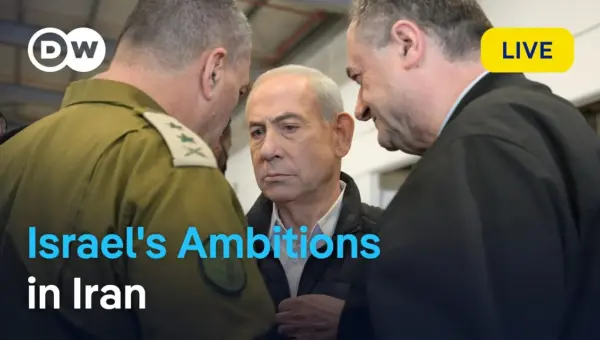
Israel's strategy to counter Iran's nuclear ambitions and regional influence centers on containment, utilizing a mix of covert military actions, intelligence operations, and diplomatic pressure. Analysts highlight the growing urgency due to Iran's nuclear advancements, while also noting the persistent risk of escalation in the volatile Middle East.

Israel Eyes Lebanon Buffer Zone: A Political Ploy?
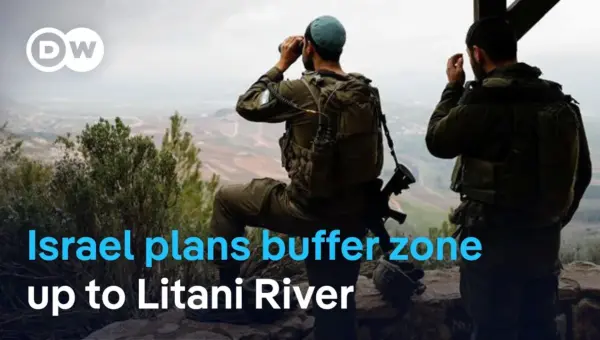
Israel's military operations in southern Lebanon aim to create a buffer zone and pressure Hezbollah, according to expert Yazid Sayigh. He argues the strategy is more political than military, echoing historical tactics. The ongoing conflict could destabilize Lebanon further, while Hezbollah fights for survival.