Did Trump Use Iran Attack to Hide Epstein Scandal?
A new poll indicates a majority of Americans suspect Donald Trump's attack on Iran was a strategic move to distract from the Jeffrey Epstein scandal. The timing of the military action, shortly after sensitive Epstein-related documents were released, fuels this public skepticism, revealing a significant partisan divide in beliefs.

A New Poll Suggests Americans Suspect a Distraction Tactic
A recent poll has revealed that a majority of Americans believe Donald Trump’s decision to attack Iran was partly a way to divert attention from the unfolding Jeffrey Epstein scandal. This perspective, shared by 52% of those surveyed, suggests a deep public skepticism about the timing and motives behind the military action. The poll indicates that many Americans see the Iran confrontation not as a necessary defense strategy, but as a calculated move to overshadow damaging revelations about Epstein and his associates.
Timing Fuels Public Suspicion
The timing of the Iran attack appears to be a key factor fueling public doubt. The military action occurred just days after the Department of Justice was compelled to release certain documents related to the Epstein investigation. These documents reportedly included details from interviews where a victim accused Trump of sexual and physical assault. The proximity of these events, a mere 48 hours apart, has led many to question whether the timing was a mere coincidence or a deliberate distraction. This has led to the idea that the Iran operation might have been more about managing domestic news than addressing foreign policy concerns.
Poll Results Show Partisan Divide
As expected, the poll results showed a significant divide based on political party. Among Democratic voters, a strong 81% agreed that the Iran attack was intended to distract from the Epstein scandal, while only 14% disagreed. Independent voters largely mirrored the overall public sentiment, with 52% believing the attack was a distraction and 40% disagreeing. However, Republican voters showed a starkly different view. A large majority, 64%, rejected the idea that the Iran action was linked to the Epstein files, with only 26% suggesting it was a distraction. While this 26% is a minority, the fact that more than a quarter of Republicans acknowledged the possibility is seen by some as a notable outcome.
Media’s Role in Shaping Narratives
The analysis suggests that the media plays a crucial role in how these events are perceived. The intense focus on a potential war, with its daily developments and uncertainties, naturally draws significant public attention. This can effectively push other, potentially more damaging, stories to the background. The media’s appetite for war coverage, which guarantees viewership and engagement, may inadvertently benefit those seeking to control the news cycle. As a result, the serious allegations and ongoing revelations surrounding the Epstein case have, for a time, been reduced from major headlines to mere whispers in the public discourse.
Why This Matters
This situation highlights a critical dynamic in modern politics and media: the power of distraction. When significant scandals emerge, there’s often a question of whether political figures might use major events to shift public focus. The poll results indicate that a substantial portion of the American public is aware of and suspicious of such tactics. This suggests a growing public sophistication in discerning manufactured crises from genuine threats, and it puts pressure on both politicians to be transparent and media outlets to maintain focus on important, albeit uncomfortable, truths.
Historical Context and Trends
The use of external events or conflicts to distract from domestic problems or scandals is not new. Throughout history, leaders have sometimes engaged in foreign policy actions or military engagements to rally national support or divert attention from internal turmoil. This tactic, often referred to as a “rally ’round the flag” effect, can be effective in the short term. However, in an era of 24/7 news cycles and social media, the public’s ability to access information and connect dots is also enhanced, potentially making such distractions less sustainable. The Epstein scandal itself has a long and complex history, touching on issues of wealth, power, and alleged abuse, making its revelations particularly sensitive and impactful.
Implications and Future Outlook
The implications of this poll are far-reaching. For Donald Trump, it suggests that his actions are being closely scrutinized, and a significant portion of the electorate is not easily swayed by manufactured crises. If a substantial number of voters, including some within his own party, perceive his motives as disingenuous, it could affect his political standing. For the media, it raises questions about their responsibility in covering potential distractions versus pursuing important investigative journalism. Looking ahead, the public’s awareness of distraction tactics may grow, making it harder for politicians to use them successfully. The ongoing revelations from the Epstein files could continue to influence public opinion and political discourse, especially if they reveal further connections or shed more light on alleged cover-ups.
Source: Trump Hits ROCK BOTTOM, Loses Everyone (YouTube)

Related Articles

Trump Halts Iran Strikes Amid Stalled Diplomacy
President Trump announced a pause on planned strikes against Iran, citing productive talks, though Iran denies negotiations occurred. Reports also suggest a potential U.S. ground operation on Iran's Hark Island. The situation raises concerns about international support for Ukraine and potential shifts in U.S. foreign policy.
Trump’s ‘Board of Peace’ Crumbles Amidst Global Conflict
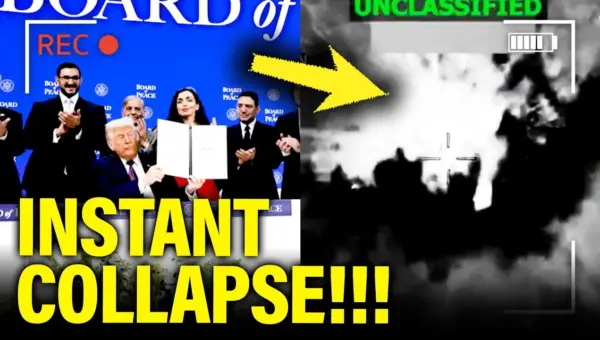
Donald Trump's 'Board of Peace,' launched with grand ambitions from Davos, faced immediate scrutiny over its $1 billion permanent membership fee. Despite attempts to secure ceasefires, the initiative appeared to falter as global conflicts, including strikes on Iran, escalated, leaving its intended purpose overshadowed.

Trump Ignored Iran War Warnings, Aides Feared Retaliation
President Trump allegedly ignored repeated warnings from his own intelligence agencies regarding the dangers of escalating conflict with Iran. Reports suggest his administration was unprepared for predictable responses like the closure of the Strait of Hormuz and significant depletion of munitions. Many within the White House reportedly suppressed their concerns for fear of repercussions.