Starship Ignites: SpaceX Tests New Engines on Pad 2
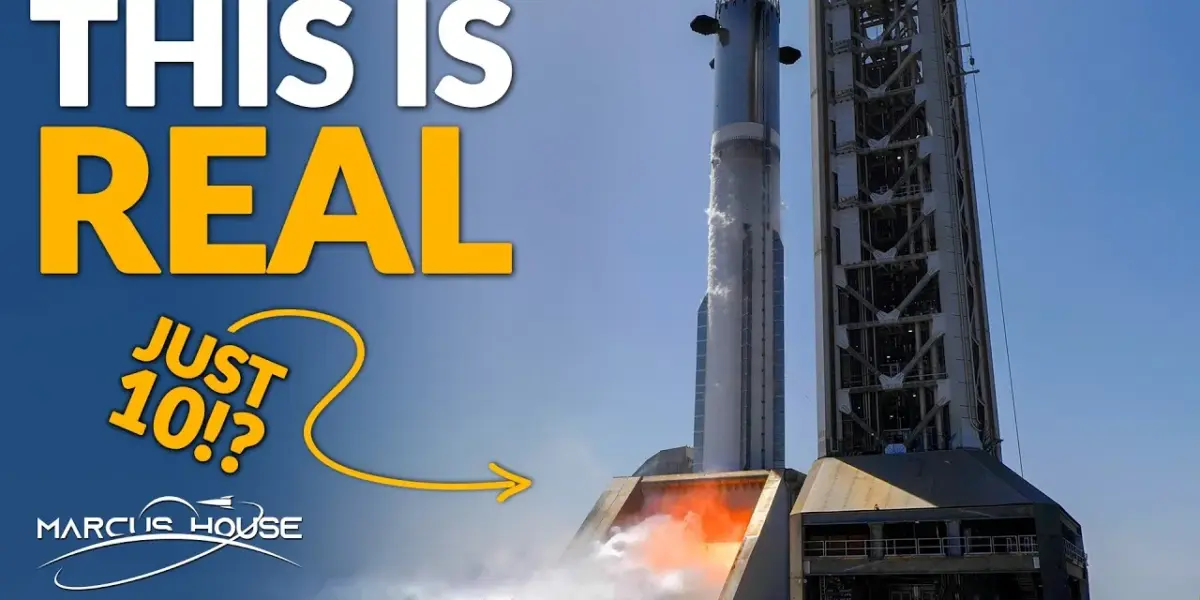
SpaceX successfully conducted a crucial engine test fire of its Super Heavy booster on the new Pad 2, igniting 10 Raptor engines. This marks a significant step towards Starship's full-scale testing and future missions. The report also touches on potential shifts in NASA's Artemis plans and the continued expansion of Starlink.

Starship Ignites: SpaceX Tests New Engines on Pad 2
SpaceX has successfully fired up its Starship engines for the first time on the new Pad 2. This significant test involved a version of the Super Heavy booster equipped with 10 Raptor engines. The event marks a crucial step in SpaceX’s ambitious plan to build a fully reusable rocket system capable of deep space exploration.
Super Heavy Roars to Life
The Super Heavy booster, a colossal rocket designed to carry the Starship spacecraft, has undergone a series of tests at SpaceX’s Starbase facility in Texas. The most recent test fire on Pad 2, a newly constructed launch site, was particularly noteworthy. Even with only 10 of its 33 planned Raptor engines installed, the test provided valuable data.
Before the engine ignition, the Super Heavy booster was carefully maneuvered onto the launch mount. This involved lifting it from a transport stand, a process that has become more routine with each test. The booster was then secured by the launch pad’s clamps, and propellant connections were made. This setup is designed to feed both liquid oxygen and methane to the powerful Raptor engines.
The test fire itself included an initial ignition sequence, marked by a high-pitched whine and an orange flash beneath the stand. This suggested an ignitor test went well. The following day, the booster was fully loaded with propellant for a more substantial test. This time, the water deluge system activated, and the Raptor engines roared to life. The test was relatively short, but it offered a spectacular preview of the exhaust plume exiting the bidirectional flame trench.
Innovations in Engine and Pad Design
One of the key changes observed is the simplified propellant feeding system. Unlike older versions where each engine had individual connections, the new setup uses just two quick disconnects for all 33 engines. This streamlines the process and reduces complexity.
SpaceX also confirmed that all 10 Raptor engines ignited successfully during the test. While a ground-side issue caused the static fire to end early, the mission gathered crucial data. The company plans to prepare the booster for a full 33-engine static fire soon, which is expected to be the most powerful static fire in history.
The Super Heavy booster, designated Booster 19, also showed off a new feature: black-coated metallic tiles on its exterior. These tiles, layered with insulation, are designed to protect the booster from the intense heat of reentry. While not as complex as the heat shield tiles on the Starship spacecraft, they represent an important upgrade for booster survivability.
Artemis Missions and Future Plans
The article also touches upon the future of NASA’s Artemis missions. There are indications that NASA is considering a new plan that would involve SpaceX’s Starship for lunar missions. This proposal suggests that Starship could potentially be used to transport the Orion spacecraft and astronauts to lunar orbit. Currently, NASA remains committed to using the Space Launch System (SLS) for Artemis missions through at least Artemis V.
Meanwhile, NASA’s Artemis II mission, which will send astronauts around the Moon, is preparing for launch. The vehicle has returned to Launch Pad 39B at Kennedy Space Center, with NASA targeting an April 1st launch window. Notably, NASA has stated they will not conduct another full wet dress rehearsal before launch, a decision that surprised many.
Starlink Continues to Grow
SpaceX’s Starlink satellite internet constellation continues its rapid expansion. The past week saw five Starlink launches, bringing the total number of satellites in orbit past the 10,000 mark. This milestone highlights Starlink’s position as the largest orbital megaconstellation.
Other Space News
The article also briefly mentions updates from Blue Origin regarding their New Glenn rocket production and engine testing. It also covers a recent spacewalk by NASA astronauts on the International Space Station to install new solar arrays. Additionally, Rocket Lab announced a significant contract for hypersonic testing missions.
A Century of Rocketry
The report concludes by reflecting on the 100th anniversary of the first liquid-fueled rocket test by Robert Goddard. His small, 41-foot flight in 1926 laid the foundation for modern rocketry. Today’s advanced rockets, like Starship, stand on the shoulders of Goddard’s pioneering work, demonstrating how far humanity has come in space exploration.
Source: SpaceX Finally Lit Super Heavy… But Something Was Off (YouTube)

Related Articles
Astronaut Recounts Space Medical Scare, Informs Future Missions
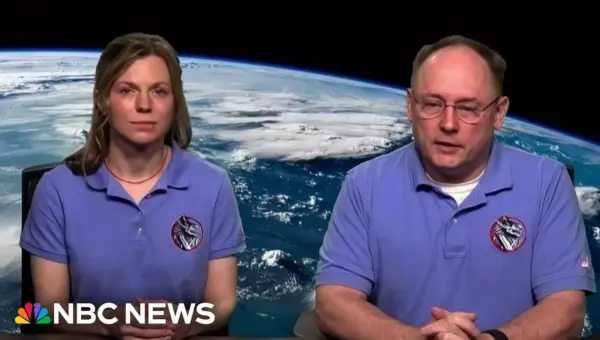
Astronaut Mike Fincke detailed a recent medical emergency aboard the ISS that led to his return to Earth. While doctors ruled out serious conditions like stroke, the exact cause is still being studied, with theories pointing to a space-related anomaly. The experience is providing crucial data for future long-duration missions, including NASA's Artemis program.

NASA Pivots: Mars Nuclear Probe, Moon Base Ahead
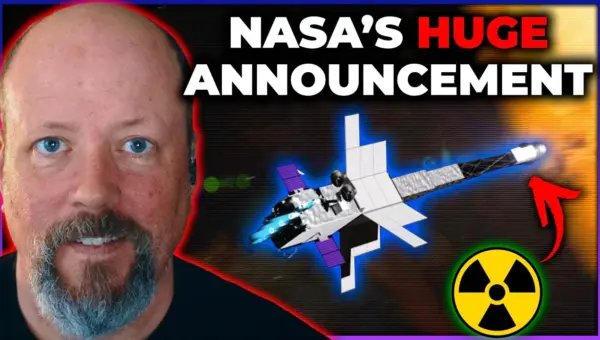
NASA is pivoting its exploration strategy, prioritizing a nuclear-powered Mars probe and accelerating plans for a moon base. The International Space Station's future is uncertain, with a shift towards commercial platforms. Meanwhile, new telescope data reveals overmassive black holes in dwarf galaxies and captures stunning images of Saturn and the Crab Nebula.


US Military Pursues Secret Tech, Lunar Base Plans Emerge
Reports indicate the US military and defense contractors are exploring advanced technologies, possibly reverse-engineering unknown craft. Concurrently, NASA plans a lunar base, while millions of UAP-related files are allegedly deleted, raising transparency concerns. These developments could reshape global power dynamics.