Cyprus at Risk: War Fallout Reopens Island’s Deep Divisions
Cyprus finds itself increasingly exposed as the Iran-Israel war escalates, triggering public protests and military deployments. The island's strategic location and historical divisions are reopening debates about security and foreign military bases. European solidarity is being tested as Cyprus navigates its role amidst regional conflict.

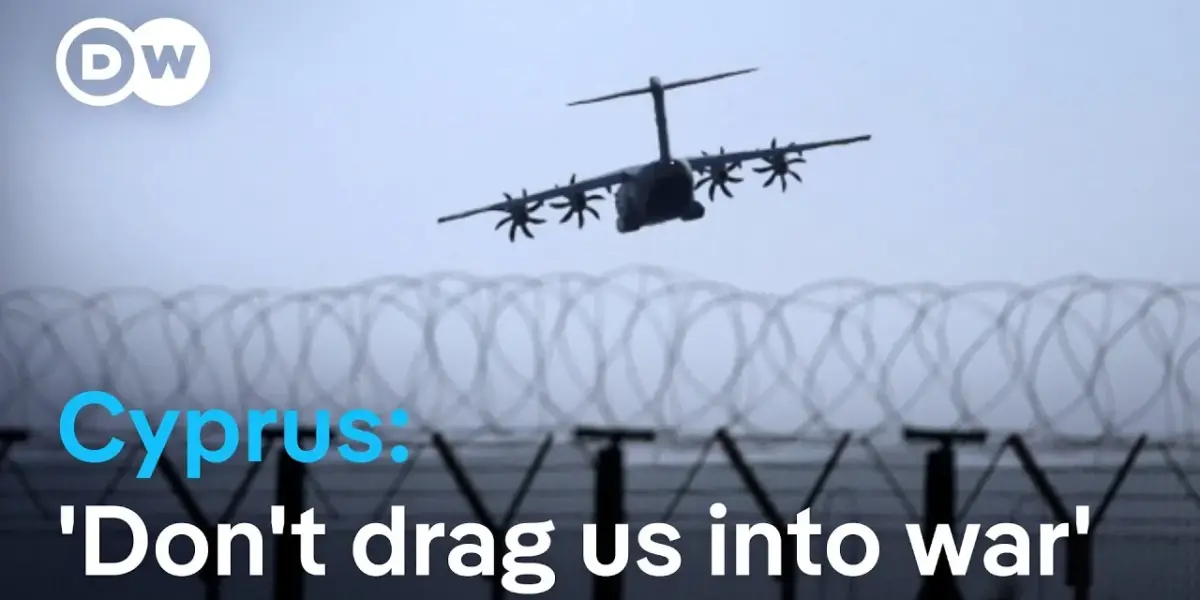
Cyprus Feels War’s Reach Amidst European Hesitation
As the conflict between Iran and Israel continues to impact the Middle East, a growing unease is palpable across Europe. Recent polls show broad public opposition to deeper involvement in the war, with protests erupting continent-wide. European governments face pressure from the United States to provide more support, while their own citizens urge caution to avoid being drawn into the conflict. This complex debate is particularly sharp in Cyprus, an European Union member state uniquely positioned to feel the war’s effects.
Strategic Location Draws Conflict Closer
Cyprus, a Mediterranean island, finds itself strategically located near the Middle East, making it a focal point for regional tensions. Its history as a former British colony has left a lasting legacy, including British military bases. Recently, an Iranian-made drone, suspected to be launched by Hezbollah from Lebanon, struck a British Royal Air Force base on the island. While the damage was minimal and no one was injured, the incident ignited fierce debate among Cypriots about their country’s role and security.
Public Mistrust and Calls for Base Removal
The drone attack has fueled public mistrust, particularly regarding the continued presence of British bases. Many Cypriots view these bases as targets that put the island at risk. “I believe UK bases must leave from Cyprus. It’s very bad for us to stay there,” stated one resident, expressing a common sentiment. Others argue that the bases make Cyprus a target, suggesting it’s time to reconsider their status. The British government maintains that the bases help protect the region, but Cypriot authorities are facing increasing questions from citizens.
Government Stresses Safety Amidst Regional Crisis
Cypriot officials have been working to reassure the public, emphasizing that the country is safe and was not directly targeted. “We have diplomatic excellent relationships with all the countries in the area,” said an official. “The message that we send every day… that Cyprus is not part of the problem, it’s always part of the solution.” Despite these assurances, the drone incident prompted a significant response from other European nations.
EU Shows Unity with Military Deployments
Following the drone strike, France, Greece, and Italy quickly sent warships to bolster defenses in Cyprus. Analysts suggest these actions mark a new chapter for the European Union, with one observer noting, “the European Union looks like an actual alliance.” This coordinated military deployment highlights solidarity within the EU, especially as Cyprus, due to historical tensions with Turkey, cannot join NATO. The EU’s support is seen as crucial for the island’s security.
The ‘Cyprus Problem’ Deepens Divisions
Cyprus’s complex geopolitical situation is deeply rooted in its history, particularly the division of the island. After gaining independence from British rule in 1960, the island struggled to balance the interests of its Greek and Turkish Cypriot populations. Intercommunal violence and subsequent Turkish military intervention in 1974 led to a de facto division. Today, the southern part is the internationally recognized Republic of Cyprus, while the north is the self-declared Turkish Republic of Northern Cyprus, recognized only by Turkey.
A Divided Island Faces Renewed Tensions
This long-standing division complicates the response to current events. The capital, Nicosia, remains the world’s last divided capital, with checkpoints separating the Greek and Turkish Cypriot sides. Crossing requires passports, and different laws, currencies, and flags mark the distinct zones. The recent military buildup by EU states in the south has been mirrored by Turkey sending fighter jets to the north, raising concerns about increased political tensions.
Hope for Peace Amidst Geopolitical Realities
Activists like Banu Malli in the north express the reality that Cyprus cannot remain an isolated island due to its location. “We know that geopolitics will never make it possible for us to live like an isolated little Mediterranean island because where we are,” she stated. While many desire a reunified Cyprus free of foreign troops, the current climate leads some to believe a strong military presence is necessary for security. This perception, however, carries risks of escalation. Despite fears, there is a shared hope among both Greek and Turkish Cypriots to remain distant from the ongoing war in the Middle East.
Looking Ahead: Navigating a Fragile Peace
As the conflict in the Middle East continues, Cyprus remains on edge. The island’s unique geopolitical position, coupled with its internal divisions, makes it vulnerable to spillover effects. The coming months will be crucial in observing how the EU’s unified stance evolves and whether diplomatic efforts can prevent Cyprus from becoming further entangled in regional hostilities. The response to potential future incidents and the ongoing debate surrounding foreign military presence will be key indicators of the island’s path forward.
Source: Iran war: Cyprus' location and history leave it exposed to conflict | DW News (YouTube)

Related Articles


U.S. Iran Tensions Rise Amid Shifting Alliances
Rising tensions between the U.S. and Iran are creating a volatile geopolitical situation. With conflicting signals on de-escalation and potential shifts in alliances like NATO and U.S.-Israel relations, the path forward remains uncertain. The global economy and regional stability hang in the balance.


Iran Targets US With Cyberattacks, Escalating Digital Warfare
Iran is increasingly using cyberattacks to challenge the U.S., as seen in a recent hack of the FBI director's account. Experts say this is a strategic shift due to Iran's limitations in conventional warfare. The U.S. needs to strengthen its digital defenses, focusing on encryption and cloud computing, rather than solely relying on traditional security measures.
Ukraine Strikes Russian Oil Refinery, Eyes Iran Threat
Ukrainian forces struck a key Russian oil refinery, disrupting Moscow's war capabilities. Meanwhile, Finland's president urged continued U.S. support for Ukraine, as Kyiv shares its air defense expertise globally amid growing geopolitical complexities involving Iran and potential sanctions against Hungary.