Farage Invests in Bitcoin Firm, Sparking Political Finance Fears
Nigel Farage's £200,000 investment in a Bitcoin firm linked to Kwasi Kwarteng highlights the growing ties between cryptocurrency and populist politics. This trend, mirroring US developments, raises concerns about financial stability and conflicts of interest in British democracy.

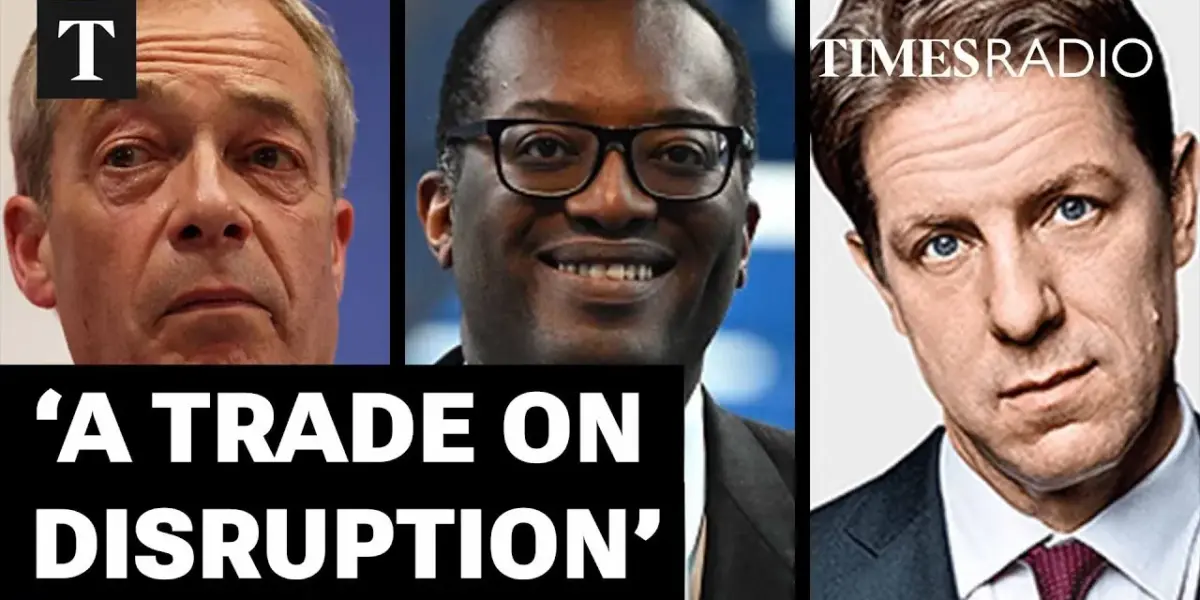
Farage Backs Crypto Firm Linked to Ex-Truss Aide
Nigel Farage, a prominent figure in British politics, has made a personal investment of £200,000 in a Bitcoin company linked to Kwasi Kwarteng. Kwarteng, a former Chancellor of the Exchequer under Liz Truss, is known for his role in the “mini-budget” that caused significant market turmoil. This investment raises questions about the intersection of cryptocurrency, populist politics, and financial stability in the UK.
Crypto and Populist Politics Forge Unlikely Alliance
The worlds of cryptocurrency and populist right-wing politics are increasingly finding common ground, a trend that has already been significantly shaped in the United States. Former President Donald Trump, who once dismissed crypto as a scam, has since embraced it. He recognized that many crypto backers share his anti-establishment views and distrust of central banks, viewing crypto as a way to challenge the financial status quo.
This alliance has translated into significant financial influence. In the US, crypto companies funded nearly half of all corporate donations in the 2024 elections, with their favored candidates achieving notable success. This level of financial backing from the crypto sector now outpaces any other corporate influence in American campaigns.
UK Sees Growing Crypto-Political Ties
A similar pattern is beginning to emerge in Britain. One major crypto investor, based in Thailand, has reportedly provided two-thirds of Reform UK’s financing. Reform UK is now outspending other political parties by a considerable margin. This financial influx suggests a growing effort to influence British politics through cryptocurrency funding.
The Appeal of Crypto: A Trade on Instability
The appeal of cryptocurrency, particularly for those who believe in challenging established financial systems, lies in its perceived potential to thrive during times of economic instability. While traditional companies seek stability, crypto investors often see opportunity in disruption. When national currencies weaken or face crises, digital currencies like Bitcoin might see increased value.
Fraser Nelson, writing for The Times, notes that crypto investors often point to Bitcoin’s history of recovery after market crashes. “Bubbles burst, but Bitcoin has come back from the dead many, many times,” he explains. This resilience, coupled with the vast sums of money within the crypto market, makes it an attractive area for investment, even for figures not traditionally associated with financial innovation.
Hype Generation: Politicians as Crypto Promoters
A key attraction of cryptocurrency for politicians lies in its ability to generate value through hype rather than tangible production. “If you’re a politician, this is the beauty of crypto. It doesn’t actually make anything. It doesn’t produce anything. The number just goes up,” Nelson writes. This allows for the conversion of public attention and political promises into financial gains.
Examples include political figures launching their own meme coins, which can rapidly gain significant market value. The potential for financial reward is substantial. Nigel Farage’s deal with Kwarteng’s company, for instance, includes provisions for a bonus of approximately £3 million in shares if the company reaches a target valuation of £100 million. This valuation is set for a company that, like many in the crypto space, does not produce physical goods.
Nelson points to companies like Ether, a major investment for a prominent Reform UK donor, which reportedly earns more than Goldman Sachs despite having a much smaller workforce. This highlights how, in the crypto world, valuations can be driven by factors other than traditional business metrics, making significant financial growth seem possible.
Concerns Over Democratic Norms and Conflicts of Interest
The growing financial involvement of politicians in crypto companies raises serious concerns about conflicts of interest and the integrity of democratic processes. In Britain, a long-standing principle is that politicians should not personally profit from companies whose success might be influenced by their public policy decisions.
Nigel Farage’s investment appears to challenge this norm directly. By investing in companies whose value could rise if he promotes a pro-crypto agenda, he creates a situation where his personal financial interests align with his political advocacy. This is seen as a departure from traditional standards of public service, where personal gain from policy is strictly avoided.
“If we lose that, we lose something very precious,” Nelson warns, referring to the principle that individuals should not benefit financially from companies whose stock prices rise due to their political actions. The transparency and integrity of British democracy could be undermined if such conflicts of interest become commonplace, mirroring trends observed in the United States.
Policing the New Financial Frontier
The challenge of policing these new financial relationships in politics is significant. If oversight relies heavily on politicians’ self-declaration and personal integrity, it could represent a fundamental flaw in the system. The lack of clear regulatory frameworks for crypto’s influence in politics leaves a gap that could be exploited, potentially eroding public trust.
A source close to Nigel Farage stated that he has “always been in the business and has had interests outside of politics.” However, the question remains how to effectively regulate and oversee these financial entanglements to ensure they do not compromise public policy or democratic principles.
What to Watch Next
As cryptocurrency continues to grow in influence, its integration with political movements is likely to deepen. Future developments will likely focus on regulatory responses to this trend, particularly concerning campaign finance and potential conflicts of interest for politicians involved in the crypto sector. The public’s trust in democratic institutions may depend on how effectively these new financial dynamics are managed and overseen.
Source: The Rise In The Right And Crypto: Why Farage Invests In Kwarteng’s Bitcoin | Fraser Nelson (YouTube)

Related Articles


Sacks Exits Crypto Role, Leaving Market Lacking Clarity
David Sacks has ended his term as White House AI and Crypto Czar without delivering promised legislative clarity or a strategic Bitcoin Reserve. His exit leaves the crypto market exposed and signals a shift towards risk-reward focused trading. Investors are now urged to rely on data and fundamentals rather than political hopes.

Crypto’s “Warfare” Era Ends? SEC/CFTC Clarity Offers Hope
The SEC and CFTC have announced a framework to classify digital assets, identifying 16 as commodities. This move aims to end years of perceived "warfare" and "lawfare" against the crypto industry under the Biden administration.


Bitcoin Bottom Signals Stack Up Amid Regulatory Hopes
Bitcoin shows potential bottoming signals, with on-chain data aligning with historical patterns and regulatory developments offering cautious optimism. Despite differing analyst views on future catalysts, adoption trends and investor conviction suggest a resilient cryptocurrency market.