Trump Lawyer Defends Handling of Accuser Claims
Attorney Todd Blanche discusses the investigation of accuser claims, using the Ghislaine Maxwell interview as an example. He explains the rigorous process of testing allegations and the challenges prosecutors face when evidence is insufficient, emphasizing the need for proof in bringing charges.


Todd Blanche Addresses Trump Accuser Claims Amid Epstein Files Release
The release of files related to Jeffrey Epstein has brought renewed attention to past allegations and investigations. In a recent interview, attorney Todd Blanche, who has represented Donald Trump, discussed how accuser claims are handled, particularly in cases where no charges are filed. The conversation touched upon the credibility of accusers and the investigative process within law enforcement agencies.
Investigating Claims: The FBI’s Role
Chris Cuomo, the interviewer, raised a point about an accuser whose claims were dismissed. He questioned why the accuser was interviewed multiple times if her story was deemed not credible by authorities. Blanche explained that investigators, often trained FBI agents, are tasked with testing claims. Their job is to listen to what a witness says and then try to verify it, especially when considering serious charges that could affect someone’s liberty.
Blanche stated that while he was not involved in that specific investigation, the process involves thorough examination. The findings and decisions made by agents at the time are now part of public records. Anyone can review these records and question the agents’ conclusions about the accuser’s credibility. However, the decision made then was that there was insufficient evidence to move forward with charges.
Prosecutors and Victims: A Difficult Balance
The discussion highlighted the challenges faced by career prosecutors. Blanche mentioned that these prosecutors in Florida and New York often speak with hundreds of victims. He noted that unfortunately, not every victim’s account provides evidence that can be acted upon to bring a case. This is a difficult reality in the justice system, where the goal is to pursue crimes when evidence supports it.
Ghislaine Maxwell Interview: A Strategic Move?
A significant part of the interview focused on Ghislaine Maxwell, who was convicted in connection with Epstein’s sex trafficking ring. Cuomo questioned why Maxwell, facing a lengthy prison sentence, had not offered information that could lead to further prosecutions if she had something significant to share. He specifically asked if Maxwell had suggested anything like that to Blanche.
Blanche confirmed he had interviewed Maxwell. He explained that he did so because no one else had spoken to her directly in that capacity. He felt it was important to get her account, especially given her situation. He emphasized that he went to her prison with an FBI agent and witnesses. Their four-and-a-half-hour conversation was recorded, and every word is available to the public.
Despite the interview, Maxwell did not offer evidence that could be used to build a case against others who had not yet been prosecuted. Blanche went to see her precisely because there was a public feeling that someone else needed to be held accountable. Maxwell was the one person they could access. He clarified that Maxwell did not receive any benefit, such as a move to a more comfortable prison, for speaking with him.
Prison Safety and Investigative Integrity
Blanche addressed concerns about Maxwell’s prison placement. He explained that the Bureau of Prisons (BOP) makes decisions about inmate security based on various factors. Threats against Maxwell had increased after people learned he was going to interview her. Therefore, the Department of Justice had to ensure her safety, as they do for all prisoners.
He reiterated that this move was not a reward for her cooperation or lack thereof. The core principle remains: any crime presented to them, especially involving underage victims, will be investigated. This commitment holds true today, just as it did during the investigations discussed.
Global Impact
The conversation underscores the complexities of the justice system when dealing with high-profile cases and sensitive allegations. The thoroughness of investigations, the need for verifiable evidence, and the protection of witnesses and defendants are all critical elements. The public’s desire for accountability often clashes with the legal requirement for proof beyond a reasonable doubt. This dynamic plays out globally in various legal and political arenas, influencing public trust and the perceived fairness of justice systems.
Historical Context
The Epstein case itself has a long history, involving powerful figures and extensive allegations spanning decades. The investigations into his network have been ongoing for years, with Maxwell’s conviction representing a significant, though not final, chapter. The challenges in prosecuting such cases often relate to the passage of time, the difficulty in gathering evidence, and the potential influence of well-connected individuals. This echoes historical patterns in complex criminal investigations where powerful networks are involved.
Economic Leverage
While not directly discussed in terms of financial sanctions or trade in this specific transcript, the concept of leverage is present. Maxwell’s potential to offer information in exchange for leniency is a form of leverage. Similarly, the government’s power to prosecute or offer deals is its own form of leverage. In broader geopolitical terms, economic tools like sanctions and trade agreements are frequently used to influence the behavior of nations, much like legal processes are used to influence individuals.
Future Scenarios
One scenario is that further information might emerge from ongoing reviews of the Epstein files, potentially leading to new investigations or shedding light on past decisions. Another possibility is that Maxwell might cooperate further in the future, although Blanche’s account suggests this has not happened yet. The public and media will likely continue to scrutinize these cases, seeking full transparency and accountability, which could pressure authorities to re-examine certain aspects or ensure future investigations are perceived as unimpeachable.
Source: Todd Blanche addresses Trump accuser in Epstein files | CUOMO (YouTube)

Related Articles


Epstein Survivors Sue DOJ, Google Over Data Leak
Survivors of Jeffrey Epstein have filed a class-action lawsuit against the U.S. Justice Department and Google, alleging the improper release of private information. The suit claims that despite the DOJ's efforts to retract the data, survivors' personal details remain accessible online, causing renewed trauma and threats to their safety. This legal action seeks accountability and aims to prevent future data disclosures.

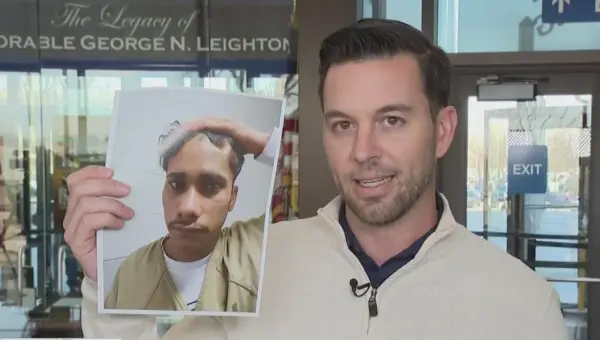
Immigration Debate Ignites Over Campus Killing
The detention hearing for Jose Medina, accused of murdering Loyola student Sheridan Gorman, has ignited a debate over immigration and mental capacity. Medina, an undocumented immigrant, will remain in custody. His defense cited head trauma and developmental delays, requesting jail time to prevent deportation and ensure due process.


Immigrant Status Fuels Deportation Fight in Chicago Murder Case
A murder suspect from Venezuela, Jose Medina-Medina, accused of killing a Loyola student, is at the center of a legal battle. The U.S. government wants him deported, while Illinois wants him to face murder charges. This case highlights the complex intersection of immigration law and criminal justice.