Rep. Vindman Slams Biden Admin’s “Chaos” Middle East Policy
Virginia Congressman Eugene Vindman criticizes the Biden administration's Middle East policy as chaotic and lacking a clear plan, leading to increased costs for Americans. He argues that actions like easing sanctions on Russia and engaging with Iran are not serving U.S. interests. Vindman also points to divisions within the Republican party regarding the definition of 'war' and its implications for congressional oversight.

Rep. Vindman Slams Biden Admin’s “Chaos” Middle East Policy
Virginia Congressman Eugene Vindman, a member of the House Armed Services Committee, sharply criticized the Biden administration’s handling of recent Middle East conflicts, calling it a policy of “chaos” lacking a clear plan or understanding of consequences. Speaking on a recent broadcast, the retired Army Colonel argued that the administration’s actions, particularly concerning oil sanctions and engagement with Iran, are not serving American interests and are directly contributing to increased costs for U.S. citizens.
No Clear Plan, Rising Costs
Congressman Vindman stated that the administration appears to be “winging it,” without a defined strategy for the conflicts it has become involved in. He highlighted the paradox of lifting sanctions on Russia, which was intended to lower global oil prices. Instead, he explained, Russia is earning more money daily from oil sales than Ukraine receives from Western aid to fight the war. This outcome, Vindman emphasized, is detrimental to U.S. interests.
“They think the consequences of giving the Russians $150 million extra dollars a day will lower cost of oil and gas for the American people. But it’s not having that effect,” Vindman said. He drew a parallel to actions involving Iran, noting the administration’s willingness to engage with a country the U.S. is currently in conflict with, again citing the goal of lowering costs for Americans.
Lack of Defined Goals
A significant concern for Vindman is the administration’s apparent lack of clearly defined objectives in these conflicts. He questioned whether the goals are regime change, unconditional surrender, or the elimination of nuclear programs. Vindman stressed the importance of these discussions within Congress, where representatives can debate whether stated goals are worth the expenditure of American lives and resources.
“But you were at their families don’t yet have a clear answer as to why. Why and how long and what we’re looking to achieve?” Vindman asked, reflecting on the human cost of conflict. He recounted witnessing the caskets of fallen soldiers and questioning the purpose of missions that cost billions of dollars daily, resulting in casualties and leaving families without loved ones.
Republican Divisions on “War” Label
The conversation also touched upon House Speaker Mike Johnson’s reluctance to label current military engagements as “wars.” Vindman pointed out that this is a tactic also employed by Vladimir Putin, who jails Russians for referring to the Ukraine conflict as a war. He argued that the label is irrelevant to the American people when soldiers are dying in conflict.
“When you send soldiers out or sailors or airmen and they die in a conflict, whether Mike Johnson calls it a war and doesn’t want Congress to approve it is not a real thing to most of those people,” Vindman stated. He noted that while some Republicans, like Lauren Boebert, have voiced strong opinions, many others privately express concerns about potential troop deployments, calling “boots on the ground” a red line. However, he observed that the majority of Republicans tend to align with former President Donald Trump, sometimes out of fear, and a lack of understanding regarding presidential accountability.
Broader Economic and Geopolitical Impacts
Vindman detailed the ripple effects of these conflicts on the American economy. He explained that increased oil and gas prices, exacerbated by the new conflicts, directly impact farmers who rely on these resources for fertilizer and transportation. This leads to higher input costs for agriculture, which will inevitably translate to higher prices for consumers at the grocery store.
“Farmers right now in planting season are paying more for fertilizer… The American people are going to see that at the grocery store,” Vindman warned. He also pointed to the stock market’s negative performance, attributing it to a lack of confidence in the administration’s ability to manage these complex situations. This instability, he suggested, is also being observed by global partners and adversaries, potentially creating geopolitical vulnerabilities.
The Congressman also noted the strategic implications, mentioning the redeployment of U.S. assets from East Asia, which he believes could be perceived by China as an opportunity. He concluded that the current approach is not only failing to achieve its stated goals but is actively harming American interests and stability.
Looking Ahead
Congressman Vindman’s remarks underscore a growing concern among some lawmakers regarding the administration’s foreign policy direction. The coming weeks will likely see continued debate over the objectives, costs, and effectiveness of U.S. involvement in Middle East conflicts. The economic pressures on American families and the geopolitical ramifications will remain key areas to monitor as the situation evolves.
Source: What House Republicans really think about Trump's war (YouTube)

Related Articles

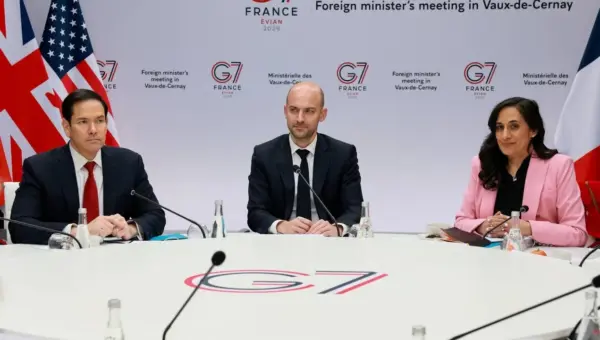
Rubio Puts US First at G7 Summit, Sparks Debate
Secretary of State Marco Rubio attended the G7 summit in France, emphasizing his commitment to serving the American people above all else. The meeting addressed the war in Iran and Russia's role, revealing differing approaches among allies on regional security and the Strait of Hormuz.

TSA Funding Fight Sparks Airport Chaos, Worker Exodus
TSA officers will soon receive back pay after President Trump signed an emergency order, but the ongoing congressional funding fight continues to cause airport chaos. Long security lines and a significant number of TSA officer resignations highlight the deep divisions over border security measures, leaving travelers frustrated.


US Christian Nationalism Fuels Global Conflict Fears
A potent strain of Christian nationalism in the US is raising alarms globally, promoting a 'warlike brand' of faith that views empathy as weakness. This ideology, amplified during times of economic hardship, risks justifying aggressive actions and undermining international humanitarian norms. Its influence on policy could reshape global dynamics.