Russia’s Moscow Internet Blackouts Signal Deep Fear
Unusual mobile internet blackouts and increased security in Moscow suggest Russia's government is deeply fearful of internal unrest. These measures, mirroring tactics used elsewhere, point to a desperate attempt to control information and prevent public dissent amidst war and growing discontent.


Russia’s Moscow Internet Blackouts Signal Deep Fear
Vladimir Putin has long sought to restore the Soviet Union’s past glory. Some believe this desire was the main reason he invaded Ukraine. Now, after years of conflict, it appears Putin has achieved a version of his vision, though not as he might have planned. We’re seeing total state control over information, the jailing of critics, and military forces surrounding Moscow. This is presented as a way to protect the leadership from internal threats, like coups.
There are two ways to achieve such a goal. One is to gain actual success that can be shown to the public. The other, more appealing to a leader like Putin, is to create an environment where success can be claimed, even if it isn’t real. This involves controlling what people can say and punishing those who disagree with harsh prison sentences. If people are unhappy, creating a strong security system prevents them from acting on their discontent. This allows a leader to remain in power, living in a false reality of success.
While some of this might be said with irony, the need for heavy information control and extreme security is a sign of weakness, not strength. This is exactly what appears to be happening in Moscow today. For about two weeks, reports have surfaced about mobile internet being shut down in the city. This has led to much speculation about what might be happening behind the scenes.
Heightened Security and Moscow’s Troubles
Adding to the concern, there have been new developments around Moscow showing increased police activity, especially near the Kremlin. Citizens have shared images on social media of more police officers and unusual activities, such as searching manholes or armed officers in unmarked trucks. While a country at war might naturally have higher security, this explanation seems insufficient.
Several factors point to a deeper issue. First, there’s the combination of mobile internet blackouts and increased security around government buildings. This situation brings to mind what happened in Iran earlier this year. Before widespread protests, Iran shut down its internet to prevent communication, both internally and externally. Russia now seems to be adopting a similar strategy, trying to control information proactively.
Shutting down mobile internet significantly impacts protests. It stops protesters from coordinating, responding to security forces, or even finding protest locations, as many rely on mobile data for navigation. Russia appears to be borrowing this playbook from Iran to prepare for something significant in Moscow.
The Official Explanation and Its Flaws
The Russian government has offered an official reason for these actions, which is itself telling. Leaders often prefer to ignore problems rather than draw attention to them. The fact that they provided an explanation suggests the events are real and not just speculation. The official reason given is military necessity and the security of the people, citing Ukrainian drone attacks.
According to the government, shutting down the internet prevents Ukrainian drones from using Russian mobile networks and stops Ukrainians from getting information from photos shared by Russians. This explanation might seem logical at first, but it has significant weaknesses. For instance, Russia has dealt with drone attacks before, but internet shutdowns were usually only for a few hours, not weeks.
If Russia needs to keep its internet offline for weeks, it suggests a serious, ongoing problem with constant drone pressure. Furthermore, Ukraine, despite facing daily Russian attacks, has not shut down its mobile internet. This implies either Russia’s explanation is false, or Ukraine’s drone technology is far more advanced, allowing them to exploit Russian networks in ways Russia cannot counter.
The geographic pattern of the shutdowns also contradicts the official story. The internet is most restricted in central Moscow, near government buildings, and becomes more available in the suburbs. If the goal were to protect against drones, the shutdowns should be at the city’s edges. Instead, the restrictions tighten closer to key targets, which makes more sense if the aim is to control public gatherings and prevent coordination near important locations.
Adding to the doubts, these mobile internet shutdowns are now being reported in Saint Petersburg, a city not under constant drone attack and located further from Ukraine. The explanation that such drastic measures are needed for rare attacks in this city simply doesn’t hold up.
A Pattern of Growing Control
This suggests the Russian government is lying and trying to cover up something else. This becomes clearer when we look at the broader trend of increasing media control in Russia since the war in Ukraine began. It’s like slowly boiling a frog: gradual changes make people less likely to react.
Russia has been throttling speeds on platforms like YouTube, making them difficult to use. They have also moved to ban Telegram, initially by slowing connections to encourage users to switch to state-controlled apps. This strategy aims to make people less dependent on certain platforms, so when they are eventually removed, the impact is less severe.
Currently, there are reports of Russian soldiers being stopped and forced to show their phones. If they have the Telegram app, they face punishment. This pushes people towards state-monitored communication channels. Such extensive efforts to control information indicate fear of people using communication against the government.
Moscow at the Center of Concern
What is particularly interesting is that these events are starting in Moscow, the capital. Typically, more drastic measures are implemented in the regions first, sparing the capital. However, these internet shutdowns are originating in Moscow. This suggests Russia is not just preparing its population but actively trying to prevent a specific event.
The increased security, especially around government buildings, combined with these unusual internet controls, raises questions about what Russia is preparing for and why it seems so fearful. It also questions why they are risking backlash from Moscow’s citizens, who are usually kept happier than those in other regions.
Speculation and Underlying Fears
Several theories attempt to explain these events, none of which can be proven but offer insight into Russia’s underlying fears, particularly of a popular uprising. One theory links the internet outages in Moscow to US and Israeli strikes on Iran. It suggests Russia might be sheltering Iran’s new supreme leader, using the internet blackout to mask his presence and prevent data leaks that could reveal his location.
Another theory points to April 1st, when Russia is expected to fully ban Telegram. This date might be chosen to prepare for public reaction to the ban itself, or as part of a larger strategy. This could involve an announcement of mass conscription, forcing more men to fight in Ukraine. Such a move would likely anger many Russians and potentially lead to unrest. The government might be preparing security measures in advance.
A third, more common theory, suggests a coup is underway. However, the internet blackout has lasted two weeks, which is long enough for a coup to either succeed and be announced or fail. The lack of further developments makes this theory less likely. Moreover, a total internet blackout, rather than just mobile internet, would be more effective in controlling information during a coup.
Regardless of the specific truth, it is clear that Putin and the Kremlin are extremely worried about something significant happening. The level of paranoia is striking, especially if nothing concrete is currently unfolding. The ongoing situation in Moscow highlights a deep-seated fear of internal instability.
Why This Matters
The events in Moscow are a critical indicator of the current state of Russia. The extensive information control and heightened security demonstrate a government deeply afraid of its own people. This fear stems from the ongoing war in Ukraine, the economic pressures, and a history of internal dissent. The strategy of controlling information and communications is a direct attempt to prevent any organized opposition from forming or spreading.
The shift in strategy, with Moscow being the focal point of these controls rather than the periphery, suggests a potential crisis brewing at the heart of Russian power. It implies that the Kremlin perceives the greatest threat to its stability to be within the capital itself. This could signal a turning point, where the regime’s efforts to maintain control are becoming increasingly desperate and visible.
Implications and Future Outlook
The current situation suggests a growing disconnect between the Russian leadership and its population. The heavy-handed tactics, while intended to suppress dissent, could inadvertently fuel it. As more citizens experience communication restrictions and increased surveillance, frustration may grow. This could lead to unpredictable outcomes, potentially including widespread protests or further internal divisions within the military and government.
The historical context of Russia shows a pattern of popular uprisings and coups. Leaders like Putin are keenly aware of this history. The recent actions, particularly the mobile internet shutdowns, are a preemptive measure against such possibilities. If these measures fail to prevent unrest, Russia could face a period of significant internal turmoil, which would undoubtedly impact the war in Ukraine and global geopolitics.
The paranoia displayed by the Kremlin, whether justified or not, points to a leadership under immense pressure. The effectiveness of these control measures in the long run remains uncertain. However, the visible signs of fear and control in Moscow suggest that the foundations of power in Russia may be more fragile than they appear, and the future trajectory of the nation, and the war, could be shaped by internal dynamics as much as by external conflicts.
Source: Something INSANE is Happening in Moscow Right Now (YouTube)

Related Articles

Ukraine’s New Strategy Cripples Russian Oil Exports
Ukraine's new multi-layered strategy is rapidly disabling Russia's oil export capabilities. By attacking loading facilities and working with allies to intercept the "shadow fleet," Ukraine is significantly reducing Russia's oil revenues, even amidst rising global energy prices.
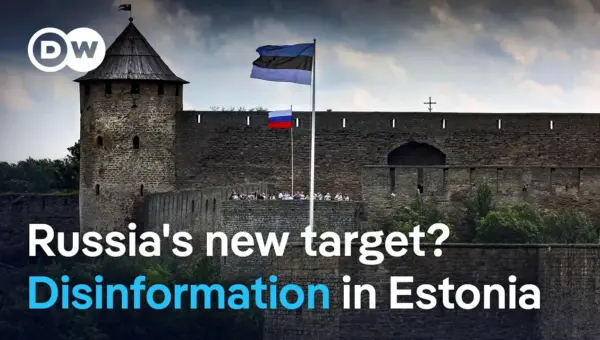
Russia Targets Estonia With Disinformation in Border City
Russia is reportedly conducting a disinformation campaign targeting Estonia's border city of Narva, aiming to sow discord among its Russian-speaking population. The online operation promotes separatist ideas, though residents largely dismiss the claims as fake. Estonian authorities view the campaign as a low-cost effort to undermine trust, with no concrete evidence of direct Russian government involvement.

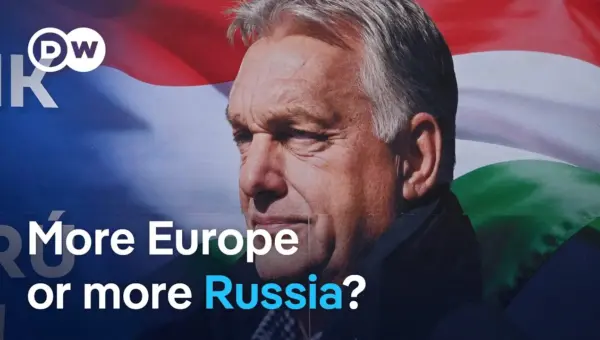
Hungary Faces Crossroads: EU Ties or Russian Alignment?
Hungary is facing a crucial election that will decide its future alignment with the EU or Russia. Growing public discontent over corruption and economic issues has propelled opposition leader Péter Magyar to prominence, promising democratic reforms. The nation's choice will significantly impact its role in Europe and its internal governance.