Air Force Trains Elite Medics for Life-Saving Flights
The U.S. Air Force's elite Critical Care Air Transport (CAT) teams are undergoing intense, realistic training to provide life-saving care during airborne missions. Utilizing advanced simulations based on real patient cases, these medics hone their skills in a state-of-the-art facility to ensure they can treat critical injuries at high altitudes. The rigorous program aims to prepare the best medical professionals for the demanding task of bringing injured service members home safely.

Air Force Trains Elite Medics for Life-Saving Flights
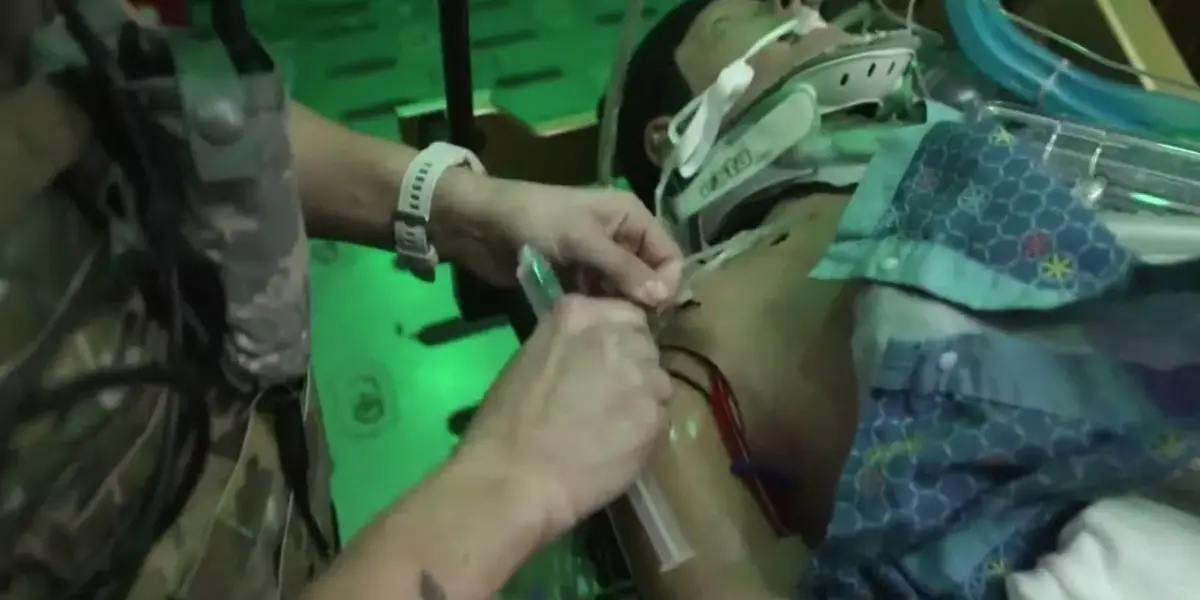
The U.S. Air Force is taking its medical training to new heights, preparing its most skilled medical teams to handle critical patient care during dangerous airborne missions. Elite Critical Care Air Transport (CAT) teams are undergoing intense simulations to ensure they can save lives anywhere in the world, even while flying at high altitudes. This specialized training happens at the Sea Stars program, located at UC Health, which boasts one of the most advanced military medical training facilities globally.
An ICU in the Sky
Colonel Valery Sams, who leads the Sea Stars program, described these missions as the highest risk and most important the Air Force undertakes. “This is what I consider probably the highest risk mission, the most important mission that the Air Force is responsible for,” Sams stated. “And that’s the critical care transport of patients from anywhere in the world.” These airborne missions are essentially intensive care units (ICUs) operating miles above the ground. However, Sams emphasized that simply placing an ICU team onto an aircraft isn’t enough. “You can’t take a critical care team out of an ICU and put them on the back of an aircraft without any additional training, and expect them to be able to do it,” she explained. The training ensures these medical professionals are ready for the unique challenges of providing care in a confined, moving, and high-stress environment.
Realistic Training for Real Missions
The Sea Stars program provides CAT teams with two-week-long intensive training sessions every year. These sessions include highly realistic flight simulations that mimic the conditions of actual medical rescue missions. During these simulations, trainees practice treating complex injuries, similar to those sustained by soldiers in real-world conflicts. The scenarios are not hypothetical; they are based on actual patients the Air Force has transported in the past. “All of the scenarios that we give them are based upon real patients,” a trainer noted. “They’re essentially real patients that we have transported in the past.” This approach ensures the training is as close to reality as possible, preparing the medics for the extreme pressures they might face.
State-of-the-Art Simulation Center
The Sea Stars simulation center at UC Health is a 25,000-square-foot facility designed to replicate various high-stress medical environments. It allows the CAT teams to practice aeromedical evacuations and field care scenarios. The goal is to provide the best possible training to ensure every injured service member can be brought home safely. “You should want the best possible training and environment for them to be able to do that, to get anyone home that needs to come home,” Colonel Sams added. The advanced technology and realistic setups allow trainees to experience the challenges of treating patients, administering medications like propofol and fentanyl for sedation, and managing critical care while airborne.
Elite Teams, Rigorous Standards
The training at Sea Stars is exceptionally demanding. Trainees are given only two chances to complete the rigorous program. Approximately 10% of participants do not make it through the training and therefore do not become part of these elite CAT teams. However, those who succeed are considered the best of the best. “We go to the ends of the earth,” Colonel Sams said, highlighting the commitment to reaching and treating service members wherever they are. This high attrition rate ensures that only the most skilled and resilient medical professionals are entrusted with the critical responsibility of in-flight patient care for injured soldiers.
Looking Ahead
As the Air Force continues to face complex global challenges, the role of its Critical Care Air Transport teams becomes increasingly vital. The ongoing development and rigorous application of training programs like Sea Stars are essential for maintaining the highest standards of medical readiness. The success of these elite teams directly impacts the survival and recovery of wounded service members, underscoring the importance of continued investment in advanced aeromedical training.
Source: Air Force medial unit training to treat trauma in the sky (YouTube)

Related Articles


Nigeria’s ‘Kito’ Scam Targets LGBTQ+ People with Violence
Nigeria's LGBTQ+ community is facing a surge in violent 'Kito' scams, where victims are lured online, ambushed, beaten, and blackmailed. Rights groups report over 50 cases since December, highlighting the dangerous exploitation of anti-gay laws and societal homophobia. Survivors share harrowing accounts of physical and emotional trauma, living in constant fear.


White House Launches “OnlyFarms” Website for Farmer Support
The White House has launched "OnlyFarms," a new website at onlyfarmms.gov, to highlight benefits and support for American farmers facing rising costs. The initiative aims to showcase how administration policies are intended to ease financial burdens and lower prices for both producers and consumers.


House Funds DHS, But Senate Deal Unlikely Amid Shutdown
The House of Representatives has passed a bill to fund the Department of Homeland Security, but the measure is unlikely to pass the Senate. TSA workers, who have faced missed paychecks and disruptions, may receive some pay soon due to a presidential order, but the broader shutdown continues.