Trump’s Iran Stance Fuels Market Volatility
Donald Trump's shifting statements on U.S. involvement in Iran have caused significant market turmoil, impacting Treasury yields and oil prices. The unpredictable rhetoric has led to a sharp market downturn and rising inflation expectations.

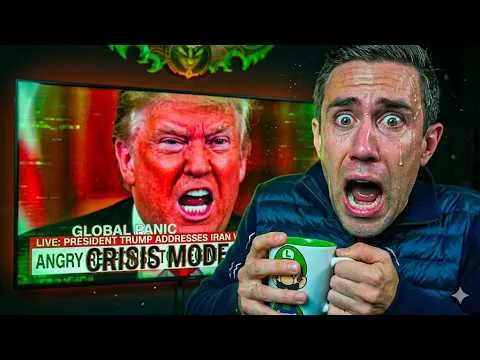
Trump’s Iran Stance Fuels Market Volatility
The financial markets experienced significant turbulence recently, largely driven by shifting statements from Donald Trump regarding U.S. involvement with Iran. This unpredictable communication created confusion and uncertainty, impacting key economic indicators like Treasury yields and oil prices.
Yields Surge Amidst Shifting Signals
The market’s anxiety was palpable as the 10-year Treasury yield climbed by 10.3 basis points in a single day, nearing the 4.4% mark. Earlier reports had warned of a potential market sell-off if the yield, which stood at 4.34%, did not decrease. This prediction proved accurate, as the market saw a broad decline throughout the day.
Oil Prices React to Conflicting News
Oil prices also showed volatility. Brent crude rose from around $107 to $112 within a single morning. This increase occurred even as news emerged that Donald Trump was considering winding down operations related to Iran. However, this was contradicted by reports of ongoing troop deployments and an Iranian missile launch at the Diego Garcia base, which, though unsuccessful, signaled continued tensions.
A Timeline of Shifting Declarations
The core of the market’s unease stems from a series of contradictory statements regarding the U.S. approach to Iran. This pattern of shifting declarations, which some have likened to chaos theory due to its unpredictability, has left investors struggling to interpret the situation.
- June 13, 2015: Trump initially urged Iran to make a deal, stating, “Just do it before it is too late,” implying a swift resolution to a conflict.
- February 28 (Year not specified, but context suggests it’s later): A shift occurred as Trump called for regime change in Iran, suggesting the Iranian people should govern themselves.
- Following February 28: Major combat operations were initiated, including strikes that killed Iran’s Supreme Leader. Trump declared, “We’re going to destroy their missiles and raise their missile industry to the ground. We are going to annihilate their enemy.”
- A Few Days Later: The projected duration of the operation expanded, with initial plans suggesting four to five weeks. Trump also commented that the war could potentially last indefinitely.
- March 6: The stance hardened again, with Trump stating there would be “no deal with Iran except total and unconditional surrender.”
- March 8-11: Conflicting messages continued. On March 8th, statements indicated strikes were just the beginning. However, the very next day, Trump suggested the war was nearly complete.
- March 9: Trump indicated the U.S. might take control of the Strait of Hormuz, a move that temporarily boosted oil markets due to hopes of stabilizing oil flow.
- March 8 (around the same time): Rumors surfaced about special forces potentially seizing uranium. Trump confirmed this was a possibility for a “short-term excursion” in the future. He also stated, “We’ve already won in many ways, but we haven’t won enough. We need more winning.”
- March 10-11: More contradictory statements emerged. While some reports suggested ongoing operations and potential troop deployments, Trump also said the war was “almost done” and that “practically nothing left at the country.” He added that what remained could be handled in “an hour.”
- March 13: Trump stated the war’s end would depend on when he “feel[s] it in [his] bones,” rather than a set objective. Simultaneously, reports confirmed the deployment of the 31st Marine Expeditionary Unit to the Middle East, signaling escalation. He also stated, “One way or another, we will soon get the Strait of Hormuz open, safe, and free.”
- March 15-16: Trump requested help from allies to police the Strait of Hormuz. European allies largely declined, stating it was not their war.
- March 17: Trump reversed course, stating the U.S. did not need allied help and would handle it alone.
- March 18: Discussions resurfaced about securing uranium and potential ground invasions.
- March 19: The administration stated there was no set timeframe for ending the war. In a conflicting statement on the same day, Trump declared, “I’m not putting troops anywhere.”
- The Day of the Market Decline: News broke of additional U.S. troop and ship deployments to the Middle East, contradicting Trump’s earlier statement. Later that day, Trump stated operations were winding down and objectives were nearly met. He then added that other nations should guard the Strait of Hormuz, a reversal from previous stances.
Market Impact and Investor Concerns
The constant shifts in rhetoric created significant market uncertainty. Investors struggled to price in the risk associated with the evolving situation in Iran. The market’s reaction was a sharp downturn, with the S&P 500 index experiencing a consistent decline throughout the trading session.
Beyond the immediate market movements, the situation has implications for inflation expectations. One-year inflation expectations have surged to their highest levels in approximately four years, nearing levels not seen since the early stages of the COVID-19 pandemic. This rise suggests that market participants anticipate higher inflation, which could influence the Federal Reserve’s monetary policy decisions. It also implies that the central bank may be less likely to implement supportive measures, such as interest rate cuts, if inflation continues to climb.
What Investors Should Know
The unpredictable nature of geopolitical events, especially when coupled with shifting official statements, can lead to heightened market volatility. Investors should be aware that such uncertainty can impact various asset classes, from Treasury yields to commodity prices like oil.
The surge in inflation expectations is a critical development. It suggests that the market is pricing in a scenario where inflation remains elevated, potentially forcing central banks like the Federal Reserve to maintain higher interest rates for longer. This contrasts with expectations of easier monetary policy, which could have driven market performance in different conditions. For investors, this means carefully monitoring inflation data and central bank communications is crucial for navigating the current economic environment.
The situation highlights the importance of clear communication from policymakers. When statements are contradictory, it becomes difficult for markets to assess risk and make informed investment decisions. The ongoing volatility serves as a reminder that geopolitical developments can have a profound and immediate impact on financial markets.
Source: Trump FLIP FLOPS on Iran (YouTube)

Related Articles


Tiger Woods Arrested for DUI After Crash
Golf legend Tiger Woods was arrested for DUI in Florida following a dramatic rollover crash. Meanwhile, a government shutdown continues as House Republicans block a Senate deal, leading to airport chaos and TSA worker pay issues. The stock market also plummeted into correction territory amid fears of a prolonged Iran conflict.
Trump’s Name Everywhere: A ‘Stain’ on GOP Legacy?
Former President Donald Trump's efforts to brand national symbols, including a proposed signature on dollar bills, spark debate. Critics view this as an authoritarian attempt to embed his legacy, potentially staining the Republican Party's history and contrasting with democratic ideals of public ownership.
Trump’s Iran War Plans Criticized Amid Border Funding Standoff
Lawmakers and analysts are criticizing the Trump administration's handling of the Iran conflict and its approach to border funding, arguing that a lack of clear planning and a focus on political battles are making the U.S. less safe. Concerns are particularly high regarding the FBI's priorities and the potential impact of these issues on national security.