Cosmic Collisions Reshape Our View of Planet Formation
Astronomers are uncovering cosmic surprises, from planetary systems that defy formation rules to the echoes of the Moon's birth in distant star systems. Discoveries include a peculiar planetary arrangement, a hot Earth-sized world offering atmospheric insights, and a spectacular planetary collision. Meanwhile, new technologies aim to capture asteroids, and recent findings shed light on lunar magnetic fields and the intense radiation risks on Mars. Finally, a seven-hour gamma-ray burst and the chaotic dance of dwarf galaxies reveal the universe's dynamic and often violent nature.

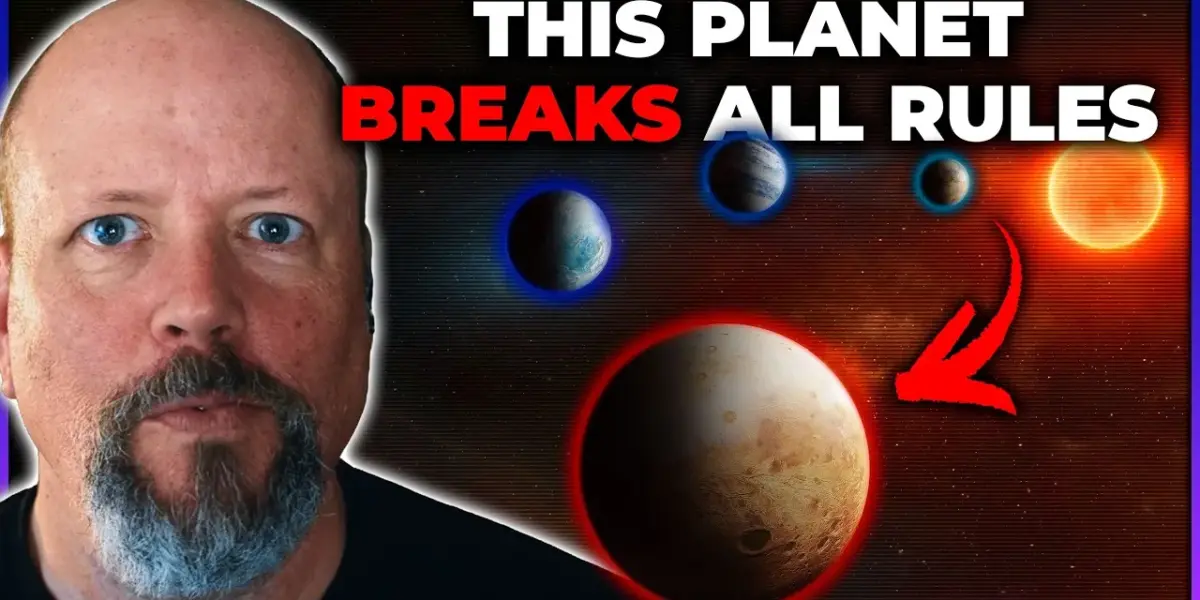
Planetary Systems Defy Expectations, Revealing Cosmic Secrets
The universe often surprises astronomers, and a distant planetary system named LHS 1903 is a prime example. Scientists expected other star systems to mirror our own, with rocky planets close to the star and gas giants farther out. This arrangement happens because intense stellar winds blow away lighter elements near a young star, leaving behind rock and metal for inner planets. Farther away, these lighter elements can freeze into ice and gather to form larger, gas-rich worlds. However, LHS 1903 presents a jumbled mix: a rocky planet near its star, followed by two mini-Neptunes, and then another rocky planet. This unusual order, rocky-gas-gas-rocky, challenges our understanding of how planets form. Astronomers are exploring possibilities, such as the rocky planet forming in place against expectations or migrating outward after failing to gather enough gas to become a gas giant.
Hot, Earth-Sized World Offers Clues to Atmospheric Escape
In another discovery, astronomers have identified an Earth-sized planet orbiting a red dwarf star. This planet, with a radius just over Earth’s, completes an orbit in a mere 1.55 days. Its close proximity to its star results in an average temperature of 525 Kelvin (251 degrees Celsius), making it too hot for a substantial atmosphere. The star, TOI 4616, has a rich observational history, with images dating back to the 1950s. This extensive archival data allows scientists to study the star’s activity, such as flares and radiation output. The planet’s extreme heat and its location near the edge of atmospheric retention make it an ideal laboratory for studying how planets lose their atmospheres and the conditions that affect atmospheric volatility. This research could help determine the likelihood of finding atmospheres on planets orbiting red dwarf stars, which are common in our galaxy.
Cosmic Crash Echoes Moon’s Birth in Distant System
Astronomers may have witnessed a planetary collision, an event that could mirror the violent birth of Earth’s Moon. By analyzing data from the Gaia mission and other sky surveys, researchers spotted a star whose brightness changed dramatically starting in 2016. Initially, the star’s output was steady, but it then experienced three flashes, followed by a significant change in its optical spectrum in 2021. Further observations revealed a surge in infrared light, indicating the presence of hot dust and rock. The leading theory is that two planets, orbiting closely, began to disrupt each other, creating dust. This eventually led to a massive collision, an event akin to the ancient impact between the proto-Earth and a Mars-sized object called Theia. That cataclysmic event is believed to have ejected debris that eventually coalesced to form our Moon. Watching this distant crash offers a rare, real-time glimpse into the processes that shaped our own solar system.
Innovative ‘Moon in a Bag’ Aims for Asteroid Mining
The concept of asteroid mining, once science fiction, is inching closer to reality. A company called Transastra is developing a novel approach to capture and return small asteroids. Their plan involves targeting asteroids roughly the size of a house, about 10 to 20 meters in diameter and weighing around 100 tons. They intend to enclose such an asteroid in a large, durable bag, possibly made of Kevlar, and then use thrusters to tow it back to a stable location, such as the Earth-Moon L2 Lagrange point. The idea is to gather multiple asteroids and potentially pile them together to create a resource hub. This could provide vital resources like water and other elements for future solar system exploration. NASA has awarded Transastra a $2.5 million grant to develop a 10-meter version of their containment bag. The company has already identified about 250 candidate asteroids that fit their size and trajectory requirements.
Lunar Magnetic Mysteries Solved by Cosmic Winds
While the Moon lacks a global magnetic field like Earth’s, it possesses localized magnetic regions. These are remnants from a past magnetic field and also induced fields created by the solar wind interacting with the lunar surface. Scientists have observed that these magnetic fields can extend much farther from the Moon’s surface than expected, a puzzle that has now been addressed through simulations. Researchers believe a mechanism called the Kelvin-Helmholtz instability is responsible. This occurs when fluids or gases moving at different speeds shear past each other, creating swirling vortices. In the Moon’s case, magnetized solar winds moving at varying speeds interact with the lunar surface and its magnetic fields, generating these vortices. These swirling actions can stretch and amplify the magnetic field lines, making them detectable by orbiting spacecraft. This discovery could also help explain similar magnetic phenomena observed on Mars.
Mars Endures Intense Solar Storm, Revealing Radiation Risks
In May 2024, a powerful solar storm struck Earth, creating spectacular auroras visible worldwide. It turns out this storm also reached Mars, impacting two orbiting spacecraft: the ESA’s Mars Express and the ExoMars Trace Gas Orbiter. Their measurements revealed a staggering dose of radiation for any potential visitor. According to the data, someone on Mars would have experienced the equivalent of 200 days’ worth of radiation in just 64 hours. This highlights a significant hazard for future human explorers. The spacecraft used their communication signals passing through Mars’ atmosphere to measure its density changes. The storm caused a dramatic increase in electrons at altitudes of 110 and 130 kilometers, demonstrating the potent and far-reaching effects of solar storms, even on planets beyond Earth.
Mysterious 7-Hour Gamma-Ray Burst Hints at Black Hole’s Hunger
Gamma-ray bursts (GRBs) are among the most energetic events in the universe, capable of releasing more energy in a fraction of a second than our Sun will in its entire 10-billion-year lifespan. Typically, these bursts last only seconds or minutes. However, in 2025, astronomers observed a GRB that defied expectations by lasting an astonishing seven hours, releasing energy in three distinct pulses and leaving a glow that persisted for months. While exhibiting GRB characteristics, its duration was unprecedented. A new theory suggests this event could have been caused by a star being torn apart by an intermediate-mass black hole. These black holes are rarer and less understood than stellar-mass or supermassive black holes. The star likely strayed too close, and the three bursts represent the black hole progressively ripping off chunks of the star until it was completely obliterated.
Galactic Tangle: Small Magellanic Cloud’s Chaotic Dance
The Large and Small Magellanic Clouds, visible from the Southern Hemisphere, are two dwarf galaxies orbiting our Milky Way. The Small Magellanic Cloud has long puzzled astronomers with its irregular shape, a long trailing tidal tail, and a lack of smooth rotation. New research suggests these oddities are the result of a past, violent encounter with the Large Magellanic Cloud. Astronomers believe the Small Magellanic Cloud plunged directly through its larger neighbor. This dramatic collision would explain its disrupted structure, the elongated tail, and the jumbled arrangement of its stars. The impact might also shed light on peculiar features within the Large Magellanic Cloud, such as its tilted bar structure, suggesting a history of chaotic interactions between these galactic companions.
Source: Weird New Planet // New Moon in A Bag // Superstorm Hit Mars (YouTube)

Related Articles

NASA Pivots: Mars Nuclear Probe, Moon Base Ahead
NASA is pivoting its exploration strategy, prioritizing a nuclear-powered Mars probe and accelerating plans for a moon base. The International Space Station's future is uncertain, with a shift towards commercial platforms. Meanwhile, new telescope data reveals overmassive black holes in dwarf galaxies and captures stunning images of Saturn and the Crab Nebula.


US Military Pursues Secret Tech, Lunar Base Plans Emerge
Reports indicate the US military and defense contractors are exploring advanced technologies, possibly reverse-engineering unknown craft. Concurrently, NASA plans a lunar base, while millions of UAP-related files are allegedly deleted, raising transparency concerns. These developments could reshape global power dynamics.


Dark Matter Defies Gravity, Forming Fuzzy Clouds Instead of Stars
Dark matter, which outweighs all visible matter, surprisingly does not collapse under gravity to form stars or black holes. Instead, it forms vast, diffuse clouds around galaxies, baffling scientists with its unique behavior. Understanding this cosmic enigma is key to comprehending the universe's structure and evolution.