Tesla Semi Truck Faces Uphill Battle for Market Adoption
Tesla's electric semi-truck, unveiled in 2017 with ambitious promises, is finally nearing significant production after years of delays. However, questions about its high cost, unproven charging infrastructure, and limited range under real-world conditions cast doubt on its widespread market adoption, potentially confining its viability to subsidized markets like California.

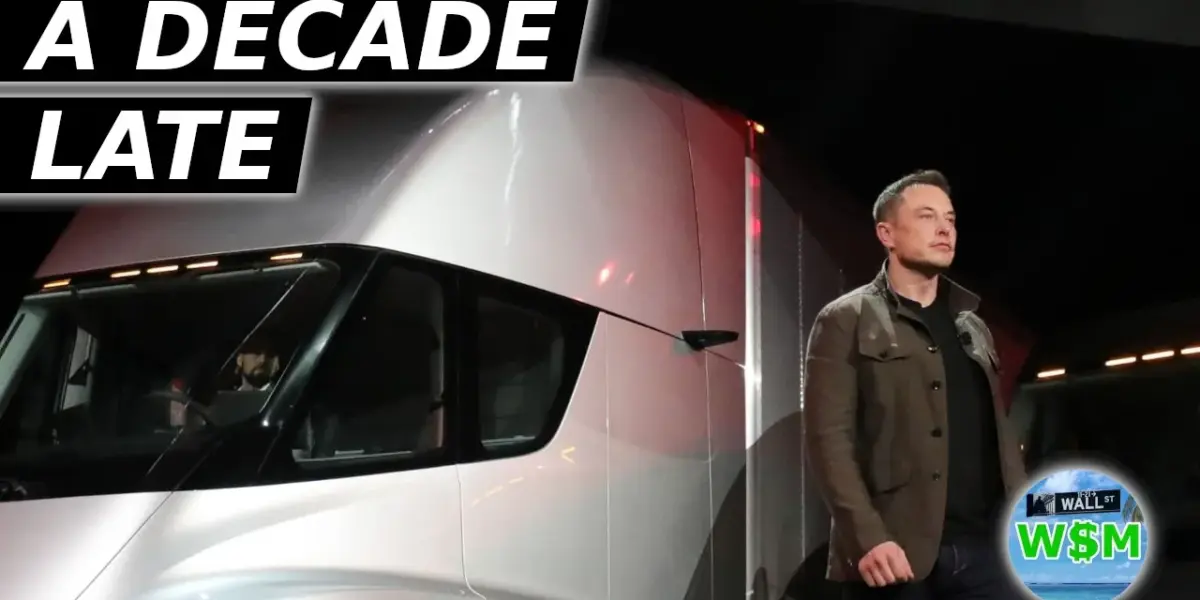
Tesla’s Electric Semi Truck: A Decade of Delays and Doubts
Unveiled with grand promises in 2017, Tesla’s electric semi-truck has faced a long and winding road to production. Initially slated for a 2019 launch, the project has been repeatedly delayed. Now, nearly a decade later, Tesla claims it is on the cusp of delivering significant volumes, aiming for an annual production of 50,000 units by 2026. However, the truck’s troubled history and economic viability raise serious questions about its future impact.
Ambitious Promises Meet Harsh Realities
When Elon Musk first presented the Tesla Semi, he touted impressive capabilities. The truck was promised to offer 500 miles of highway range even when fully loaded with 80,000 pounds. A cheaper version with 300 miles of range was also planned. To achieve this, a massive 850 kWh battery pack was required, dwarfing the 60 kWh battery in a Tesla Model Y.
Charging such a large battery posed a significant challenge. Standard Superchargers, which take 20-30 minutes to charge a Model Y, would take many hours for the Semi. Musk’s solution was a network of “MegaChargers,” designed to deliver 1.2 megawatts of power – five times more than Superchargers. These MegaChargers were intended to add 400 miles of range in just 30 minutes. Tesla even proposed building solar farms next to these chargers to provide power and guarantee a low electricity cost of 7 cents per kilowatt-hour.
Beyond charging, Musk also promised significant cost savings. He claimed the Semi would cost just $1.26 per mile to operate, a stark contrast to the $1.51 per mile for diesel trucks. This calculation, however, heavily relied on the promised cheap electricity and the initial projected truck prices: $150,000 for the 300-mile version and $180,000 for the 500-mile version.
Autonomous Driving Dreams and Pilot Program Realities
Autonomous driving was another key selling point. Musk envisioned “autonomous convoys” where one human-driven truck would lead two driverless trucks. This, he claimed, would drastically reduce labor costs and improve safety, cutting convoy operating costs to 82 cents per mile. However, evidence for these safety claims was never provided.
Despite the ambitious launch, production delays pushed the Semi’s arrival back from 2019. By late 2022, the first few dozen units were delivered to select customers like PepsiCo, Walmart, Costco, and DHL for pilot programs. These programs have revealed a different picture than the one painted in 2017.
- Charging Infrastructure Lags: The promised MegaCharger network has not materialized. PepsiCo installed a 750 kW charger at its distribution center, which is half the promised power and likely takes over an hour to charge a Semi. It appears to be connected to the local grid, with no solar panels in sight.
- Short-Haul Operations: PepsiCo is using the Semis for relatively short delivery routes, requiring them to return to the distribution center for recharging.
- No Autonomous Convoys: None of the pilot programs have featured the promised autonomous driving capabilities or convoys. The trucks are being used like conventional diesel trucks.
Efficiency Claims Under Scrutiny
Concerns have also been raised about Tesla’s efficiency claims. A 2024 test by logistics company DHL, using a Semi with a 75,000-pound load, showed energy consumption of 1.72 kWh per mile. This aligns with Tesla’s claim of 1.7 kWh per mile. However, the test details raise questions. The truck exceeded 50 mph for only half the journey, suggesting it spent considerable time driving at slower speeds. EVs are typically more efficient in stop-and-go city driving due to regenerative braking, while highway speeds increase aerodynamic drag significantly, reducing range. Tesla’s 2017 claim of 500 miles at highway speeds of 60 mph under maximum load might be overly optimistic, especially if real-world highway driving involves lower average speeds or higher loads than the DHL test.
Economic Viability: A High Price to Pay?
The biggest hurdle for the Tesla Semi is its economic viability for trucking companies. With production slated to ramp up in 2026, the economics appear challenging:
- Purchase Price Doubles: While Tesla initially quoted $150,000-$180,000 in 2017, reports suggest the long-range version now costs around $290,000. This is roughly double the price of a comparable $100,000-$150,000 diesel semi-truck.
- Operating Costs: The average operating cost for a semi-truck in 2024 was $2.26 per mile. While the Semi’s fuel cost is estimated at 24 cents per mile (half that of diesel), the significantly higher purchase price translates to roughly double the financing costs (80 cents per mile vs. 40 cents for diesel). This means the Semi is likely more expensive to operate than a diesel truck, even before considering charging infrastructure costs.
- Charging Infrastructure Burden: Without the promised MegaCharger network, fleet operators would need to invest heavily in installing their own charging infrastructure at distribution centers. The average electricity cost in the transportation sector is around 14 cents per kWh, making the Semi’s operating cost per mile higher than initially projected.
Government Subsidies as a Lifeline
The financial picture changes dramatically with government subsidies. In California, the Hybrid and Zero-Emission Truck and Bus Voucher Incentive Program (HVIP) offers up to $120,000 for the long-range Semi. This subsidy effectively lowers the purchase price to about $160,000, making it only slightly more expensive than a diesel truck, especially considering California’s higher diesel fuel prices. This suggests that the Semi’s market viability may be largely confined to states with strong incentive programs.
Market Impact and Investor Outlook
Tesla aims to produce 50,000 Semis annually, but the potential market may be limited. California accounts for roughly 12% of the U.S. population, suggesting a potential annual demand of around 30,000 trucks. Even if Tesla captures a significant portion of this, selling 10,000 units per year in California would generate approximately $2.9 billion in revenue. While substantial, this figure is a small fraction of Tesla’s overall revenue, which exceeded $95 billion in 2025. Therefore, the Semi is unlikely to be a major financial driver for the company in the near term.
The long-delayed Tesla Semi faces significant challenges in achieving widespread adoption. High purchase prices, unproven charging infrastructure, and questionable operating cost advantages over diesel trucks present major obstacles. While government incentives could make it viable in specific regions like California, its impact on Tesla’s overall financial performance appears limited for now.
Source: What Ever Happened to the Tesla Semi? (YouTube)

Related Articles


Musk’s AI Plant Sparks Outrage in Mississippi Town
Residents of Southaven, Mississippi, are experiencing significant disruption from a makeshift power plant supplying Elon Musk's AI data center. They report constant, loud noise and fear air pollution from the methane turbines, impacting their health and quality of life despite promises of economic benefits.

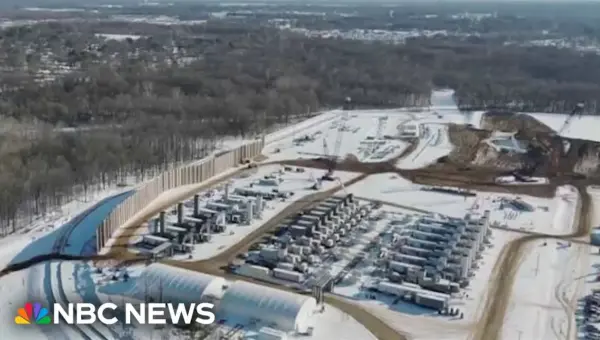
Musk’s AI Plant Sparks Noise, Pollution Fears in Mississippi
Residents in Southaven, Mississippi, are raising alarms over a new AI power plant linked to Elon Musk, citing constant, unbearable noise and fears of air pollution. Despite promises of economic benefits and the recent approval of permanent turbines, locals feel their quality of life and health are being compromised.


Musk Unveils Ambitious ‘Terafab AI’ Plan
Elon Musk's XAI, in partnership with SpaceX and Tesla, is launching 'Terafab AI,' a massive chip manufacturing project aiming for a terawatt of annual compute power. This initiative is presented as essential for humanity's expansion into space and achieving a galactic civilization, addressing current AI compute limitations.