Israel Denies Pressuring US into Iran War
Prime Minister Benjamin Netanyahu and President Donald Trump have denied claims that Israel pressured the US into the war with Iran. An analyst suggests the conflict is a joint effort, with both leaders sharing responsibility. Meanwhile, Iran continues to target strategic assets, raising questions about the war's trajectory and potential off-ramps.

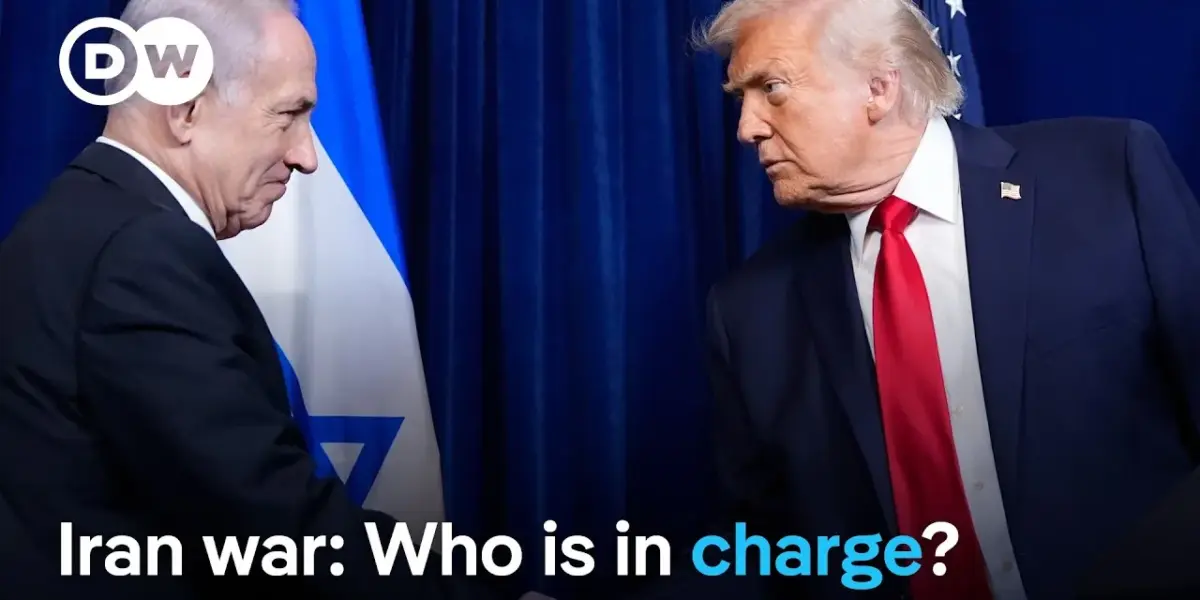
Israel Denies Pressuring US into Iran War
As the conflict with Iran continues, questions are emerging about how it began and who is truly in charge. Some critics, including certain conservative voices, suggest that Israel pushed the United States into the war. This has led to concerns about rising fuel prices and broader inflation. However, Israeli Prime Minister Benjamin Netanyahu is working to dismiss these claims.
Trump Clarifies US Role in Gas Field Strikes
Following Israeli strikes on the South P gas field, U.S. President Donald Trump used his social media platform to state that the U.S. was not involved and had no prior knowledge of the attacks. During a press conference, Trump mentioned he had urged Israel’s leader to stop targeting the large gas field.
“I did. I told him don’t do that and he won’t do that. We didn’t discuss, you know, we do uh we’re independent. We get along great. Uh it’s coordinated, but on occasion he’ll do something and if I don’t like it and so we’re not doing that anymore,” Trump stated.
Netanyahu supported Trump’s account shortly after. He emphasized that Israel acted alone against the gas compound and that President Trump requested a pause on future attacks.
“Fact number one, Israel acted alone against the Sloia uh gas compound. Fact number two, President Trump asked us to uh hold off on future attacks,” Netanyahu said, adding, “America is not fighting for Israel. America is fighting with Israel for a common goal to protect our future, to protect civilization against these barbarians.”
Expert Views on War Leadership and Coordination
Myra Zonshin, a senior analyst with the International Crisis Group, discussed the complexities of decision-making in the conflict. She believes it would be incorrect to assume Netanyahu dragged Trump into the war. Zonshin described the situation as a joint venture, noting that the U.S. is a superpower and Trump has a history of taking aggressive actions, such as the killing of Qasem Soleimani.
Zonshin highlighted Netanyahu’s deep experience and long-standing focus on the threat from Iran, suggesting he has a clear strategy. Israel has been engaged in conflict for over two years and possesses significant experience in military intelligence and targeted operations. While Netanyahu may be influencing certain directions, Zonshin stressed that the war is a joint effort for which both leaders share responsibility.
Regarding coordination, Zonshin noted that Trump’s messaging can be inconsistent, and U.S. officials have made varied statements. However, she acknowledged that despite potential differences in nuanced views or end goals, the armies and commands show seamless coordination, particularly through the relationship with CENTCOM (U.S. Central Command). This suggests a high level of operational synchronization between the U.S. and Israeli forces.
Iranian Attacks on Strategic Assets
The conversation also addressed an Iranian attack on the Haifa oil refinery, which produces about half of Israel’s domestic fuel. While the full extent of the damage is unclear due to strict information controls by Israeli authorities, reports indicate some limited damage. This refinery was previously hit in June 2025 during a 12-day war, which also saw major Iranian strategic assets targeted, including the Weizmann Institute.
Zonshin suggested that Iran might be opting for a long war of attrition, using smaller numbers of missiles with less powerful explosions. However, she cautioned that if Iran possesses greater capabilities, as the IDF suggests they largely do not, then hitting strategic assets with more powerful warheads or in larger numbers could significantly alter the situation. Any successful strike against Israeli or U.S. targets is considered a strategic win for Iran, given the significant military advantages held by the U.S. and Israel.
Potential for Ground Troops and War Off-Ramps
The possibility of using ground troops in Iran was also explored. Prime Minister Netanyahu indicated that while air operations are important, a ground component is also necessary, though he did not specify details.
“It is often said that you can’t win, you can’t do revolutions from the air. That is true. You can’t do it only from the air. You can do a lot of things from the air and we’re doing. But there have to be there has to be a ground component as well. There are many possibilities for this ground component and I uh take the liberty of not uh sharing with you all those possibilities,” Netanyahu said.
Zonshin expressed skepticism about large-scale ground invasions, particularly by Israeli troops into Iran, citing the country’s vast population and the potential ineffectiveness of such an approach for regime collapse. She also noted that using ground troops to forcibly open the Strait of Hormuz, a potential U.S. objective, would be risky and difficult. She concluded that the use of force might lead to further escalation rather than a solution.
Regarding potential ways to end the war, Zonshin stated that negotiating a deal seems unlikely at present, as both sides are targeting leadership, and Iran may wish to maintain its strategic leverage. She suggested that any off-ramp would likely require concessions from both sides or a precarious unilateral ceasefire. Given that both sides appear committed to escalation and Israel aims to degrade Iranian capabilities, Zonshin does not foresee an immediate end to the conflict. She emphasized that further escalation could deepen the predicament for both Iran and Israel, as Iran also has much to lose.
Iran’s Resilience and Lack of Negotiated Settlement
The discussion touched upon the increasing costs of the war for Iran, especially with recent strikes on energy facilities. However, Zonshin, whose expertise lies in Israel-Palestine rather than Iran, noted that Iran appears to have prepared for a prolonged situation. The regime has a deep ideology and insists on its defense, utilizing any leverage it has. Zonshin finds it unlikely that Iran would suddenly abandon its programs or become completely vulnerable.
Even after weeks of conflict, Iran does not seem to be heading towards capitulation. Zonshin expressed uncertainty about what price Iran would have to pay to stop fighting, suggesting that a complete cessation of hostilities is not on the horizon.
Source: Has Israel pressured the US to get into the war with Iran? | DW News (YouTube)

Related Articles
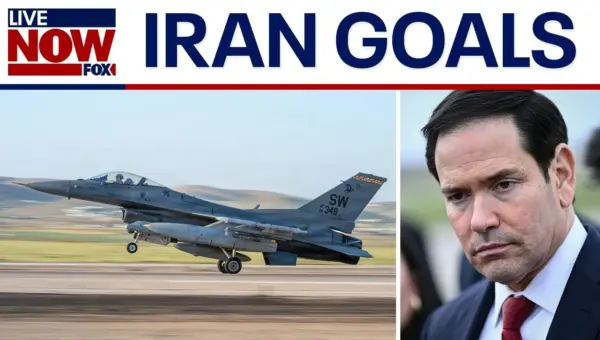
Rubio: US Can Achieve Iran War Goals Without Troops
Senator Marco Rubio outlined a strategy to counter Iran without deploying U.S. ground troops, focusing on weakening the regime and enhancing maritime security. He also criticized Cuba's economic system and expressed concerns about West Bank violence.


Israelis Forge Resilience Amidst Constant Bomb Shelter Drills
Life in Israel is a blend of resilience and constant vigilance, with many families adapting to frequent bomb shelter drills and even sleeping in makeshift shelters. Despite ongoing missile attacks, Israelis strive to maintain normalcy, though businesses face disruption and emotional fatigue is a growing concern.


Israel Escalates Iran Strikes, Warns of Wider War
Israel has launched significant strikes inside Iran following continued missile fire, warning of further escalation. The conflict risks wider regional instability and economic disruption, especially concerning the Strait of Hormuz.