Treasury Yields Surge, Sparking Rate Hike Fears
Treasury yields have surged, pushing the 2-year yield near 4% and the 10-year yield to 4.35%. This rise fuels fears of potential Federal Reserve rate hikes and puts pressure on rate-sensitive stocks like Tesla. Geopolitical tensions in the Middle East are also contributing to market uncertainty and driving up oil prices.

Treasury Yields Surge, Sparking Rate Hike Fears
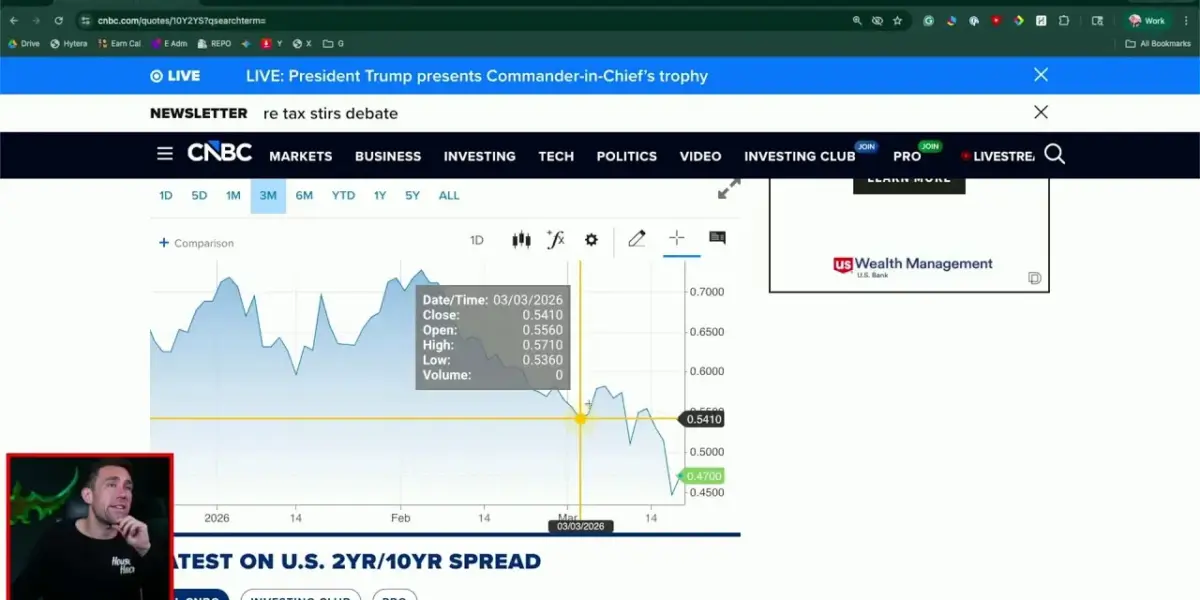
The stock market experienced significant pressure as Treasury yields climbed sharply, raising concerns about potential interest rate hikes by the Federal Reserve. The 2-year Treasury yield jumped by 9.3 basis points to nearly 4%, while the 10-year Treasury yield rose 6.9 basis points to 4.35%. This rapid increase in yields, particularly in the bond market, is being closely watched as a key indicator for the broader market’s direction.
Treasury Market Signals Alarm Bells
For much of the trading session, the bond market was the primary focus, acting as a ‘canary in the coal mine’ for stock market performance. As yields on Treasury bonds climbed, stock indices like the Nasdaq (Q’s) struggled to maintain any upward momentum. This inverse relationship, where rising yields often pressure stocks, was clearly visible. The market’s inability to sustain a bounce in stocks when bond yields were increasing suggested that the underlying market sentiment remained bearish.
Rate Hike Bets Gain Traction
Adding to the market’s unease, recent data indicates that traders are beginning to price in the possibility of an interest rate hike, rather than a cut, by the Federal Reserve. As of late March, there’s a roughly 30% chance being priced in for a rate hike by October. This sentiment shift is a stark contrast to earlier expectations of rate cuts. Such a move would make borrowing more expensive across the economy, impacting everything from mortgages to business loans.
Tesla Faces Pressure Amid Rising Yields
Companies considered ‘rate-sensitive’ are feeling the pinch. Tesla, for instance, saw its stock come under pressure. The company relies on financing for vehicle purchases, and higher interest rates mean higher borrowing costs for consumers. While Tesla offers promotional financing, such as 0% on Model Y leases and 3.99% on some other models, the overall trend of rising rates makes financing less attractive. Beyond its current car business, a significant portion of Tesla’s valuation is tied to future products like RoboTaxi and Optimus, which are subject to development timelines and market enthusiasm.
Geopolitical Tensions Escalate
Adding another layer of complexity, geopolitical events are unfolding. The U.S. is deploying thousands of additional troops to the Middle East, with reports indicating the deployment of warships and Marines. This escalation in the region, particularly concerning potential disruptions to oil flows through the Strait of Hormuz, adds to market uncertainty. While oil prices have seen movement, the Treasury market’s reaction has been more pronounced, highlighting the immediate financial implications of these geopolitical shifts.
Oil Prices on the Rise
The ongoing conflict in the Middle East has put upward pressure on oil prices. Officials are closely monitoring the situation, with some projections suggesting Brent crude could soar past $180 per barrel if disruptions persist through late April. This scenario could lead to significant price increases at the pump, with average gasoline prices already at their highest levels since the early days of the Russia-Ukraine invasion. Higher energy costs can fuel inflation, potentially leading to reduced consumer spending and slower economic growth.
Real Estate as a Diversifier?
Amidst stock market volatility and rising interest rates, some analysts are pointing to real estate as a potential diversifier. The argument is that well-leveraged, low-debt real estate can offer insulation from short-term market swings and geopolitical shocks. In a recessionary environment, where interest rates are expected to fall significantly, real estate could become more attractive for refinancing and leveraging. Some projections suggest that interest rates could be substantially lower by 2032, creating a potential decade-long window for real estate investment.
What Investors Should Know
The current market environment is characterized by rising Treasury yields, a growing possibility of interest rate hikes, and escalating geopolitical tensions. These factors are creating headwinds for stocks, particularly growth and rate-sensitive sectors. Investors are advised to pay close attention to the bond market as a leading indicator of market sentiment. While the long-term outlook for interest rates remains a subject of debate, the immediate focus is on the Fed’s next moves and the impact of global events on inflation and economic growth.
Source: Stock Market (YouTube)

Related Articles


Stocks Ignore War Risks, Focus on “Taco Moments”
Stock markets appear to be overlooking the severe supply chain risks stemming from the Iran conflict, focusing instead on potential diplomatic de-escalations. While the S&P 500 shows resilience, bond and commodity markets signal deep concern over disruptions to critical resources like LNG, helium, and fertilizers.


U.S. Iran Tensions Rise Amid Shifting Alliances
Rising tensions between the U.S. and Iran are creating a volatile geopolitical situation. With conflicting signals on de-escalation and potential shifts in alliances like NATO and U.S.-Israel relations, the path forward remains uncertain. The global economy and regional stability hang in the balance.


Iran Targets US With Cyberattacks, Escalating Digital Warfare
Iran is increasingly using cyberattacks to challenge the U.S., as seen in a recent hack of the FBI director's account. Experts say this is a strategic shift due to Iran's limitations in conventional warfare. The U.S. needs to strengthen its digital defenses, focusing on encryption and cloud computing, rather than solely relying on traditional security measures.