War Fuels Inflation: White House Oil Claims Crumble
White House claims of a swift end to the Iran conflict and falling oil prices are being challenged by market data and expert analysis. Rising producer prices and global supply chain disruptions suggest a more challenging economic outlook ahead.

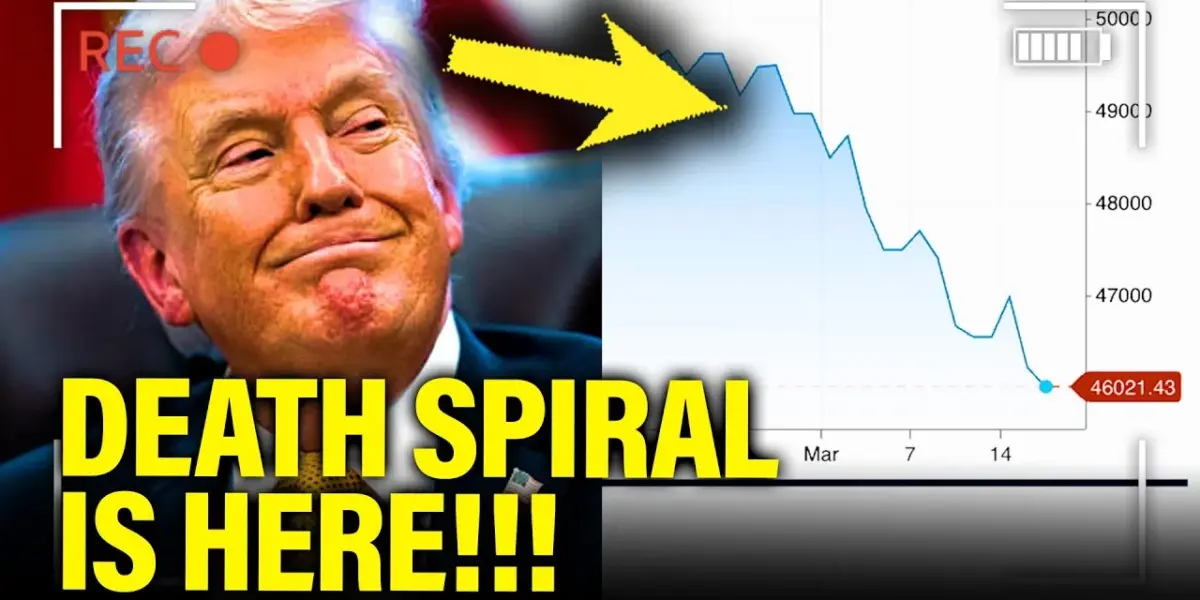
White House Downplays War Impact, Experts Disagree
The White House is telling a story about the ongoing conflict in Iran that doesn’t match reality, according to some economic analysts. Officials suggest the war is ending soon and that oil prices will drop back to normal levels. However, evidence from the futures markets and statements from respected industry experts paint a much different, and more worrying, picture. This disconnect raises serious questions about the government’s economic forecasts and the true cost of the conflict.
Oil Price Forecasts Clash
Kevin Hassett, NEC Director, recently stated on CNBC that oil prices would fall into the $60s by autumn, citing futures markets as proof. He suggested that tankers were already moving through the Strait of Hormuz and that the economy was fundamentally sound. This claim, however, relies on a selective reading of market data. While some older futures contracts might show lower prices far in the future, current market prices tell a different story.
Looking at live futures data for December 2026, the price is around $77.7 per barrel, not the $60s mentioned. Even further out, into 2027, prices remain in the $70s. This indicates that the market, which constantly adjusts to new information, does not expect prices to fall significantly anytime soon. The White House’s optimistic outlook seems to ignore these real-time market signals.
Expert Voices Raise Alarm
Jeff Currie, a highly respected commodities analyst formerly with Goldman Sachs, offers a starkly different view. He describes the situation as “molecular contagion,” meaning the supply shock is spreading like a virus across global supply chains. Prices for refined products like jet fuel and diesel have already spiked above $200 a barrel in places like Singapore and Rotterdam. Currie emphasizes that this is a problem of physical supply, not just financial markets. “You can’t print molecules,” he stated, highlighting that simply printing money won’t solve a shortage of actual goods.
Currie’s analysis points to a fundamental disconnect between the paper market, where futures are traded, and the physical market, where actual oil is bought and sold. While paper prices might hover around $100 a barrel, physical crude in some areas is trading much higher. This suggests that consumers and refiners are already facing costs far beyond what the futures market initially predicted, even before the full impact of the conflict is felt.
Supply Chain Disruptions Echo COVID-19
The scale of the supply shock caused by the conflict in Iran is being compared to the demand shock experienced during the COVID-19 pandemic. Just as it took years to untangle the supply chain issues during COVID, analysts believe repairing the current physical disruptions will not be quick. This isn’t a simple demand problem that can be fixed with economic stimulus; it’s a complex issue involving refinery operations, shipping routes, and storage capacity. These are real-world constraints that cannot be easily overcome.
Furthermore, the lifting of sanctions on Russian oil has played a role. As Russian crude returned to the market and its price increased, it reduced the availability of spare oil globally. This, combined with the current conflict, has pushed oil prices higher and eliminated the buffer that might have previously absorbed such shocks. The situation means Russia could potentially profit significantly from the current energy crisis.
Inflationary Pressures Mount
Adding to the economic concerns, recent data shows a significant jump in producer prices. The Producer Price Index (PPI), which tracks inflation at the wholesale level, rose to its highest point in a year. This indicates that businesses are facing higher costs, which are likely to be passed on to consumers. Core PPI, excluding volatile food and energy prices, also showed a substantial increase, with goods prices seeing their steepest monthly rise since August 2023.
Crucially, this PPI data reflects prices *before* the recent escalation of the Iran conflict and the surge in oil prices above $100 a barrel. The next round of data, expected in April, will likely show an even more dramatic impact as it includes the significant increase in energy input costs. This suggests that inflation is not only a growing problem but is likely to worsen considerably in the coming months.
Why This Matters
The disconnect between the White House’s optimistic pronouncements and the reality of the global oil market and rising inflation is deeply concerning. If the government is providing misleading information about economic stability and the impact of the conflict, it hinders the public’s ability to prepare for potential economic hardships. The comparison to COVID-19’s supply chain disruptions is a stark warning that the effects of this conflict could be long-lasting and difficult to resolve.
The rising producer prices are a clear signal that consumer inflation is likely to accelerate. This could lead to reduced purchasing power for households, increased costs for businesses, and potentially force central banks to take more aggressive action to control inflation, which could slow down economic growth. The current situation highlights the complex interplay between geopolitical events and global economic stability, showing that even seemingly contained conflicts can have far-reaching and costly consequences.
Looking Ahead
The future outlook suggests continued economic uncertainty. The physical limitations of supply chains mean that even if the conflict in Iran de-escalates quickly, the recovery process will be slow. The oil market will likely remain volatile, and inflation could prove persistent. It is essential for individuals and businesses to be aware of these underlying economic realities, rather than relying solely on official reassurances. The ability to “print molecules” is impossible, and the world economy is now grappling with the real-world consequences of physical supply disruptions, a challenge that will likely shape economic conditions for some time to come.
Source: Trump in Economic DEATH SPIRAL as WAR THREATENS IT ALL (YouTube)

Related Articles


Market Complacency Sparks Investor Anxiety Amid Supply Chain Fears
Global supply chain disruptions are causing growing investor anxiety, contrasting with earlier market complacency. Retail investors are showing signs of nervousness, while private credit faces transparency issues. Experts suggest opportunities may arise in companies with strong fundamentals despite short-term market weakness.

US Military Aims Achievable, Iran Political Future ‘Fuzzy,’ Says Ex-Advisor
Former Trump advisor Joel Rayburn stated that while US military objectives in Iran are achievable, the political outcome remains uncertain. Rayburn noted that Iran's regime is under immense pressure and could be nearing collapse. The potential closure of the Strait of Hormuz remains a key concern, with military assets being deployed to ensure its openness.


US Weapons Stockpiles Drained by Iran Conflict
The U.S. faces a significant depletion of its weapons stockpiles, particularly interceptors, due to the ongoing conflict with Iran. While production is being ramped up, it will take years to meet current demand, raising concerns about long-term sustainability. Gulf allies are also experiencing critical shortages of essential munitions.