US Military Grip on Iran’s Fate Sparks Regional Alarm
The U.S. military's growing influence over Iran's fate is causing regional alarm, as unexpected Iranian actions and internal silence surprise global powers. A recent rift between Israel and the U.S. over a gas field strike highlights growing complexities and shifting alliances in the volatile Middle East.

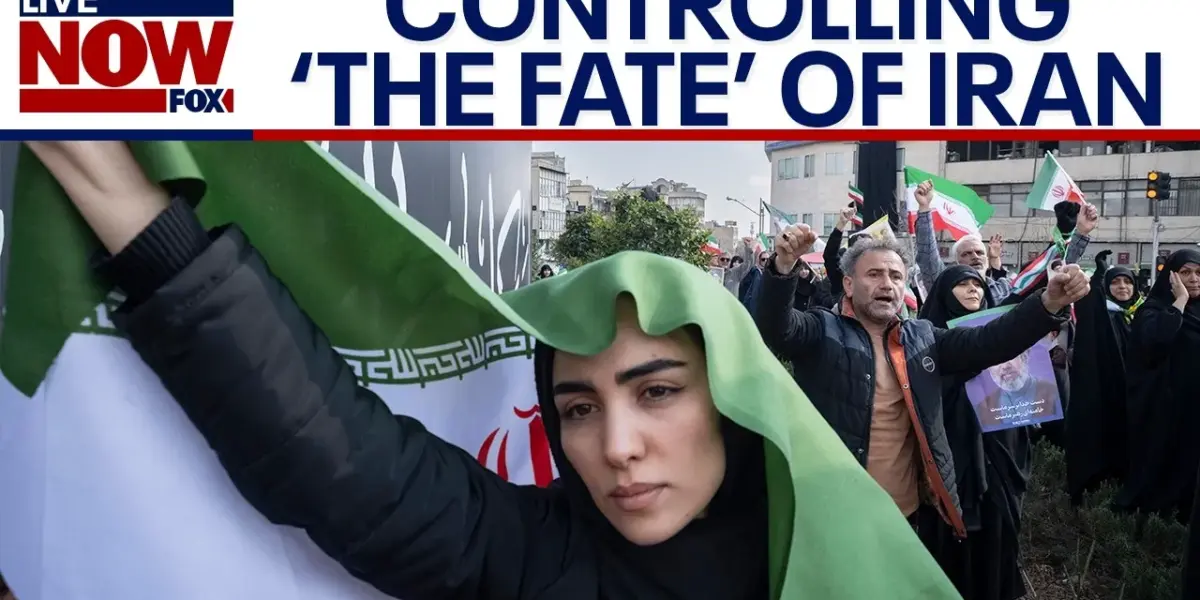
US Military Influence Over Iran’s Future Grows
Recent events in the Middle East suggest a significant shift in regional power dynamics, with the U.S. military now appearing to hold considerable sway over Iran’s future. This development has caught many by surprise, including key players like Israel and the United States itself. The situation is complex, involving unexpected Iranian actions and a surprising lack of internal dissent within Iran.
Surprise at Iranian Actions and Internal Silence
Professor Alone Burstin, host of the Israel Palestine Report, noted that both the U.S. and Israel seemed taken aback by Iran’s willingness to act on its threats. Iran had warned it would block the Strait of Hormuz and retaliate against countries in the region allied with the U.S. However, many did not believe these threats would be carried out. The professor highlighted three key areas of surprise:
- Iran’s commitment to blocking the Strait of Hormuz, despite the economic cost to itself.
- Iran’s willingness to attack regional partners of the U.S., leading to complaints from those countries.
- The unexpected absence of widespread protests within Iran following initial strikes.
Burstin suggested this lack of internal protest might be due to ongoing bombings or severe repression. He also pointed out that initial hopes for protests, perhaps spurred by exiled figures or international calls, have not materialized. This has left both Israel and the U.S. uncertain about their next steps.
Disagreement Over Gas Field Strike Creates Rift
A recent incident involving an Israeli airstrike on a natural gas field shared by Iran and Qatar revealed a crack in the unified front between Israel and the U.S. Initially, Israel stated the U.S. was aware of and coordinated the strike. U.S. officials initially confirmed this. However, after Iran retaliated with a strike on Qatar’s gas facilities, President Trump issued a statement saying the U.S. did not know about the Israeli strike and that Iran was mistaken in its retaliation.
Israeli Prime Minister Netanyahu later held a press conference confirming the U.S. was unaware of the strike, seemingly under pressure from Trump. This public disagreement is a notable departure from previous coordinated actions. Burstin described it as the “first public crack in the foundation of the joint attacks of Israel and the United States.” The incident has led to discussions about forming a committee to prevent future coordination failures.
Strategic Importance of Natural Gas Fields
The targeted gas fields are vital to the economies of both Iran and Qatar, being the largest in the world. Attacking such resources carries significant weight in regional signaling. Burstin explained that conflicts in the Middle East often involve demonstrating how far each side is willing to escalate. While direct strikes between Iran and Israel have occurred, major commando operations have been avoided.
Attacking oil and gas fields represents a critical escalation, as these resources are crucial for global energy supplies. There’s an unspoken rule in regional conflicts to avoid destroying these facilities due to their widespread economic impact. Iran has signaled it would retaliate against such attacks, and its limited strike on Qatar aimed to send a message without causing complete devastation, yet it has terrified Gulf states about potential wider conflict.
Gulf States’ Hesitation to Join the Fight
While President Trump has called on Gulf states and NATO partners to join U.S. and Israeli forces, most have hesitated. These nations are absorbing Iranian retaliation, viewing themselves as targets due to hosting U.S. troops. They want to avoid active involvement to prevent further escalation against them.
However, if the conflict continues to escalate, they may be forced to join. This could happen if Trump demands their active participation or if internal pressures mount due to increasing civilian casualties. While some Gulf nations are receiving significant U.S. aid, their populations generally prefer stability and economic prosperity over war. Some are trying to involve citizens in defense efforts, like Saudi Arabia’s new app for reporting missile attacks, but the long-term strategy of non-involvement faces challenges.
NATO’s Hesitation and Shifting Alliances
NATO allies have shown reluctance to defend the Strait of Hormuz. Two main reasons are cited: uncertainty about a viable defense plan, as Iran’s long coastline makes complete protection difficult, and a lack of clarity on the war’s agenda and end goals. Some European nations stated they would commit if there was a clear objective, but with the war’s duration uncertain, they are less willing to engage.
The professor also highlighted the constantly shifting nature of alliances in the Middle East. While a common enemy like Iran can temporarily unite disparate nations, underlying tensions remain. He noted that a full-scale invasion of Iran, which would be necessary for unconditional surrender, is a monumental task. The U.S. is the only country with the capability for such an operation, but it would be extremely difficult given Iran’s size, military, and challenging topography. Therefore, further escalation is more likely to involve intensified aerial and naval attacks rather than ground invasions.
Discussion on International Law and Island Occupation
Amidst discussions of deploying more troops, questions have arisen about potentially occupying islands like Carg Island for oil usage. According to international law, occupying territory for military purposes is permitted under certain conventions. However, using the natural resources of an occupied area for personal gain is generally not allowed; they can be used for the benefit of the local population.
While international law exists, it is often disregarded in practice. The professor noted that countries often create facts on the ground, and legal justifications follow. He suggested that even if the U.S. were to occupy Carg Island, its primary goal would likely be to stop Iran’s oil production and sales, rather than to utilize the island’s refineries for export.
Where to Find More Analysis
Professor Alone Burstin shares his expertise on the Middle East through his YouTube channel, the Israel Palestine Report, and his website, loneburstine.com. He frequently uploads content discussing the region, including analyses of Iran’s proxy networks, the ongoing conflict, and geopolitical developments.
Source: Middle East latest: Hegseth warns that US military controls Iran’s fate (YouTube)

Related Articles

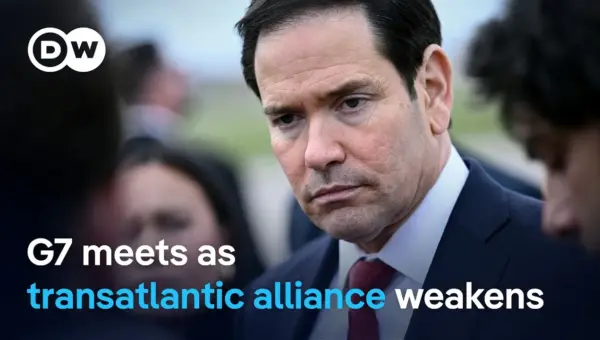
G7 Allies Clash Over Iran War Strategy, Urge Focus on Russia
G7 foreign ministers met in Paris, revealing deep divisions over the U.S. war with Iran. European allies urged the U.S. to pressure Russia, linking its actions to the conflict and fearing support for Ukraine will wane.

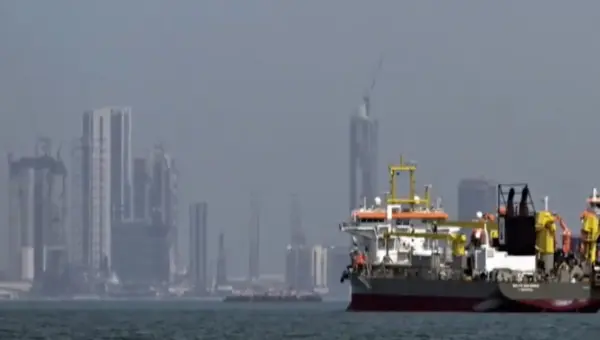
Iran Blocks China Ships, Exposing Beijing’s Weak Grip
Iran's recent decision to block Chinese ships at the Strait of Hormuz is exposing the limits of Beijing's influence in the Middle East. This action is causing delays and cancellations for Chinese manufacturers, turning a perceived geopolitical win into an economic strain.
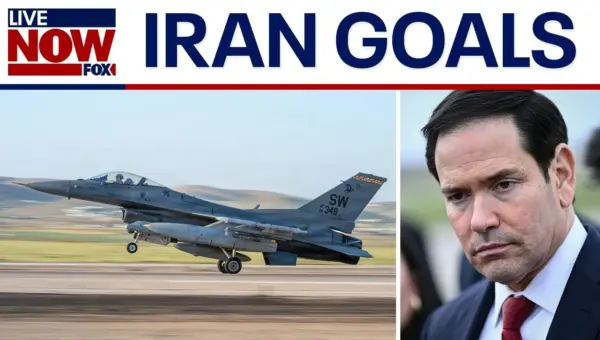
Rubio: US Can Achieve Iran War Goals Without Troops
Senator Marco Rubio outlined a strategy to counter Iran without deploying U.S. ground troops, focusing on weakening the regime and enhancing maritime security. He also criticized Cuba's economic system and expressed concerns about West Bank violence.