Zipper’s Secret: How a Simple Invention Changed Clothing Forever
Discover the surprising engineering behind the everyday zipper. From its flawed beginnings to Gideon Sundback's revolutionary design, this article explores how the zipper became an indispensable part of modern life, detailing its evolution and the innovations that keep it working.

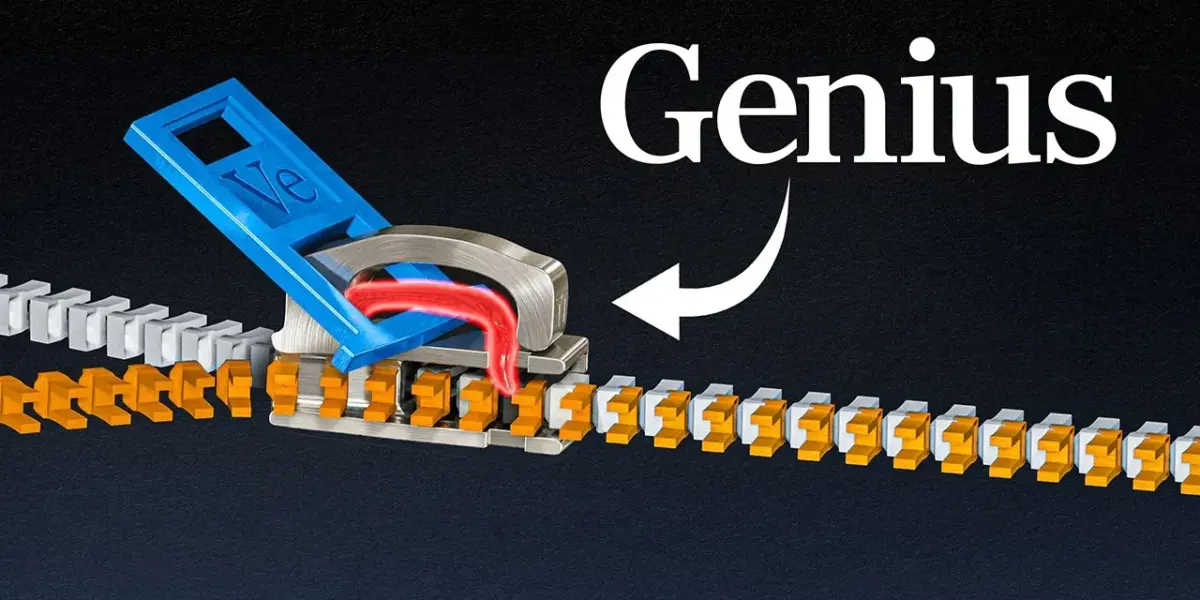
The Humble Zipper: More Than Just a Fastener
The zipper, a device we use countless times a day without a second thought, is a marvel of engineering. Its seemingly simple function of joining two sides of fabric with a smooth glide hides a complex history and ingenious design. While we often only notice zippers when they break, their journey from a clunky novelty to an everyday essential is a fascinating tale of innovation and perseverance.
From Hooks and Eyes to Automatic Solutions
Before the zipper, clothing was fastened with buttons, laces, brooches, and hooks and eyes. These methods worked, but they were time-consuming, requiring individual fastening for each point. In the late 19th century, American engineer Whitcomb Judson envisioned a better way. His goal was to create an “automatic” fastener that could join clothing in a single motion, initially for shoes to replace tedious lacing.
Judson’s first attempt, presented at the 1893 Chicago World’s Fair, was a hook-and-eye system. Despite his salesmanship and the formation of the Universal Fastener Company, his invention was deeply flawed. It jammed frequently, was made of rust-prone steel, and had to be unsewn for washing. If even one hook was out of place, the whole fastener could pop open. This design struggled to gain traction, leading the company into debt.
Gideon Sundback’s Breakthrough
A turning point came in 1906 with the arrival of Gideon Sundback, a young Swedish engineer. Initially drawn to the company by the manager’s daughter, whom he later married, Sundback began improving Judson’s design. After his wife’s passing, he poured his grief into his work, leading to a pivotal realization: the hook-and-eye system was fundamentally flawed. He needed a new approach.
By 1914, Sundback had patented a design that is remarkably similar to the zippers we use today. His innovation featured two rows of interlocking teeth, shaped to slide smoothly into place. The key was the slider, which contains a Y-shaped cavity. As the slider moves up, this cavity guides the teeth into their grooves at the perfect angle. When moving down, a wedge-shaped piece within the slider separates the teeth, allowing them to unfasten.
This design created a strong, secure closure. Unlike Judson’s device, Sundback’s teeth were precisely shaped with a “nib” on top and a “scoop” on the bottom, fitting snugly into each other for a robust connection. The fabric tape holding the teeth also prevented stretching, ensuring the zipper’s integrity.
The Challenge of Manufacturing
Despite Sundback’s brilliant design, mass production in the early 20th century presented a huge hurdle. Each tiny tooth needed to be manufactured with extreme precision. There were no existing machines capable of this task reliably. Sundback rose to the challenge, developing ingenious machinery that could automate the process. These machines took Y-shaped wire, cut it into individual teeth, stamped the nib and scoop onto each one, and then clamped them onto a fabric tape. Even early versions could produce about 150 meters of zippers per day.
While incredibly strong, Sundback’s design had a potential weakness: if a single tooth broke or fell off, it could create a gap, allowing neighboring teeth to loosen and leading to a cascading failure. This was a more significant failure point than a single broken button.
From “Hookless Hooker” to “Zipper”
The Universal Fastener Company, renamed the Hookless Fastener Company, launched Sundback’s improved design. Initially, it found niche applications on money belts, tobacco pouches, and rubber boots. The B.F. Goodrich Company was particularly enthusiastic about using the fastener on their rubber boots. They needed a name for this new, automatic closure. As they observed the fastener in action, they noted the distinctive “zip” sound it made when closing. Thus, the name “zipper” was born, and it quickly became the common term for the device itself.
The zipper’s popularity surged. By the 1930s, the company, now renamed Talon (referencing the secure grip of an eagle’s talons), was highly successful. Zippers were simpler, made of rust-resistant nickel alloy, and could stay on garments during washing. Despite initial resistance from conservative consumers and urban legends about accidental unzipping, the zipper’s novelty and modern appeal made it a hit. During World War II, zippers were even considered a protected industry in Germany, symbolizing modern prosperity.
Evolution and Dominance: Coil Zippers and YKK
While metal zippers remain popular, the world’s most common zipper today is actually made of plastic: the coil zipper. Developed around the 1940s, this type uses two coils of plastic, molded so that their bulges interlock. Coil zippers are cheaper, more flexible, and ideal for applications like luggage and backpacks that need to bend around corners. Crucially, because the teeth are one continuous piece of plastic, a single tooth cannot fall off, eliminating the cascading failure risk of early metal designs.
Another important innovation was the locking mechanism, also conceived by Sundback. A small pin in the slider can engage with a hole in the slider’s base, preventing it from moving unless the pull tab is intentionally pulled forward. This feature, found on over half of zippers today, prevents accidental unzipping.
The zipper market was dominated by Talon for decades. However, when Sundback’s original patent expired in 1934, the door opened for competitors. Tadao Yoshida founded the Yoshida Manufacturing Corporation (YKK) in Japan that same year. Despite setbacks, including the destruction of his factory by bombs in 1945, Yoshida rebuilt and focused on improving manufacturing speed and quality. YKK’s commitment to reliability and in-house production allowed them to surpass Talon by the 1980s, becoming the world’s largest zipper manufacturer. Today, YKK produces over 10 billion zippers annually, including specialized airtight and watertight versions used in deep-sea diving suits and even spacesuits.
The Enduring Genius of Sundback’s Design
Remarkably, Gideon Sundback’s core design from over a century ago remains the standard for most zippers. While materials and minor features have evolved, the fundamental principle of interlocking teeth guided by a slider has proven exceptionally effective. The zipper’s journey from a flawed novelty to an indispensable component of modern life is a testament to its surprising genius, a simple yet elegant solution that quietly revolutionizes our daily interactions with the world around us.
Troubleshooting Your Zipper
If your zipper gets stuck, avoid forcing it. Gently remove any trapped fabric or debris. If there’s no visible obstruction, try lubricating the teeth with graphite from a pencil, which acts as a dry lubricant.
For zippers that repeatedly unzip on their own, the slider may be worn or bent. You can often fix this by carefully crimping the slider with pliers to narrow its internal cavity, restoring its grip on the teeth. Be gentle; over-crimping can make the problem worse.
Source: The Surprising Genius Of Zippers (YouTube)

Related Articles


Trump’s Pearl Harbor Question: A Glimpse into Historical Amnesia
Donald Trump's question about why Japan didn't warn the U.S. about Pearl Harbor reveals a surprising disconnect with historical facts. The attack's success hinged on its surprise element. This incident underscores the importance of historical accuracy in international discourse.

History Repeats Itself: 11 Disturbing Parallels We Can’t Ignore
History's echoes are loud, showing 11 disturbing parallels between past events and today's world. From pandemics and political unrest to economic bubbles and climate crises, these connections offer vital warnings we can't afford to ignore.


History’s Grim Grimace: Most Brutal Deaths Revealed
WatchMojo's latest video, "30 Most BRUTAL Deaths in History," chronicles shocking executions, assassinations, and accidents from ancient times to the 21st century. The list features gruesome methods like the Brazen Bull, flaying, and pressing, alongside modern tragedies like industrial accidents and animal attacks.