Kremlin Faces Internal Dissent as Blogger’s Critique Sparks Purge
A prominent Russian blogger's public denouncement of Putin has led to his hospitalization and suggests growing internal dissent within the Kremlin. The incident highlights right-wing criticism focused on war losses and economic sanctions, hinting at power struggles and a potential challenge to Putin's authority.

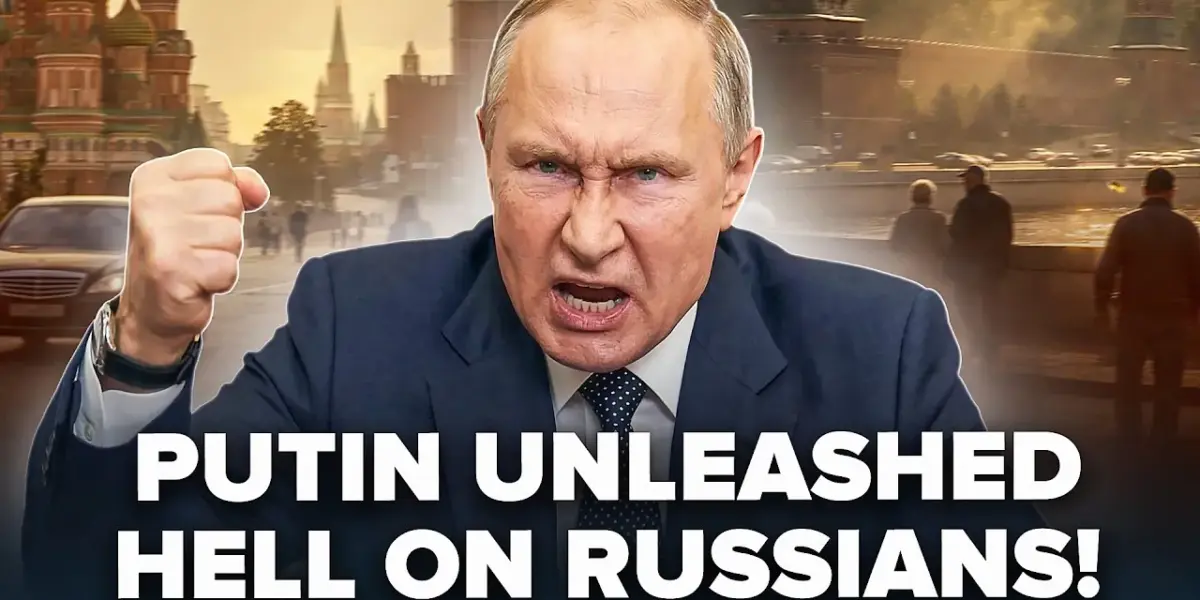
Kremlin Faces Internal Dissent as Blogger’s Critique Sparks Purge
A prominent pro-war Russian blogger has been hospitalized in a psychiatric facility after publicly calling President Vladimir Putin a war criminal. This incident signals potential turmoil within the Kremlin and suggests a growing internal challenge to Putin’s authority, moving beyond simple propaganda shifts.
The blogger’s statement was not just an opinion piece; it appeared to be a carefully prepared political declaration. Analysts suggest it reads more like a manifesto from revolutionary forces within Russia, specifically from the right-wing of Russian politics. This faction is not criticizing Putin for starting the war or for killing opponents. Instead, their focus is on the war’s perceived losses, the financial drain from Western sanctions, and the continuation of a “senseless war.” This indicates a strategic dissatisfaction with Putin’s handling of the conflict, rather than a fundamental opposition to the war itself.
Internal Power Struggles Emerge
The blogger, who reportedly earns income from his political activities, may have been paid to lead a new political movement. He hinted at a significant rift between the current Defense Minister, Andrei Belousov, and the former minister, Sergei Shoigu. Shoigu, once considered the most powerful figure in Russia after Putin, now faces potential legal trouble, with many of his associates already imprisoned. This suggests Shoigu may be a target in the ongoing power plays.
Beyond this prominent blogger, other smaller movements within Russia have also begun criticizing Putin. These criticisms often focus on military losses and recent government actions, such as limiting mobile internet access and deploying counter-missile systems around the Kremlin. These developments collectively suggest the beginning of a significant internal challenge to Putin’s leadership.
Blogger’s Defiance Signals Shifting Elite Attitudes
Despite the risk of severe repercussions, the blogger has shown remarkable confidence. After his initial statement, he gave interviews to Russian opposition TV channels broadcasting from outside Russia. He maintained that his views were his own and expressed readiness to go to jail. He boldly predicted that Putin’s regime would not last more than a few months, stating he aimed to be a hero who initiated the change.
This defiance draws parallels to Yevgeny Prigozhin’s rebellion in 2023, though this current situation appears to be an attempted coup from a different segment of the Russian elite, not solely military figures. The analyst noted that Putin himself has been increasingly confined, reportedly rarely leaving his bunker at his Novo-Ogaryovo residence.
Heightened Security and Putin’s Political Withdrawal
Security measures around the Kremlin have noticeably intensified. Manhole covers in central Moscow have been sealed, and counter-drone units are deployed not just around the Kremlin but also at symbolic locations like Lenin’s Mausoleum. This heightened alert suggests a fear of internal threats or unconventional attacks.
Furthermore, Putin has become politically withdrawn over the past three months. He has largely disappeared from public view and international pronouncements. Unlike previous periods where he frequently made political declarations and offered interventions on global issues, he has recently remained passive. His public statements have been limited to brief condolences for foreign dignitaries’ deaths, often worded vaguely, as if the individuals died of natural causes.
Geopolitical Passivity and Economic Strain
This political quietude extends to major international crises. For instance, when Venezuela’s president was reportedly detained by American forces, Putin made no public comment. Similarly, he only sent a written message of condolence after a Hamas leader was killed. Even when asked to contribute naval forces to guarantee shipping through the Strait of Hormuz, a situation where the Putin of the past might have offered his services, he remained silent.
This lack of initiative suggests Putin is in a weakened position, possibly due to health concerns or internal power struggles. His administration is also facing significant economic challenges. Despite potential revenues from oil sales, Russia’s budget revenues from oil and gas in March were 52% lower than the previous year. This economic strain likely contributes to the overall instability.
Peace Talks Stalemate and Shifting Alliances
Regarding peace talks with Ukraine, the Kremlin claims they are on a “situational pause,” blaming U.S. schedules and energy infrastructure tensions. However, neither Russia nor Ukraine appears to be actively pushing for negotiations. The departure of key American negotiators, like Steven Vitkov and Jared Kushner, has left both sides uncertain about the path forward. The conflict is currently characterized solely by military action, with diplomatic avenues stalled.
The broader geopolitical landscape also shows signs of uncertainty. European leaders, including France’s Macron and Germany’s Merkel, have questioned the strategic goals of the United States and Israel in recent conflicts. The Foreign Minister of Oman and even Belarus’s Alexander Lukashenko have echoed these sentiments, indicating a lack of clear objectives and a potential lack of a cohesive plan from Washington in certain international affairs.
Economic Pressures May Dictate Political Outcomes
While there is speculation about the duration of conflicts, economic factors may ultimately drive political decisions. The significant rise in gasoline prices in the United States, coupled with falling approval ratings for President Trump, suggests that domestic economic concerns could force a swift resolution to international engagements. Analysts believe that economic stability and public opinion, rather than military objectives, may become the primary drivers for political action in the coming months.
The situation highlights a complex interplay of internal political dissent, economic pressures, and shifting geopolitical dynamics. The blogger’s bold challenge, though met with immediate suppression, may be indicative of broader cracks appearing within the Russian power structure.
Source: 😱Putin fears for his power! Kremlin is launching large-scale purges. Russians are in agony (YouTube)

Related Articles
Germany’s Anti-AfD Firewall Crumbles Amidst Shifting Politics
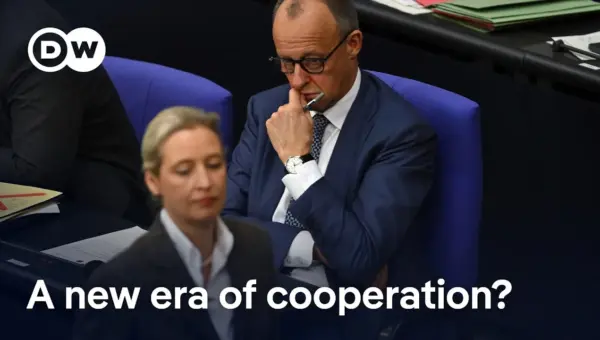
Germany's political 'firewall' against the far-right AfD party is showing significant cracks due to rising AfD popularity and recent instances of cooperation. Historically rooted in Germany's experience with Nazism, the firewall aimed to prevent extremist parties from gaining power. However, shifts in the AfD's rhetoric and increased AfD strength, especially in eastern Germany, are challenging this long-standing political norm.
Ukraine Strikes Russian Oil Refinery, Eyes Iran Threat
Ukrainian forces struck a key Russian oil refinery, disrupting Moscow's war capabilities. Meanwhile, Finland's president urged continued U.S. support for Ukraine, as Kyiv shares its air defense expertise globally amid growing geopolitical complexities involving Iran and potential sanctions against Hungary.
G7 Allies Clash Over Iran War Strategy, Urge Focus on Russia
G7 foreign ministers met in Paris, revealing deep divisions over the U.S. war with Iran. European allies urged the U.S. to pressure Russia, linking its actions to the conflict and fearing support for Ukraine will wane.