Canton Network Challenges Crypto Norms
Canton Network is generating buzz with its $380 billion claimed asset value, sparking debate over its valuation methods and visibility on platforms like DeFi Lama. CEO Yuval Rooz defends the network's approach, distinguishing it from traditional "institutional chains" and highlighting its unique privacy capabilities and accessible validator system.

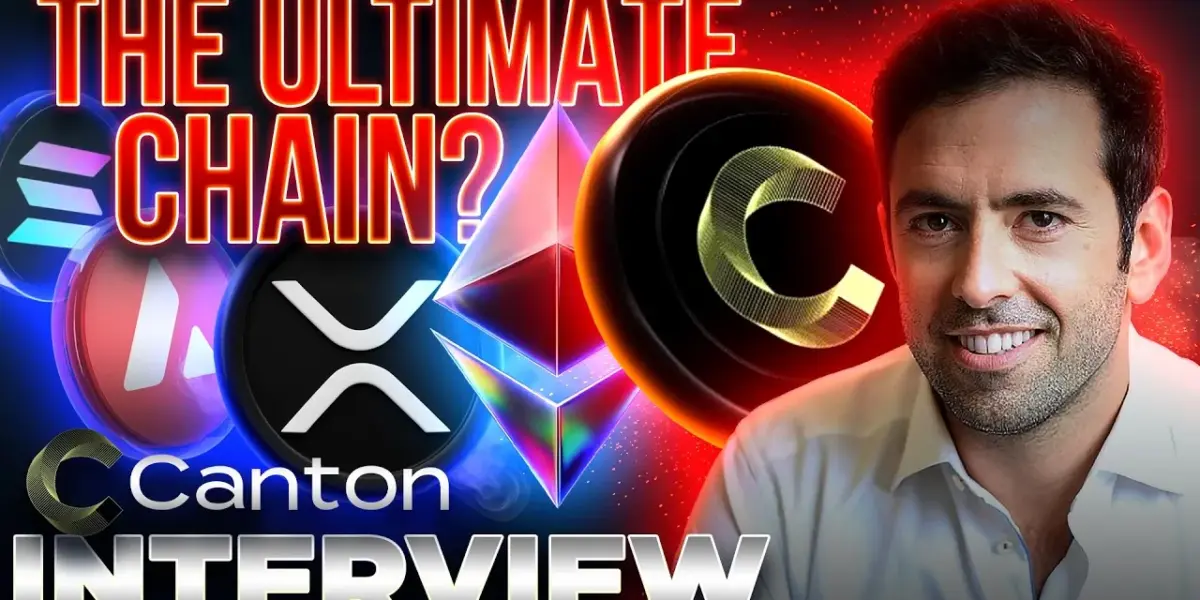
Canton Network Challenges Crypto Norms
Canton Network is sparking debate in the crypto world, especially regarding its valuation and positioning against established players like XRP, Solana, and Ethereum. The network claims a significant represented asset value, raising questions about how it’s measured and displayed compared to traditional crypto metrics.
Valuation and Visibility Questions
During a recent interview, Canton Network’s CEO, Yuval Rooz, addressed the network’s claimed represented asset value of $380 billion. This figure is notably larger than the total market cap of all stablecoins on public crypto networks combined. Rooz defended these numbers, suggesting it’s irrational for a CEO to inflate figures for mere attention.
However, this valuation method has led to confusion. Unlike many other blockchains, Canton Network does not appear on popular DeFi tracking websites like DeFi Lama. This lack of visibility on standard platforms has fueled skepticism and questions about the network’s true market presence and how its assets are accounted for.
Defining an “Institutional Chain”
A key point of discussion revolved around whether Canton Network should be classified as an “institutional chain.” Rooz pushed back against this label, explaining that the term is often misunderstood. He pointed out that many so-called “institutional” chains have primarily celebrated partnerships with large financial firms, a strategy Canton also employs but doesn’t define it exclusively.
Canton Network was started by a startup, not directly by traditional financial institutions. While it has over 40 “super validators,” not all of them are large corporations. Rooz questioned the definition of an institution, suggesting that the network’s structure and partnerships don’t fit a narrow “old guard of Wall Street” mold.
Memecoins and Network Focus
The conversation touched upon the prevalence of memecoins on other blockchains, with hosts questioning Canton’s lack of them. Rooz stated that Canton does not currently have memecoins listed, attributing this to community priorities rather than technical limitations. He suggested that if the absence of memecoins leads to Canton being labeled an “institutional chain,” he accepts that classification.
He clarified that while it’s technically possible to launch a memecoin on Canton Network in a permissionless manner, the network’s focus has been on other priorities. This stance highlights a deliberate choice in development direction, prioritizing certain types of applications over others.
Comparing with Avalanche and Privacy Features
When compared to networks like Avalanche, Canton Network highlights key differences. One significant distinction is how transactions between different parts of the network are handled. Avalanche uses bridges between its subnets, which Canton considers less safe than its own approach.
Canton emphasizes that all transactions between any two parts of the Canton network are fully composable, functioning as if they were on a single, unified network. This aims to provide a more seamless and potentially secure experience for users and developers.
Privacy Capabilities
Regarding privacy, Rooz clarified that Canton Network is not an exclusively private chain. Instead, it’s described as the only public chain offering privacy capabilities. The network operates on a principle of flexibility, allowing certain data to remain public while other information can be designated as private through smart contract design.
This contrasts with chains that are either entirely public or entirely private. Canton’s approach allows for a hybrid model, where transparency and privacy can coexist based on specific needs, offering a nuanced solution for different use cases.
Validator Structure and Accessibility
The network’s validator system also came under scrutiny. While the term “super validator” might sound exclusive, Rooz explained that the process to become one is not solely based on capital investment, unlike some other blockchains. Instead, Canton Network prioritizes contribution to the network.
Potential validators can propose “Canton Improvement Proposals” (SIPs), outlining how they can add value through research, education, or other means. If two-thirds of the existing super validators vote in favor, the proposer can become a validator. Rooz argued this is more accessible than needing significant capital, citing examples like Angel Hack, a company focused on developer education, as a super validator, rather than exclusively large financial institutions.
He further contested the idea that Canton is a “Wall Street corp chain,” stating that most super validators are not traditional Wall Street entities. He argued that many other supposedly decentralized chains require substantial capital to run a full node, making them less accessible to the average person than Canton’s contribution-based model.
Market Dynamics and Future Outlook
The interview also touched upon broader market trends, including the recent clarification by regulators regarding certain assets being classified as commodities. Rooz suggested that any project could potentially qualify as a commodity if it meets the defined rules, indicating a shifting regulatory environment that could impact various crypto projects.
While the host remained skeptical, labeling Canton as potentially centralized and a “Wall Street corp chain,” Rooz maintained his position that the network’s distribution of validators is more balanced than perceived. The discussion concluded with both parties acknowledging their differing viewpoints but remaining open to future developments, particularly as the crypto space continues to evolve.
Source: Canton Chain Better Than XRP, Solana, & Ethereum?🔥Yuval Rooz INTERVIEW (YouTube)

Related Articles


Crypto’s “Warfare” Era Ends? SEC/CFTC Clarity Offers Hope
The SEC and CFTC have announced a framework to classify digital assets, identifying 16 as commodities. This move aims to end years of perceived "warfare" and "lawfare" against the crypto industry under the Biden administration.


Bitcoin Bottom Signals Stack Up Amid Regulatory Hopes
Bitcoin shows potential bottoming signals, with on-chain data aligning with historical patterns and regulatory developments offering cautious optimism. Despite differing analyst views on future catalysts, adoption trends and investor conviction suggest a resilient cryptocurrency market.


Azza Miner Faces Scrutiny Over Investment Withdrawals
Azza Miner, a new cryptocurrency mining company, is under scrutiny for its business model, which restricts users from withdrawing initial investments while promising guaranteed daily profits. The company faces questions about transparency and proof of operations.