Trump’s Iran Conflict Escalates: Gas Prices Surge, Global Crisis Looms
Escalating conflict involving Iran has pushed gas prices up 25% and Qatar to review energy contracts after an attack on its gas fields. Experts warn the situation is evolving into a "war of necessity" with potential for a prolonged global crisis and severe economic consequences.

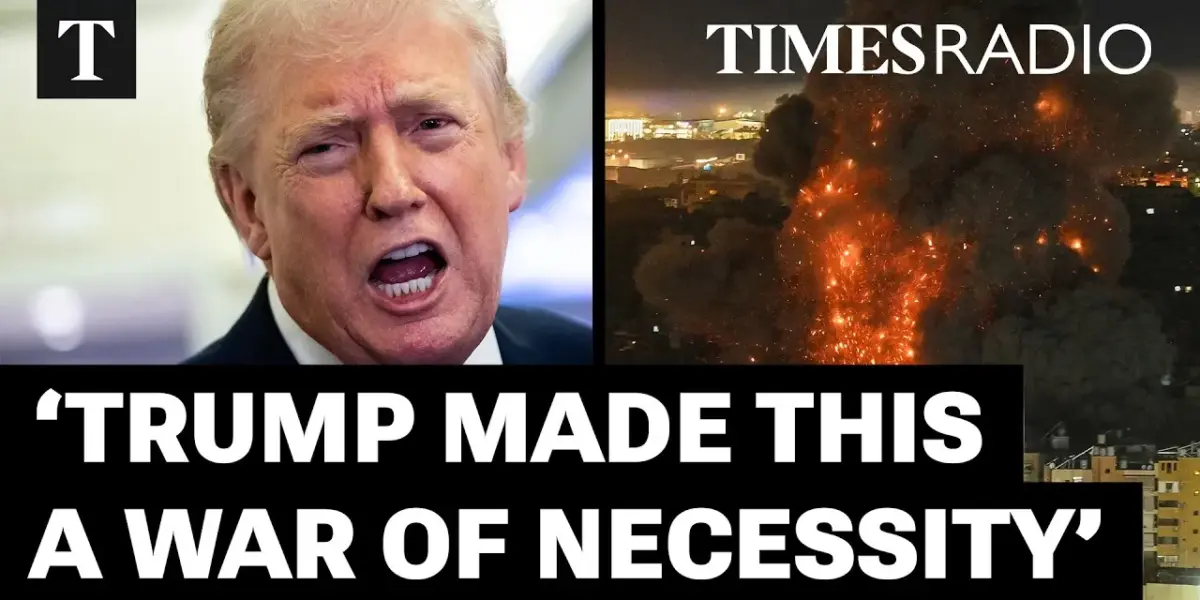
Global Tensions Rise as Trump Escalates Iran Conflict
The conflict involving Iran, previously described as a limited operation, is rapidly evolving into a more serious and potentially prolonged crisis. This escalation, marked by attacks on energy infrastructure, has already sent gas prices soaring and threatens to destabilize the global economy. Experts warn that the situation is moving from a “war of choice” to a “war of necessity,” with few easy ways out.
Qatar Hit, Gas Prices Spike
Just before the broadcast, Qatar, a major global gas supplier, announced it is reviewing its contracts after suffering an attack on a key gas field. This development has deepened worries about the rising cost of fuel. Gas prices have already jumped 25% since the conflict began, adding financial pressure worldwide.
Tit-for-Tat Attacks on Energy Targets
The situation is now characterized by tit-for-tat attacks on energy fields and installations. President Trump has warned Iran of severe retaliation, specifically mentioning the country’s largest gas field, the South Pars field, if there are further attacks on Qatari energy targets. The Iranian strike on Qatar was reportedly in retaliation for an Israeli attack. President Trump has referred to the Israeli action as “violently lashing out,” stating it occurred without his knowledge or approval, though Israeli officials have denied this.
The president has turned a war of choice in my judgment now into a war of necessity. He has no alternative right now other than to escalate in an effort at some point to open the streets. The longer this goes on, the greater the possibility that these target sets both in terms of the US and the Israelis striking oil infrastructure as well as power grids and civilian infrastructure and the Iranians retaliating in kind.
Trump Defends Actions, Cites Surprise
In a statement from the Oval Office, President Trump described his actions as necessary and something other presidents lacked the courage to do. He explained that allies were not informed of the initial attack on Iran to ensure surprise, drawing a parallel to Japan’s attack on Pearl Harbor. This comment, met with laughter in the Oval Office, was noted as characteristic of his style.
Expert Analysis: A Quagmire Ahead?
Aaron David Miller, a former Middle East negotiator, expressed deep concern about the conflict’s trajectory. He believes the situation is rapidly escalating from military targets to civilian infrastructure. Miller stated that the conflict is no longer a matter of weeks but could extend for months, turning a “war of choice” into a “war of necessity.” He sees no clear exit ramp or diplomatic solution, suggesting Iran is intent on imposing costs and maintaining its capacity to strike the Gulf region.
The Cost of Conflict
The Pentagon has requested $200 billion, but estimates suggest the first six days of the war already cost the U.S. $11 billion. Miller noted that while the global economy might withstand short-term energy price spikes, sustained attacks on infrastructure would be economically devastating, potentially impacting a fifth of global oil supply.
A “War of Necessity” or Ideological Drive?
James Jeffrey, former U.S. Deputy National Security Adviser, agreed with Miller’s assessment of a potential quagmire but disagreed on the “war of choice” framing. Jeffrey argued that Iran has been waging a long-term campaign through proxies and its nuclear program to control the region and its resources. He believes Trump felt compelled to act decisively while Iran was weakened, stating that war was likely inevitable sooner or later.
Defining Imminent Threats
Addressing the intelligence community’s assessment that an imminent threat from Iran was not seen, Jeffrey emphasized that presidents, not intelligence advisors, ultimately decide on imminent threats. He cited historical examples, like Britain’s delayed action against Germany, to argue for a more flexible understanding of when to act.
The Path Forward: Negotiation
Despite the escalating tensions and the potential for severe economic fallout, both experts suggest that negotiation is ultimately necessary. Jeffrey pointed out that destroying Iran’s infrastructure is not a sustainable solution and that the people are unlikely to collapse. He highlighted the validity of proposals for diplomatic solutions, including Russian offers to store enriched uranium, as potential offramps.
Looking Ahead
The coming weeks will be crucial in determining whether the current escalation leads to a wider regional war or if diplomatic channels can be reopened. The response to further attacks on energy infrastructure, the economic impact of rising gas prices, and the willingness of all parties to engage in meaningful negotiations will be key factors to watch.
Source: From Choice To Necessity: How Trump’s Iran Strikes Could Spiral Into A Global Crisis (YouTube)

Related Articles


Tiger Woods Arrested for DUI After Crash
Golf legend Tiger Woods was arrested for DUI in Florida following a dramatic rollover crash. Meanwhile, a government shutdown continues as House Republicans block a Senate deal, leading to airport chaos and TSA worker pay issues. The stock market also plummeted into correction territory amid fears of a prolonged Iran conflict.

Trump’s Name Everywhere: A ‘Stain’ on GOP Legacy?
Former President Donald Trump's efforts to brand national symbols, including a proposed signature on dollar bills, spark debate. Critics view this as an authoritarian attempt to embed his legacy, potentially staining the Republican Party's history and contrasting with democratic ideals of public ownership.

Trump’s Iran War Plans Criticized Amid Border Funding Standoff
Lawmakers and analysts are criticizing the Trump administration's handling of the Iran conflict and its approach to border funding, arguing that a lack of clear planning and a focus on political battles are making the U.S. less safe. Concerns are particularly high regarding the FBI's priorities and the potential impact of these issues on national security.