Europe Eyes Defense Autonomy Amidst Russian Aggression and Shifting US Reliability
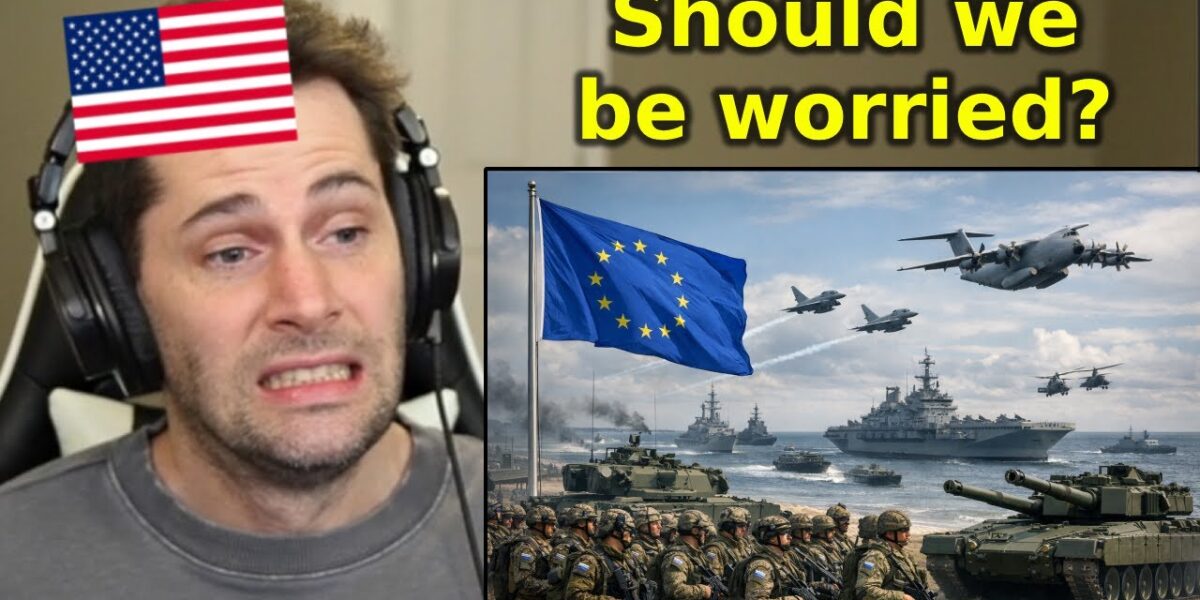
Europe is seriously contemplating the creation of a unified defense force or a robust European Security Council, driven by persistent Russian aggression and concerns over US reliability. These ambitious plans, which have historical roots, aim to bolster European strategic autonomy and could significantly reshape transatlantic relations and the future role of NATO.

Europe Eyes Defense Autonomy Amidst Russian Aggression and Shifting US Reliability
In a significant pivot signaling a potential realignment of global security architecture, European Union officials are once again seriously contemplating the establishment of a unified European defense force or a robust European Security Council. This renewed impetus stems from a confluence of factors: persistent Russian aggression, particularly in Ukraine, and a growing perception of strategic disinterest or unreliability from the United States, a long-standing cornerstone of European security.
The discussions, which have gained considerable traction in recent months, reflect a deepening resolve within Europe to forge greater strategic autonomy. While individual European nations maintain their own militaries, the vision of a collective, integrated defense mechanism represents a monumental shift, potentially reshaping transatlantic relations and the future of NATO.
The Catalysts: Russia and a Shifting US Stance
The primary drivers behind Europe’s renewed push for defense integration are starkly clear. The ongoing conflict in Ukraine has underscored the fragility of peace on the continent and the immediate threat posed by an assertive Russia. This geopolitical reality demands a more cohesive and resilient European response.
Equally, if not more, impactful is the evolving perception of the United States as a reliable security partner. Recent rhetoric and actions by prominent US political figures have fueled anxieties across European capitals. Concerns reached a fever pitch following remarks by former President Donald Trump, who, during his previous term, openly questioned the value of NATO and suggested scenarios that implied a reduced US commitment to European defense. The transcript highlights specific instances, such as Trump’s reported interest in annexing Greenland by force, which, despite being walked back, sent ripples of alarm through Europe, signaling a potential unpredictability in US foreign policy.
Observers note that such incidents have significantly damaged the US’s global reputation, particularly among its allies. As one commentator reflected, "It says a lot about the state of the United States in the world right now… we are increasingly living in insane crazy times." This sentiment encapsulates the growing European apprehension that reliance on the US, once a bedrock of post-World War II security, may no longer be a sustainable long-term strategy.
Historical Echoes: A Long-Standing Ambition
The concept of a unified European defense is not novel; it has a rich, albeit often frustrated, history. The idea first gained serious consideration in 1952, in the aftermath of World War II, when the US advocated for West Germany’s rearmament and integration into NATO. France, wary of German military resurgence, countered with a proposal for a European Defense Community (EDC), aiming to merge the armies of six European states under a supranational command. This ambitious plan, however, collapsed in 1954 when the French Parliament failed to ratify it, leading West Germany to join NATO instead.
Decades later, in the 1960s, French President Charles de Gaulle, a staunch advocate for European independence from US influence, attempted to transform the European Economic Community into a security alliance. Yet, member states largely preferred the established framework of NATO, which provided the formidable military backing of the United States.
Significant progress towards an independent EU security policy emerged around the turn of the millennium with the 1998 St. Malo Declaration, signed by French President Jacques Chirac and British Prime Minister Tony Blair. This declaration laid the political groundwork for the EU’s Common Security and Defense Policy (CSDP) and set an ambitious goal to create a 60,000-strong rapid reaction force for European crises. However, this force was never fully realized, and progress subsequently regressed as the EU expanded to include former Soviet states, many of whom prioritized NATO membership and its US security guarantee.
Current Proposals: A Standing Army and a Security Council
Today, the discussions are more concrete, presenting two main avenues for enhanced European defense cooperation:
1. A Standing European Military Force
The EU’s defense commissioner recently floated the idea of creating a standing European military force of 100,000 troops. This force would potentially replace US troops in the event of a mass withdrawal, signifying a direct response to concerns about US commitment. The vision is to consolidate Europe’s currently fragmented military capabilities. Presently, European NATO countries collectively command nearly 2 million troops, but these forces are disparate, poorly coordinated, and operate under 30 separate defense procurement systems, leading to massive inefficiencies and inflated costs.
Establishing a unified standing army would address these logistical challenges, streamlining command structures, standardizing equipment, and enhancing interoperability. However, the complexities of integrating national armies, each with its unique traditions, doctrines, and leadership, remain a significant hurdle. Questions of supreme command and political oversight in a multi-national context are particularly vexing.
2. The European Security Council (ESC)
A more immediately plausible proposal, championed by a German Green MEP, is the creation of a separate European Security Council (ESC). Drawing inspiration from the United Nations Security Council, the ESC would envision a small group of key military powers collectively responsible for crucial security decisions in Europe. The idea is not entirely new, having been debated in various forms since the 1980s, and resurfacing after the 2003 Iraq war and again in 2017.
Under current proposals, the ESC’s core voting members would initially include the President of the European Parliament and the five EU countries with the largest economies, militaries, and defense spending: France, Germany, Italy, Spain, and Poland. Crucially, the plan also seeks to include the United Kingdom, despite its non-EU member status post-Brexit, recognizing its significant nuclear capability and defense spending, and signaling that European security extends beyond the EU’s immediate borders. A small number of rotating EU members would also sit on the council, albeit without voting rights, with the potential for future expansion.
The ESC aims to overcome the EU’s usual requirement for unanimous defense decisions, which often lead to paralysis. By establishing it through a new intergovernmental treaty, it could operate within EU law while bypassing the cumbersome unanimity rule, similar to the Schengen Agreement or the Eurozone’s multi-speed integration approach. This pragmatic approach could allow for swift and decisive action in crisis situations.
Challenges and Implications for European Unity
While the ESC offers a pragmatic solution to decision-making paralysis, it comes with significant political costs. Concentrating power in the hands of a small group of large states risks reviving long-standing fears of a "two-speed Europe," where influence is unevenly distributed, and smaller countries feel sidelined to secondary status. Such a development could further erode European unity, a core principle of the EU.
The bureaucratic hurdles inherent in such a monumental undertaking are also considerable. Implementing either a standing army or a new security council would likely require contentious EU treaties and extensive political negotiation, demanding significant bureaucratic bandwidth and political will at a time when the EU already faces numerous internal disagreements, such as those concerning debt.
The Future of Transatlantic Relations and NATO
These discussions about European defense autonomy carry profound implications for NATO and transatlantic relations. The very notion of a distinct European defense architecture, independent of the United States, signals a potential weakening of NATO’s role as the sole cornerstone of European security.
From an American perspective, as highlighted in the transcript, this development is viewed with mixed feelings. While some acknowledge the understandable rationale behind Europe’s desire for self-reliance given recent US rhetoric, there is also a recognition of the objective negative impact on US influence and strategic partnerships. "This is bad for the United States," one observer conceded, "because it just sounds like Europe is trying to do something like this to distance itself further from having to rely on the United States." The damage to the US’s global reputation for reliability and stability is seen as substantial, potentially affecting trade, investment, and military alliances for years to come.
Ultimately, the move towards a European army or a robust European Security Council is a long-term project. While a full-fledged EU army may not be imminent, the seriousness of these discussions underscores a fundamental shift in European strategic thinking. Faced with a volatile geopolitical landscape and concerns about the reliability of its traditional allies, Europe is clearly determined to take greater control of its own security destiny, a development that will undoubtedly reshape global power dynamics for decades to come.
Source: American Reacts to Plans for a European Army (YouTube)

Related Articles
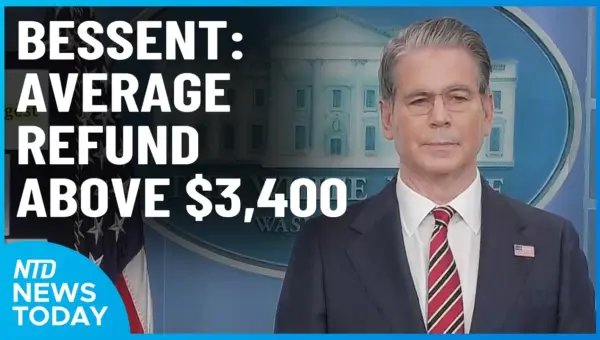
US Halts Iranian Trade: Peace Talks Loom Amidst Global Tensions
The U.S. has implemented a blockade on Iranian maritime trade, aiming to pressure the nation while simultaneously suggesting peace talks could be imminent. This move occurs alongside complex international relations, including China's involvement and ongoing regional conflicts. Domestically, the administration is highlighting significant tax refunds and economic relief measures for Americans and small businesses.

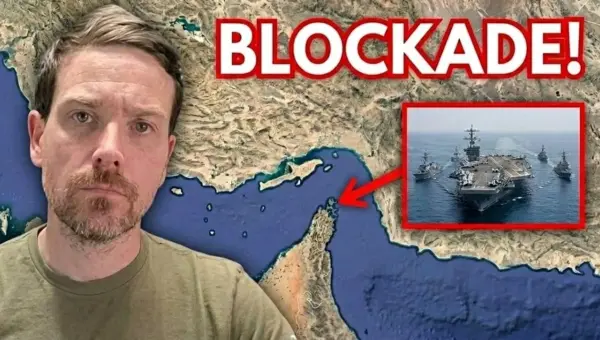
US Navy Blockade Tightens Grip on Iran’s Oil
The US Navy has imposed a strict blockade on Iranian ports, aiming to cripple the nation's oil exports and economy. With warships enforcing the closure, Iran faces significant financial pressure. The long-term effectiveness and potential for escalation remain key concerns.

Iran War Costs Mount, Deal Prospects Dim
The war in Iran is costing the U.S. billions daily, impacting inflation and healthcare costs. While military gains are noted, concerns remain about Iran's nuclear ambitions and the lack of a clear diplomatic path. A "grand bargain" is sought, but the economic and human costs at home are rising.