Global Economy Faces Recession Risk Amid Middle East Conflict
Escalating Middle East conflict is pushing the global economy toward recession, disrupting vital energy and food supplies. Soaring natural gas and fertilizer prices are fueling inflation, while infrastructure damage poses long-term economic threats. Experts warn of a potential global downturn, with disproportionate impacts on lower-income populations.


Global Economy Faces Recession Risk Amid Middle East Conflict
The global economy is facing increasing risks of recession due to escalating conflict in the Middle East, which has disrupted vital energy and food supplies. Experts warn that the damage could be long-lasting, impacting everything from gas prices to the cost of basic necessities like food.
Energy Markets Thrown into Chaos
A recent strike on the South Pars oilfield, the world’s largest natural gas repository, has sent shockwaves through global energy markets. While the United States initially claimed no knowledge of the Israeli strike, Israeli officials reportedly informed U.S. counterparts of the operation. This incident, followed by Iran’s retaliation against Qatar, a major natural gas processing hub, has led to a staggering 30 percent surge in natural gas prices in Europe. Tankers are struggling to navigate the Strait of Hormuz, a critical chokepoint for oil and gas transport, leading to significant supply chain interruptions.
Fertilizer Shortages and Rising Food Prices
The economic fallout extends beyond energy prices, directly affecting global food security. Natural gas is a key ingredient in fertilizer production, accounting for about 60% of the world’s food supply. With natural gas supplies disrupted, fertilizer prices are soaring. This, coupled with the fact that much of this fertilizer is produced in the Middle East and shipped through the Strait of Hormuz, means higher fertilizer costs are translating directly into increased food prices worldwide. Economists are concerned about the ripple effect on food affordability.
Infrastructure Damage and Long-Term Economic Impact
Catherine Rampell, economics editor for The Bulwark, highlighted the severity of the situation, noting that the damage is more than just a temporary disruption. “When the infrastructure is gone, it is gone. It does not come back immediately,” she stated. The destruction of natural resources, refineries, and processing plants could take years to rebuild. This physical destruction of key infrastructure intensifies the risk of a global recession, a concern that has been growing in recent days due to these escalations.
Recession Fears Mount for U.S. and Global Economies
While some economists previously believed a U.S. recession was unlikely unless oil prices reached $138 a barrel, the current situation presents a more complex picture. The rising cost of gas is already straining household budgets, forcing Americans to spend an estimated $300 million more per day on gasoline than a month ago. This increased spending on fuel directly reduces disposable income available for other goods and services. Businesses may then face reduced demand, leading to cutbacks in investment, purchasing plans, and potentially staffing, creating a vicious cycle that could lead to a recession.
“K-Shaped” Economy and Disproportionate Impact
The economic pain is not felt equally across the population. Rampell explained that while the wealthy might weather the storm better, those at the bottom of the income distribution will feel the impact of higher fuel and food prices most acutely. “It’s not that easy to switch away your spending from when gas prices rise, you still have to drive to work, you still have to get your kids to school, etcetera,” she said. This disparity highlights concerns about a “K-shaped” economy where different segments of society experience vastly different economic outcomes.
Broader Economic Risks Beyond Conflict
The Middle East conflict is not the only factor contributing to economic fragility. Experts also point to other risks, such as concerns surrounding the artificial intelligence bubble and issues within private credit markets. These pre-existing vulnerabilities, combined with the current geopolitical instability, create a precarious economic environment. The convergence of multiple risks could have self-reinforcing effects, increasing the likelihood of significant economic downturns.
Unclear Objectives and Messaging in U.S. Policy
Adding to the uncertainty, there are questions about the clarity and consistency of U.S. policy regarding the conflict. Conflicting statements from government officials regarding objectives and strategies have created confusion. This lack of clear direction and coordination within the administration is seen as problematic, particularly in a situation with such high stakes for the global economy. Experts emphasize the need for well-defined goals and a cohesive plan to navigate the complex challenges ahead.
Looking Ahead
The coming weeks will be critical in determining the trajectory of the global economy. Continued escalation or de-escalation in the Middle East, alongside policy responses from major economies and the stability of energy and food markets, will be key indicators to watch. The ability of governments and international bodies to address these interconnected crises will be crucial in mitigating the risk of a widespread recession.
Source: Trump 'making every major facet of the economy worse' without explaining why it's worth it: Rampell (YouTube)

Related Articles


Farmers Need Innovation and Support Now
As planting season begins, American farmers face rising costs and global disruptions. An industry analyst calls for more innovation, investment, and policy support to ensure the future of family farms and food security for all.


Israelis Forge Resilience Amidst Constant Bomb Shelter Drills
Life in Israel is a blend of resilience and constant vigilance, with many families adapting to frequent bomb shelter drills and even sleeping in makeshift shelters. Despite ongoing missile attacks, Israelis strive to maintain normalcy, though businesses face disruption and emotional fatigue is a growing concern.

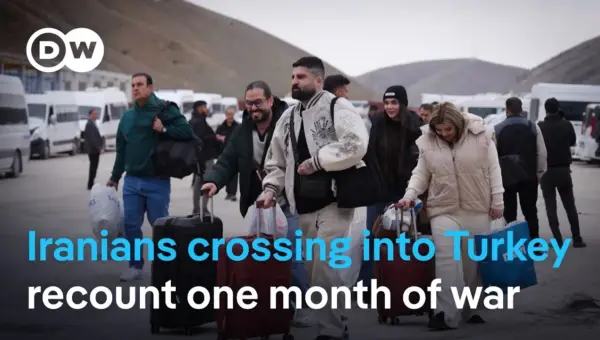
Iran War Exodus: Refugees Flee to Turkey Amidst Bombings
A train from Tehran brings refugees to Turkey, fleeing daily bombings and economic collapse. Many express deep fear for loved ones left behind, while some hold onto national pride and hope for victory. The conflict's impact is also felt economically in Turkey, with rising gas prices.