Iran Tensions Escalate: Europe and Global Economy at Risk
Tensions are escalating in the Strait of Hormuz, threatening global oil supplies and economies. Foreign affairs expert Tim Marshall discusses the legal and military complexities, warning that Europe is increasingly drawn into the conflict. The crisis carries significant economic risks and could redefine regional power dynamics for generations.

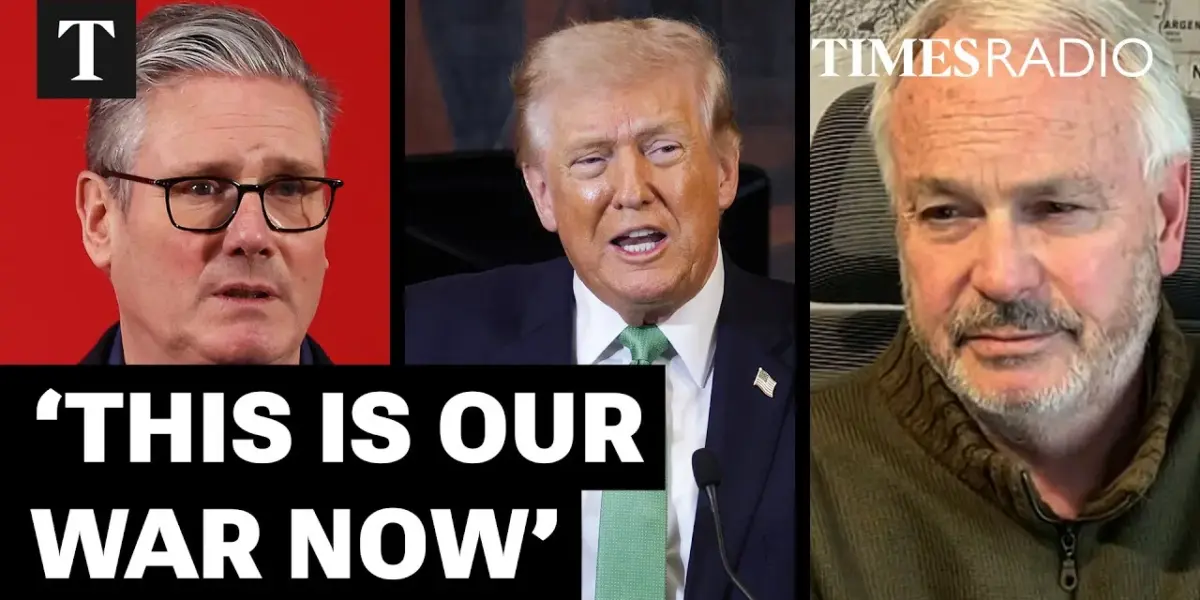
Global Oil Flow Threatened as Iran Tensions Mount
The Strait of Hormuz, a critical waterway for global oil transport, has become the focal point of an escalating crisis involving Iran, the United States, and increasingly, European nations. Recent attacks on oil tankers and energy infrastructure have raised fears of wider conflict, potentially disrupting a significant portion of the world’s energy supply and impacting economies worldwide. The situation is complex, with legal interpretations and military responses adding layers of uncertainty.
Legal Gray Areas and Military Responses
Foreign affairs and security expert Tim Marshall explains that while Iran firing on tankers is illegal, the legal status of those tankers can change if they join an international convoy. If British and American ships escort tankers, those vessels could be considered legitimate military targets by Iran, according to the United Nations Convention on the Law of the Sea. This legal nuance is a key consideration for European nations debating their involvement.
US Actions and Iran’s Capabilities
Marshall notes that the United States and Israel have been systematically degrading Iran’s defensive capabilities, leading to a significant reduction in missile launches. However, he stresses that the remaining 10% of Iran’s capability still poses a threat to a substantial portion of global energy supplies. The Strait of Hormuz handles about 30% of the world’s fertilizer precursors, which impacts not only the US but also global economies.
Europe’s Stake in the Crisis
“This is their war. But where the truth of it is uncomfortable, which is that it is also our war,” Marshall states, highlighting Europe’s direct stake in the unfolding events. He argues that European allies, along with Japan, are facing pressure from the US to contribute more significantly. The current deployment of the 31st Marine Expeditionary Force from Japan, comprising 2,500 Marines and an amphibious assault ship, signals a potential military strategy to force the Strait open.
Options: Negotiation or Escalation
Two primary options are presented: a swift negotiation with Iran to ensure the Strait remains open, or a military escalation. Marshall points out that a diplomatic solution might be perceived as an Iranian victory. The alternative involves military action, which could include taking control of islands to neutralize Iran’s asymmetric warfare capabilities. These forces, including fast boats and drones, are spread along Iran’s coastline and pose a persistent threat even if Iran’s missile capabilities are diminished.
The Houthi Threat and Convoy Challenges
Beyond direct Iranian actions, the Houthi rebels in Yemen present another potential threat. Marshall explains that even with military escorts, convoys might not be able to move the necessary volume of oil and gas. Furthermore, tankers heading through the Red Sea and the Suez Canal must navigate the Bab al-Mandeb Strait, where Houthi forces could launch attacks. Securing this route would require extensive naval assets, including mine sweepers, helicopters, and destroyers.
Economic Ramifications of Conflict
The potential for a tit-for-tat exchange of attacks on energy installations is a grave concern. Marshall warns that such a scenario could lead to oil prices exceeding $200 per barrel and gas prices soaring, with devastating consequences for the global economy. He discusses the potential targeting of Iran’s energy infrastructure, such as pipelines on Kish Island, which could cripple the Iranian economy and leave them with little to lose, potentially triggering a full-scale retaliatory response.
Generational Stakes and Global Power Dynamics
Marshall emphasizes that the current crisis carries generational implications. If Iran is perceived as the winner, even after suffering military setbacks, it could embolden them to reassert dominance in the Gulf over the next 5 to 10 years. This scenario would be backed by Russia and China, potentially shifting the global power balance. The decisions made now, particularly regarding potential US ground troop involvement, are described as “generational decisions” comparable to major geopolitical events of the past.
Skepticism Over Israeli Actions
Regarding reports of Israeli attacks on Iranian energy facilities, Marshall expresses skepticism about President Trump’s claims of surprise and lack of authorization. He notes that such significant actions would likely involve coordination, and he finds it hard to believe they would be carried out without prior consultation. This skepticism is shared by some within the American media and Israeli officials who privately question the narrative.
The Narrowing Window for Action
As US forces, including the Marine Expeditionary Force, are en route, the window for diplomatic solutions narrows. The critical question remains whether these forces will attempt to forcibly open the Strait of Hormuz. Every day that passes increases the potential for further escalation and complicates the situation. The long-term implications of this conflict could reshape regional dynamics and international alliances for decades to come.
Source: Trump's War On Iran Is Now Europe's War Too | Tim Marshall (YouTube)

Related Articles

Stocks Ignore War Risks, Focus on “Taco Moments”
Stock markets appear to be overlooking the severe supply chain risks stemming from the Iran conflict, focusing instead on potential diplomatic de-escalations. While the S&P 500 shows resilience, bond and commodity markets signal deep concern over disruptions to critical resources like LNG, helium, and fertilizers.

U.S. Iran Tensions Rise Amid Shifting Alliances
Rising tensions between the U.S. and Iran are creating a volatile geopolitical situation. With conflicting signals on de-escalation and potential shifts in alliances like NATO and U.S.-Israel relations, the path forward remains uncertain. The global economy and regional stability hang in the balance.


Iran Targets US With Cyberattacks, Escalating Digital Warfare
Iran is increasingly using cyberattacks to challenge the U.S., as seen in a recent hack of the FBI director's account. Experts say this is a strategic shift due to Iran's limitations in conventional warfare. The U.S. needs to strengthen its digital defenses, focusing on encryption and cloud computing, rather than solely relying on traditional security measures.