Iran Strikes Gulf Energy Hubs; US Responds
Iran launched ballistic missiles and drones at Qatar's LNG hub and Kuwaiti oil refineries, prompting a decisive U.S. military response targeting Iranian naval assets and missile sites. The attacks highlight ongoing tensions and the critical importance of the Strait of Hormuz for global energy supplies.

Iran Strikes Gulf Energy Hubs; US Responds
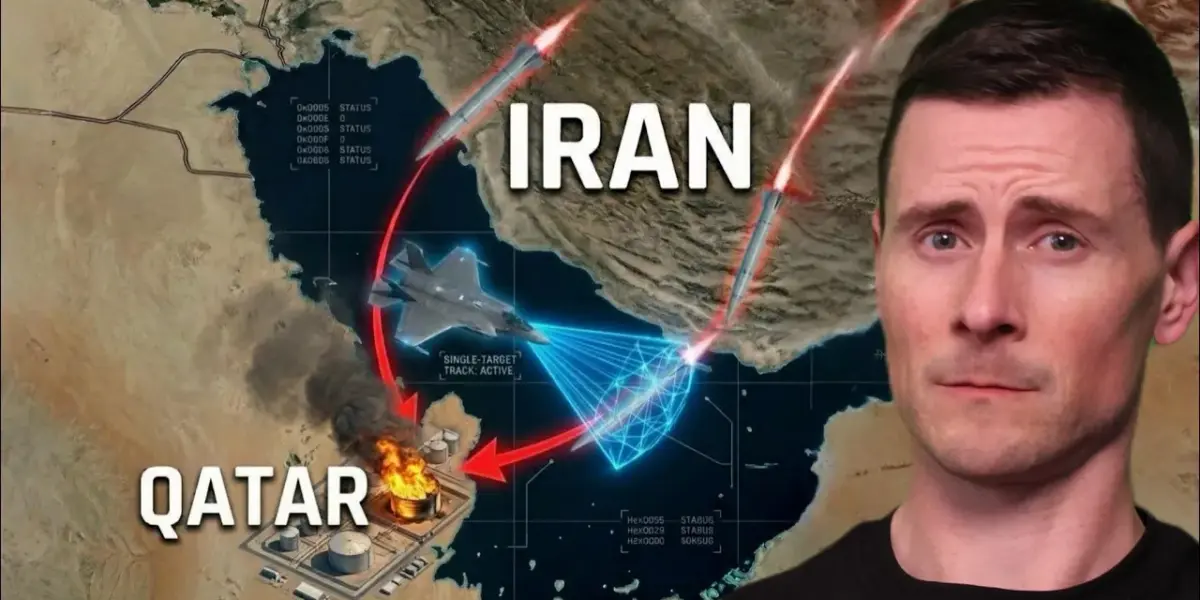
On March 19, 2026, the conflict escalated as Iran launched ballistic missiles and drones targeting Qatar’s Ras Laffan Industrial City. This critical hub, the world’s largest liquefied natural gas (LNG) export facility, sustained significant damage. Massive fires erupted across processing plants, leading to partial evacuations. Iran also struck two key Kuwaiti oil refineries, Mina Al-Ahmadi and Mina Abdullah, causing fires and halting production.
These attacks followed Israeli strikes on Iran’s South Pars gas field. Following the Israeli action, former President Trump reportedly warned against further strikes on Iranian gas fields. Iran viewed this as a red line, prompting a retaliatory response against energy infrastructure in the Gulf. The U.S. military responded swiftly and decisively. They targeted and destroyed numerous small vessels, likely military assets disguised as civilian craft, used by Iran to disrupt shipping in the Strait of Hormuz. U.S. forces also conducted ballistic missile strikes against Iranian targets.
While Iran’s missile production has reportedly decreased significantly, its remaining ballistic missile capabilities pose a threat to energy infrastructure. The U.S. Navy has intensified strikes on these assets. Additionally, U.S. F-15E aircraft recently deployed new GBU-72 advanced bunker buster bombs. These targeted hardened Iranian anti-ship missile sites along the coast near the Strait of Hormuz. The goal is to pressure Iran to fully reopen the vital waterway.
Strategic Context: Why This Matters
The attacks on Qatar and Kuwait highlight Iran’s continued ability to project power and disrupt global energy supplies. Ras Laffan’s importance cannot be overstated; it supplies roughly one-fifth of the world’s LNG. Disruptions here have immediate and significant global economic consequences, as seen in the rise of Brent crude prices towards $116 per barrel. The strikes are framed by Iran as retaliation for hosting U.S. assets and for the earlier Israeli strikes on its energy facilities.
The U.S. response focuses on degrading Iran’s ability to launch such attacks and securing freedom of navigation in the Strait of Hormuz. This strait is a crucial chokepoint for global oil and LNG shipments. By targeting Iran’s naval assets and missile launch sites, the U.S. aims to neutralize threats to shipping and potentially foster internal pressure within Iran’s regime.
What This Means on the Ground
The ongoing military operations, dubbed “Operation Epic Fury,” are complex. Iran’s vast size and dispersed missile launchers present a challenge. The U.S. is employing a multi-pronged strategy. This includes striking naval threats, targeting command and control (C2) nodes, and degrading Iran’s ballistic missile infrastructure. The use of aircraft like the F-16CJ, equipped with anti-radiation missiles (HARMs), indicates a focus on neutralizing Iranian radar and targeting systems. These are similar in function to electronic warfare aircraft like the EA-18G Growler.
The F-15E’s loadout, including GBU-54 laser-guided bombs and JDAMs, shows a capability for precision strikes. The mention of specific munition types like the GBU-72 bunker buster and the potential use of APKWS rockets on other platforms underscores the advanced weaponry being employed. The U.S. is also reportedly considering sending thousands more troops to the region, with a Marine Expeditionary Unit (MEU) already en route. This unit, the 31st MEU, is equipped with amphibious capabilities and aircraft like the F-35B, which can support operations aimed at securing key terminals and infrastructure.
Iran’s claims of destroying U.S. aircraft, specifically KC-135 tankers, have been met with skepticism. U.S. officials acknowledged minor damage to some tankers but stated they remained operational. The alleged images of destroyed tankers have been described as potentially AI-generated, suggesting a disinformation campaign by Iran.
Broader Geopolitical Impact
The escalation risks further destabilizing the global economy, particularly through energy price volatility. The decision by former President Trump to reportedly halt Israeli strikes on Iranian gas fields signals an effort to de-escalate, likely to mitigate wider economic fallout. Iran’s rhetoric, taunting the U.S. and suggesting a desire for a protracted conflict, appears aimed at drawing the U.S. into a costly quagmire, a strategy the U.S. appears keen to avoid.
The U.S. strategy emphasizes degrading Iran’s offensive capabilities without committing to a large-scale ground invasion. This approach aims to weaken the Iranian regime internally by removing its external leverage. The successful reopening of the Strait of Hormuz is seen as a key objective that, if achieved, could significantly undermine the Iranian government’s position.
The ongoing conflict also highlights the evolving nature of warfare, with the use of drones, ballistic missiles, and advanced precision munitions. The U.S. military’s focus on electronic warfare and intelligence gathering, utilizing platforms like the F-35, is crucial in countering Iran’s asymmetric tactics. The long-term outcome depends on the U.S.’s ability to consistently degrade Iran’s capacity to threaten maritime security and energy supplies.
“We see the US Navy now ramping up strikes. We see more ballistic missiles being struck. But, as you can see, the job isn’t done yet. And this is not just an overnight fix.”
Source: Iran Attacks Gulf Energy Facilities In Qatar Then THIS Happened (YouTube)

Related Articles


Iran Targets US With Cyberattacks, Escalating Digital Warfare
Iran is increasingly using cyberattacks to challenge the U.S., as seen in a recent hack of the FBI director's account. Experts say this is a strategic shift due to Iran's limitations in conventional warfare. The U.S. needs to strengthen its digital defenses, focusing on encryption and cloud computing, rather than solely relying on traditional security measures.


Iran Hacks FBI Chief, Exposing U.S. Cyber Vulnerabilities
A recent hack of FBI Director Kash Patel's personal email by an Iran-linked group highlights Iran's growing cyber threat to the U.S. Experts explain how simple security oversights are exploited, emphasizing the need for basic defenses like two-factor authentication to protect against propaganda and potential infrastructure attacks.

Trump Halts Iran Strikes Amid Stalled Diplomacy
President Trump announced a pause on planned strikes against Iran, citing productive talks, though Iran denies negotiations occurred. Reports also suggest a potential U.S. ground operation on Iran's Hark Island. The situation raises concerns about international support for Ukraine and potential shifts in U.S. foreign policy.